
How to capture the GCLID in YouCanBookMe
Use Attributer to capture the GCLID with every YouCanBookMe booking and pass it to your CRM and back to Google Ads as an offline conversion.

Attributer makes it easy to capture the GCLID in YouCanBookMe. Add a hidden question field to your YouCanBookMe booking form, and Attributer will automatically grab the GCLID from the URL and pass it through with every new booking. As a bonus, it also captures UTM parameters and other attribution data at the same time.
Do you know which of your Google Ads campaigns are actually generating appointments (and ultimately and paying customers)?
Most marketers use Google Analytics to track how many visitors their ads drive, but the picture gets a bit fuzzy from there. It can't tell you which of those visitors went on to book a call or eventually become a client. Without that link, you're left making budget decisions based on incomplete information.
The good news? There's a straightforward fix.
In this article, we'll show you how to use Attributer to capture the GCLID with every YouCanBookMe booking, send that data to your CRM, and pass it back to Google Ads as an offline conversion.
3 steps for capturing the GCLID in YouCanBookMe
Capturing the GCLID with every YouCanBookMe booking is easy with Attributer. Here's how to get everything set up:
1. Install Attributer and add a hidden field to YouCanBookMe
Start by signing up for a 14-day free trial of Attributer. Once your account is ready, you'll receive a small snippet of code to add to your website.
The exact process depends on your website platform (WordPress, Webflow, Squarespace, etc.), but in most cases it's just a matter of dropping the code into the settings section of your site.
Once the code is installed, you need to give Attributer somewhere to write the GCLID. To set this up, go into your YouCanBookMe settings and add a new question field labeled "GCLID". This creates a hidden field where Attributer can write the GCLID so it gets captured with every new booking.
2. Attributer stores the GCLID and passes it through with each booking
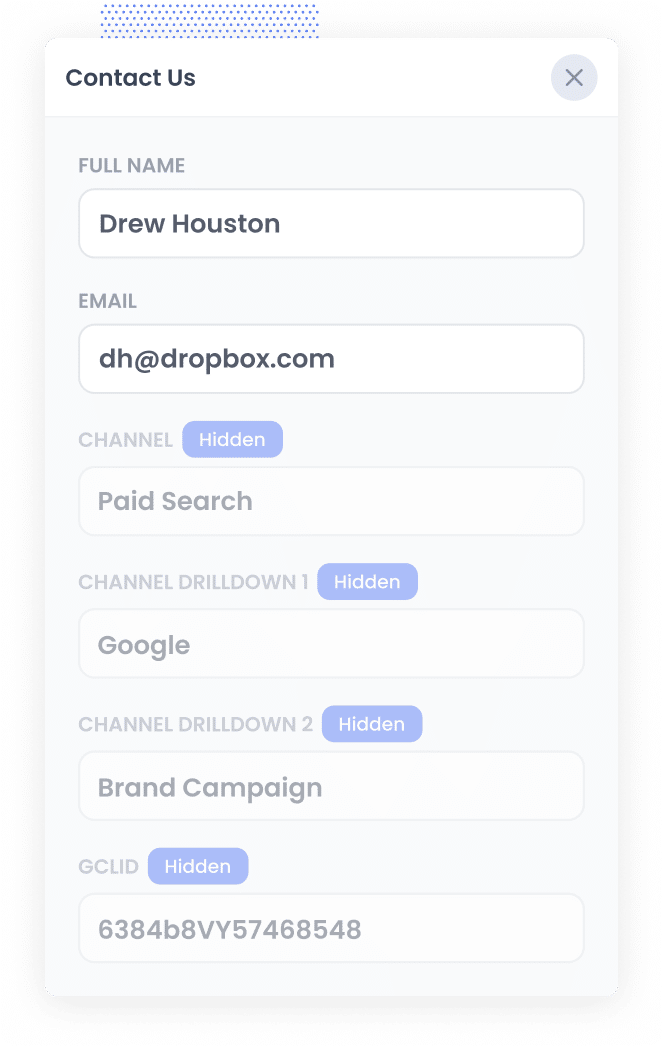
When someone clicks one of your Google Ads and lands on your website, Attributer reads the GCLID from the URL and stores it in their browser. That means even if they browse around several pages, or leave and come back a few days later, the GCLID is still there.
Then, when they go to book through your YouCanBookMe form, Attributer automatically writes the GCLID into the hidden field, which ensures it gets captured with the booking.
3. GCLID is captured with each booking
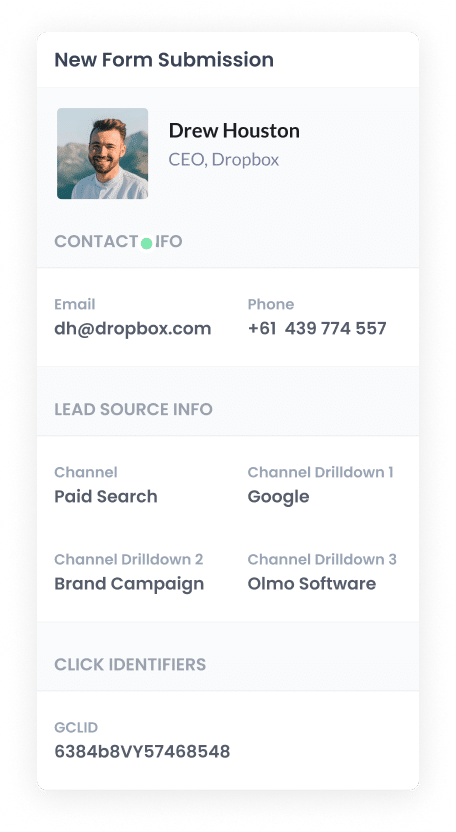
Once the visitor finishes booking a time, YouCanBookMe captures the GCLID alongside everything else they entered, like their name, email, and phone number.
You can view this data in the Bookings section of your YouCanBookMe dashboard, and it will show up in any booking notification emails you have configured.
From there, you can use Zapier or another integration tool to send the GCLID (along with the rest of the booking data) to your CRM or any other tool in your stack.
How to send the GCLID back to Google Ads and mark it as an offline conversion
The first thing you'll need to do is create a new conversion action inside Google Ads.
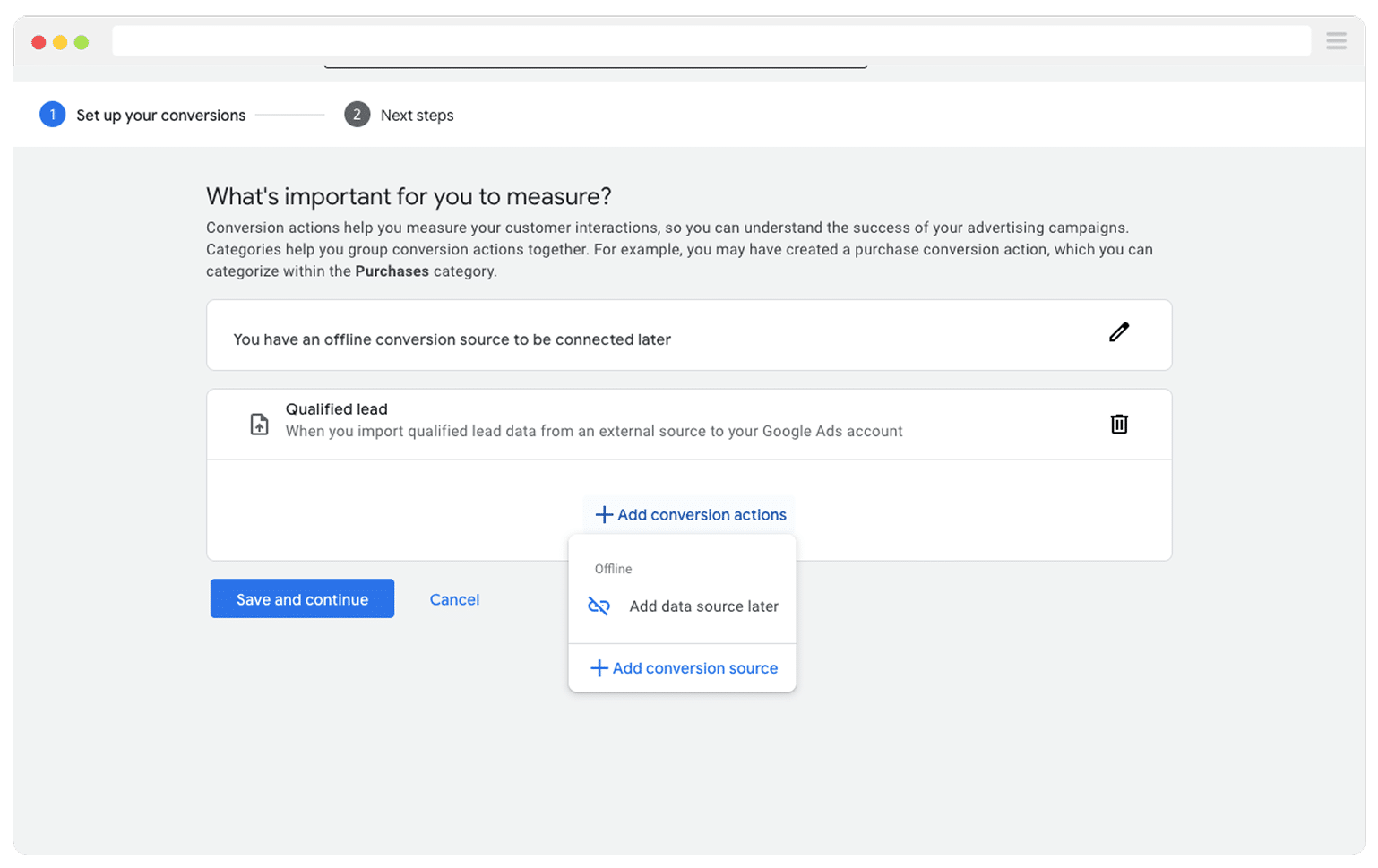
Open Google Ads and head to Goals in the left sidebar, then click into Conversions. Hit the button to add a new conversion and choose Offline Conversion as the type.
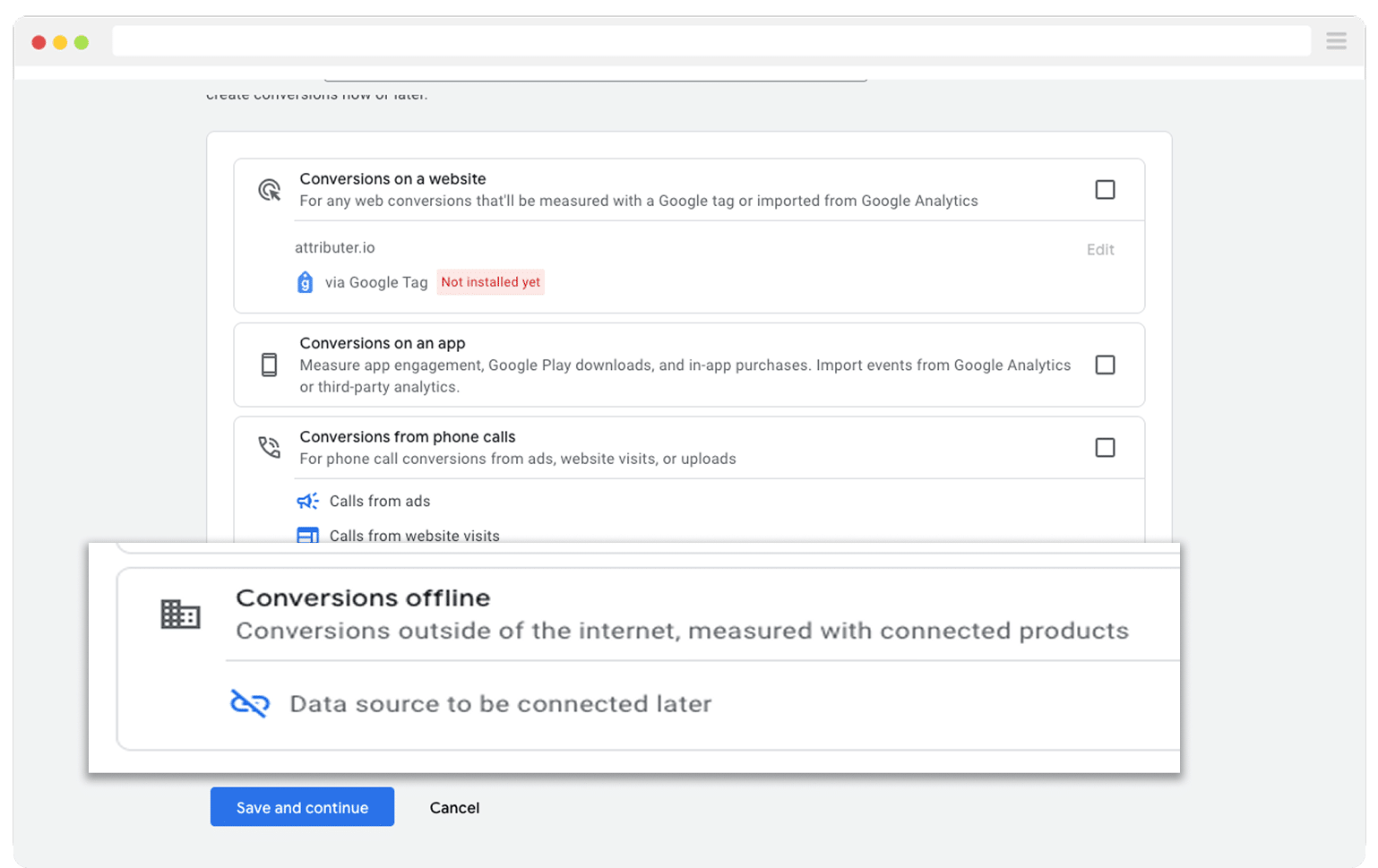
On the last screen, when it prompts you to connect a data source, go ahead and choose the 'Add data source later' option.
Got it. Here's a rewrite with that correction baked in:
With your conversion action set up in Google Ads, the next step is deciding which point in your sales process should trigger the GCLID being sent back. This matters more than it might initially seem.
A lot of businesses default to waiting until a deal closes before firing the conversion. That makes intuitive sense, but it can actually limit how well Google's automated bidding performs. Options like Maximise Conversions, Maximise Conversion Value, and Target CPA typically need around 50 conversions per month before they really hit their stride.
If you are not closing 50 deals a month, you will usually see better results by triggering the conversion at an earlier pipeline stage. That said, you want to pick a stage that still represents a genuine quality signal. Firing the conversion when a raw, unreviewed lead first hits your CRM is not ideal, since at that point you have no idea whether it is worth anything.
A much better option is to trigger it when a lead gets marked as qualified in your CRM, or when a deal is created. At that stage, a human has reviewed the lead and decided it is worth pursuing. That is a meaningful signal for Google Ads to work with, and it gives the algorithm a much larger pool of data to learn from compared to waiting for a closed deal.
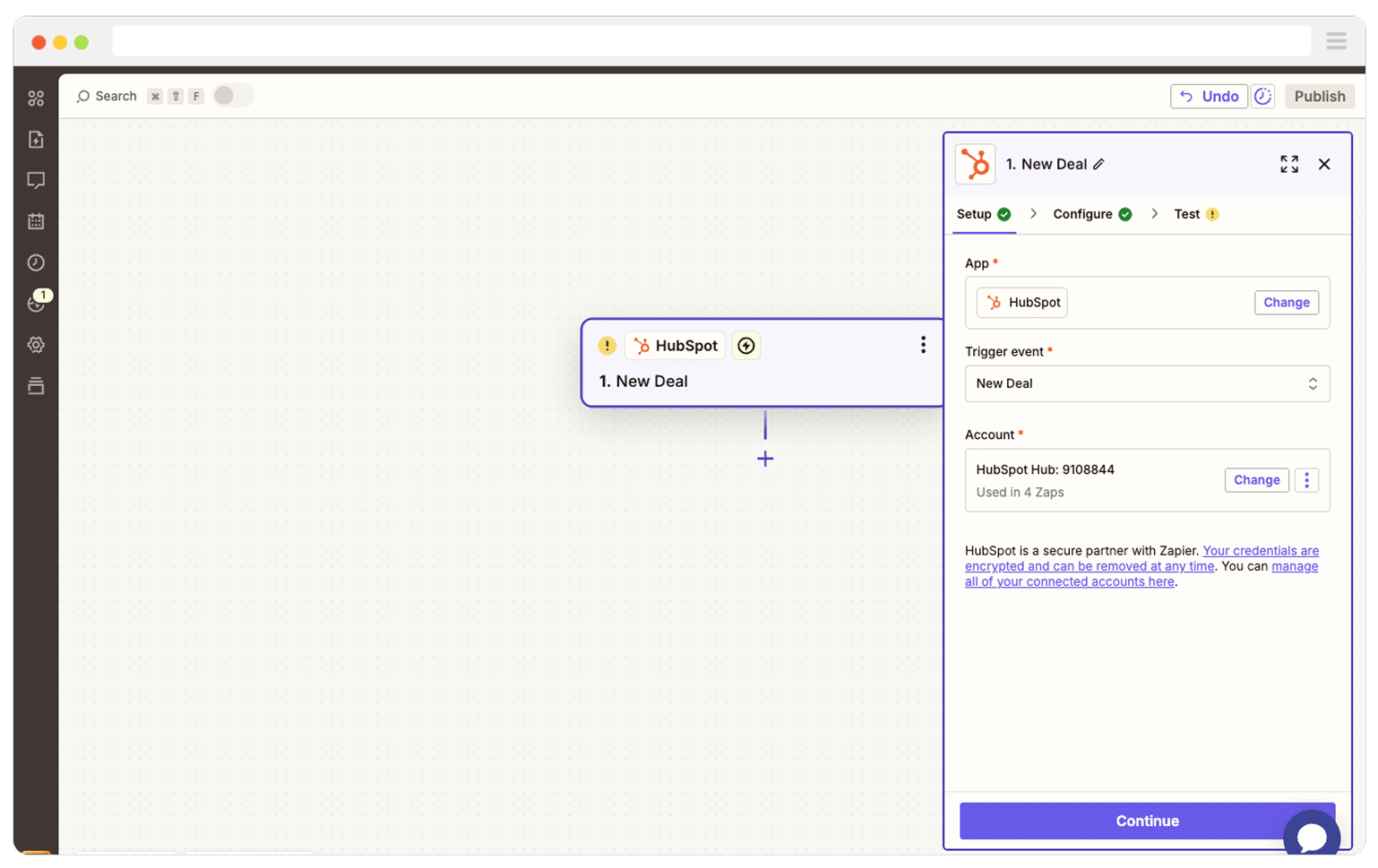
Once you have landed on the right trigger, head to Zapier and build a new Zap. Set the trigger to match the pipeline stage you chose, such as when a lead is marked as qualified or when a new deal is created in your CRM.
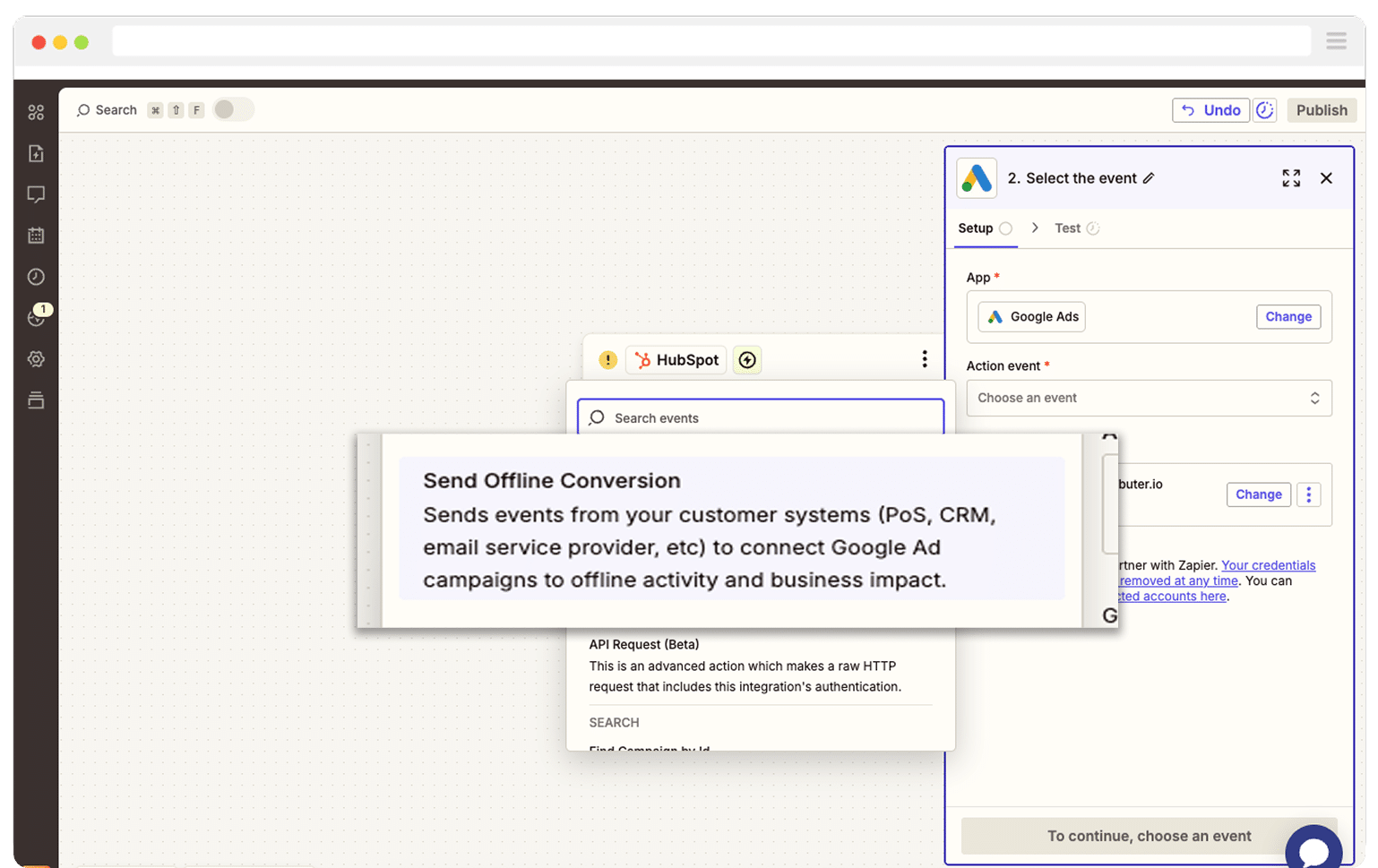
After that, choose Google Ads as your Action step and select 'Send Offline Conversion' as the event.
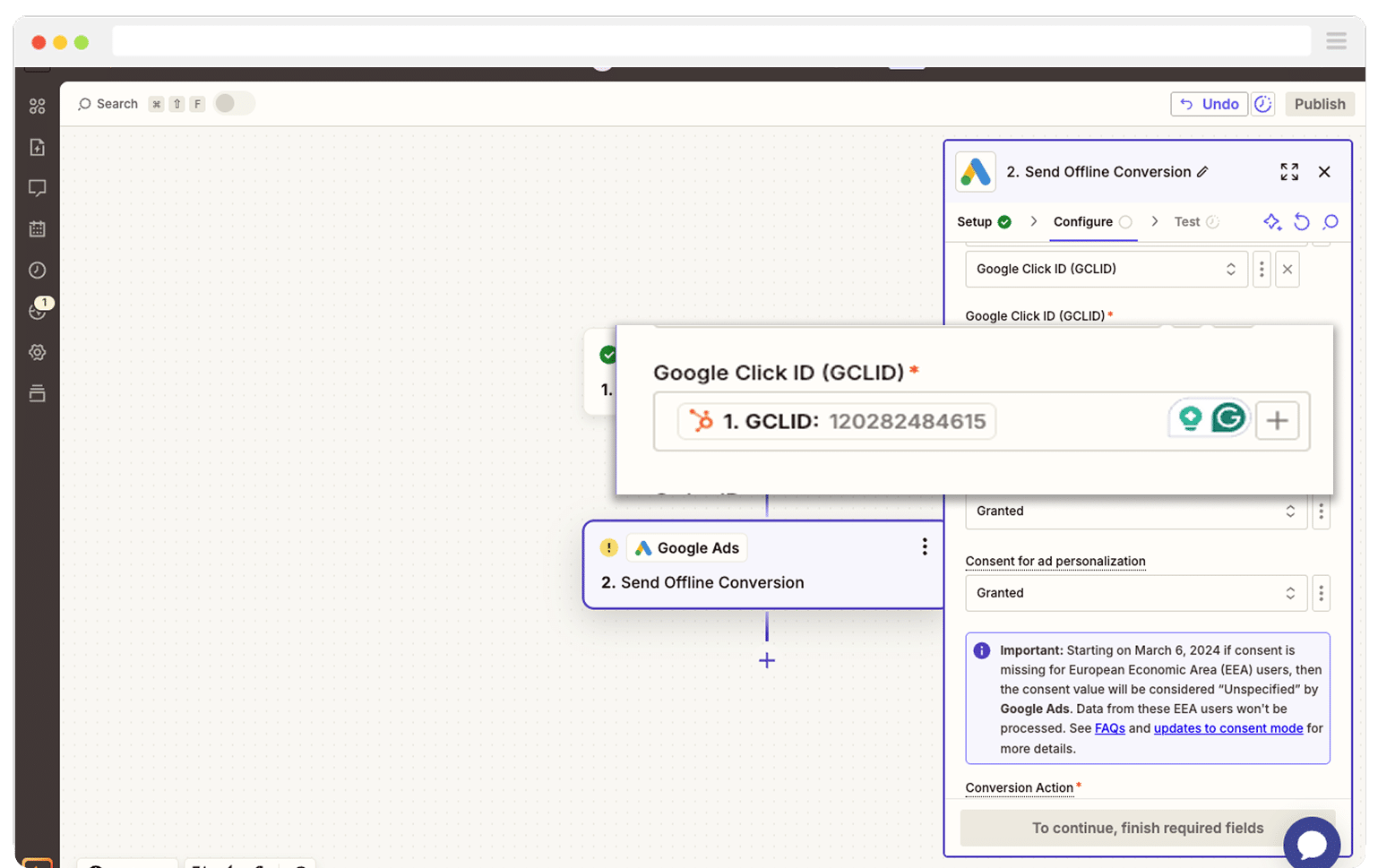
The final step is to map the GCLID field from your CRM (or wherever you're storing it) to the corresponding field in Zapier.
And that's all there is to it! Your offline conversions are now configured in Google Ads. Before you start scaling your spend, it's worth running a quick test to make sure everything is firing correctly. You can find a detailed walkthrough on how to test your setup here.
Why Attributer is the best way to capture the GCLID in YouCanBookMe
There are other approaches to getting the GCLID captured with YouCanBookMe bookings, so what makes Attributer the better option?
Here are a few reasons it's worth using:
1. Remembers the GCLID as visitors browse your site
Most other methods for capturing the GCLID only work if the visitor books on the exact same page they first landed on after clicking your ad.
That's a real problem in practice. Picture this: someone clicks your Google Ad and lands on your homepage, then navigates over to your Services page before booking a consultation. By that point, the GCLID is gone from the URL, so it never gets recorded.
Attributer works differently. It saves the GCLID in the visitor's browser the moment they arrive on your site, so no matter which page they end up booking from, or even if they leave and return later in the week, the GCLID is always captured.
2. Captures UTM parameters as well
Attributer doesn't stop at the GCLID. It also captures any UTM parameters you've added to your campaigns.
For example, imagine you run an accounting firm. When someone clicks one of your Google Ads and books an appointment through YouCanBookMe, Attributer would write the following into the hidden fields alongside the GCLID:
- Channel = Paid Search
- Channel Drilldown 1 = Google
- Channel Drilldown 2 = Tax Advisory Campaign
- Channel Drilldown 3 = Small Business Tax Advice Ad
3. Captures information on visitors from organic channels
Attributer also picks up attribution data for visitors who find your site through organic channels like Organic Search, Organic Social, Referral, or Direct Traffic.
Using the same accounting firm example, if a potential client finds your website through a regular Google search rather than a paid ad, Attributer would capture something like this:
- Channel = Organic Search
- Channel Drilldown 1 = Google
- Channel Drilldown 2 = www.google.com (or whichever search engine they used)
- Channel Drilldown 3 = tax accountant Melbourne (or whatever keyword they searched, if available)
How Attributer helped Harris Federal Law see which Google Ads campaigns were actually bringing in clients
Harris Federal Law Firm is a Washington D.C. legal practice that helps federal employees navigate and secure their benefits.
Like a lot of firms running Google Ads, they had a visibility problem. Google Analytics could tell them how many people were clicking through to their site, but it couldn't tell them which of those visitors were turning into real leads and paying clients.
Attributer closed that gap.
Once it was set up, every new lead that submitted a form on their website came through with full attribution data attached, including campaign, ad group, ad, keyword, and GCLID. They then sent this data to their CRM alongside each lead's contact information.
For the first time, they could see exactly which campaigns were generating actual clients and which ones were just burning through budget.
The finding that surprised them most was that several of their display campaigns were driving plenty of website traffic but converting almost none of it into new business. As a result, they shifted that budget into the search campaigns that were actually bringing in clients and were able to get more clients at a lower cost per acquisition.
"With Attributer we can see which campaigns are actually generating customers & revenue, rather than just website visitors. We were able to see that some of our campaigns were driving lots of visitors but few of them converted into leads and customers. Now we're able to reinvest that budget into other campaigns that we can see are generating revenue."

Nick Child - Director of Marketing, Harris Federal Law Firm
Wrap Up
Want to capture the GCLID with every YouCanBookMe booking and send it to your CRM so you can fire offline conversions back to Google Ads? Attributer makes it easy.
It grabs the GCLID the instant a visitor arrives from one of your ads and holds onto it as they move around your site, even if they leave and come back later. So the GCLID gets captured with every single booking, no matter which page they book from.
Best of all, it's free to get started and setup takes less than 10 minutes. Start your 14-day free trial today and begin capturing the GCLID with every YouCanBookMe booking.
Get Started For Free
Start your 14-day free trial of Attributer today!

About the Author
Aaron Beashel is the founder of Attributer and has over 15 years of experience in marketing & analytics. He is a recognized expert in the subject and has written articles for leading websites such as Hubspot, Zapier, Search Engine Journal, Buffer, Unbounce & more. Learn more about Aaron here.