
The best way to track WordPress form submissions as conversions in Google Ads
Proper conversion tracking can lift your recorded conversions by as much as 23%. Here's how to set it up for your WordPress form submissions in Google Ads.

Attributer captures the GCLID and the other identifiers Google Ads needs whenever a visitor submits one of your WordPress forms (it supports Gravity Forms, WPForms, Contact Form 7 and the rest). That data then gets sent back to Google Ads as a conversion, either right away on submission or further down the track once the lead becomes a customer in your CRM.
Google Ads can be a brilliant source of new leads and customers, but getting conversion tracking set up correctly is surprisingly tricky.
Go the Google Tag Manager route and you're suddenly writing custom code to listen for form submissions, then wrangling triggers, tags, variables, and a pile of other fiddly settings.
Take the simpler route of tracking thank you page visits and you can miss as much as 30% of your conversions, thanks to ad blockers, browser privacy features (Safari being the worst offender), or someone clicking your ad on their phone and only converting later on their laptop.
So what are you actually meant to do?
In this guide, we'll walk through how to set up proper conversion tracking in Google Ads whenever someone submits a form on your WordPress site, using a method called server-side tracking. It works no matter which form plugin you use, whether that's Gravity Forms, WPForms, Contact Form 7, Formidable Forms or any of the others.
Why you need to be doing server-side tracking in Google Ads
The usual ways of tracking conversions in Google Ads, like counting thank you page visits or firing events through Google Tag Manager, come with some real problems. Research suggests these methods can miss up to 30% of your conversions.
There are a few reasons this happens:
- Ad blockers. They stop the Google Tag from loading on your site, so it can't record anything the visitor does.
- Browser privacy features. Browsers like Safari include technology that blocks the Google Tag from tracking a visitor for more than a few days. So if someone clicks your ad and converts 3 days later, that conversion goes untracked.
- Multiple devices. A visitor might click your ad on their work computer but fill out your form later on their phone or home computer, which leaves their original click disconnected from the eventual conversion.
This is exactly why server-side tracking matters. Rather than waiting for something to happen in the browser (like a visit to a thank you page) and hoping the Google Tag catches it, you send a direct, private message straight to Google with the lead's details, so the information can't be stripped out by ad blockers or privacy settings.
And it genuinely works better too. Google's own figures show that server-side tracking usually delivers a 23% average increase in total recorded conversions along with a 10% drop in cost per conversion (because Google's algorithms have cleaner data to learn from and can target your ads more effectively).
How to track WordPress form submissions in Google Ads using server-side conversion tracking
How you set this up depends on one question: When do you want to send the conversion back to Google Ads?
There are a couple of options:
Option 1: When a lead submits the form
If you want to fire a server-side conversion to Google Ads the instant someone submits a form on your WordPress site, a tool like Converly makes it simple.
There's no wrestling with Google Tag Manager to spot submissions, dig the lead's data out of the form, hash it with SHA-256 and post it to the API. Instead, Converly gives you a visual builder, and you assemble your conversion flow in a few clicks.

To set it up, you simply select a trigger (like one of your WordPress forms being submitted) and then select the actions you want it to take (such as sending a conversion to Google Ads).
Once you've set it up (and put the Covnerly code on your site, everything els ehappens automatically. Converly listens for form submissions, pulls the lead's name, email and phone, hashes it with SHA-256, and forwarding it to Google Ads.
On top of that, it also gathers a pile of extra signals about the visitor and how they reached you (GCLID, GBRAID, WBRAID, User Agent and more) and bundles those in too, all of which makes it far likelier that Google can trace the conversion back to the precise campaign, ad and keyword they lead originally came from.
What you're left with is the full payoff of server-side tracking (the 23% average bump in recorded conversions, the 10% lower cost per conversion) without needing to write any custom code or do any fiddly configuration in tools like Google Tag Manager.
Option 2: When a lead becomes a customer
Already pushing your WordPress form leads into a CRM like Salesforce or Pipedrive? Then you've got another option, which is to hold off and only send the conversion to Google Ads later in the sales cycle, such as when that lead finally becomes a customer.
To do this, you need to grab a little extra information when they submit your lead form and send it through to your CRM. Here's how it works:
1. Install Attributer on your website and add a hidden field

Start by signing up for a 14-day free trial of Attributer. You'll receive a small snippet of code to add to your website.
Next, add a handful of hidden fields to your forms:
- GCLID
- WBRAID
- GBRAID
- User Agent
Attributer works with all the major WordPress form plugins, including Gravity Forms, WPForms, Contact Form 7, Formidable Forms and Ninja Forms. Most of them let you add a hidden field by dragging one into your form (or adding a simple hidden-field tag) and giving it the right name. You'll find step-by-step instructions for your specific plugin on the Attributer Help site.
2. Attributer writes data into the hidden fields
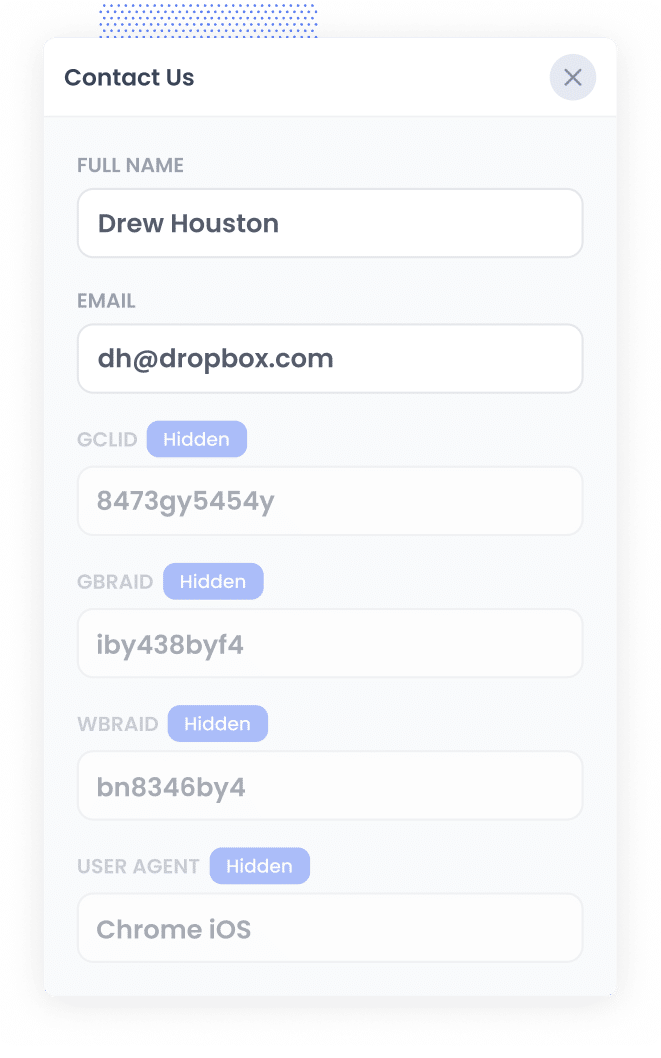
Once the Attributer code is on your site, it gets to work in the background.
When a visitor arrives from one of your Google Ads, Attributer captures everything Google Ads needs for a server-side conversion (the GCLID, GBRAID, WBRAID, User Agent and so on) and stores it in the visitor's browser.
Then, the moment they submit a form on your WordPress site, Attributer drops that data into the hidden fields you set up, and it's captured right alongside the rest of the submission.
3. Data is sent to your CRM
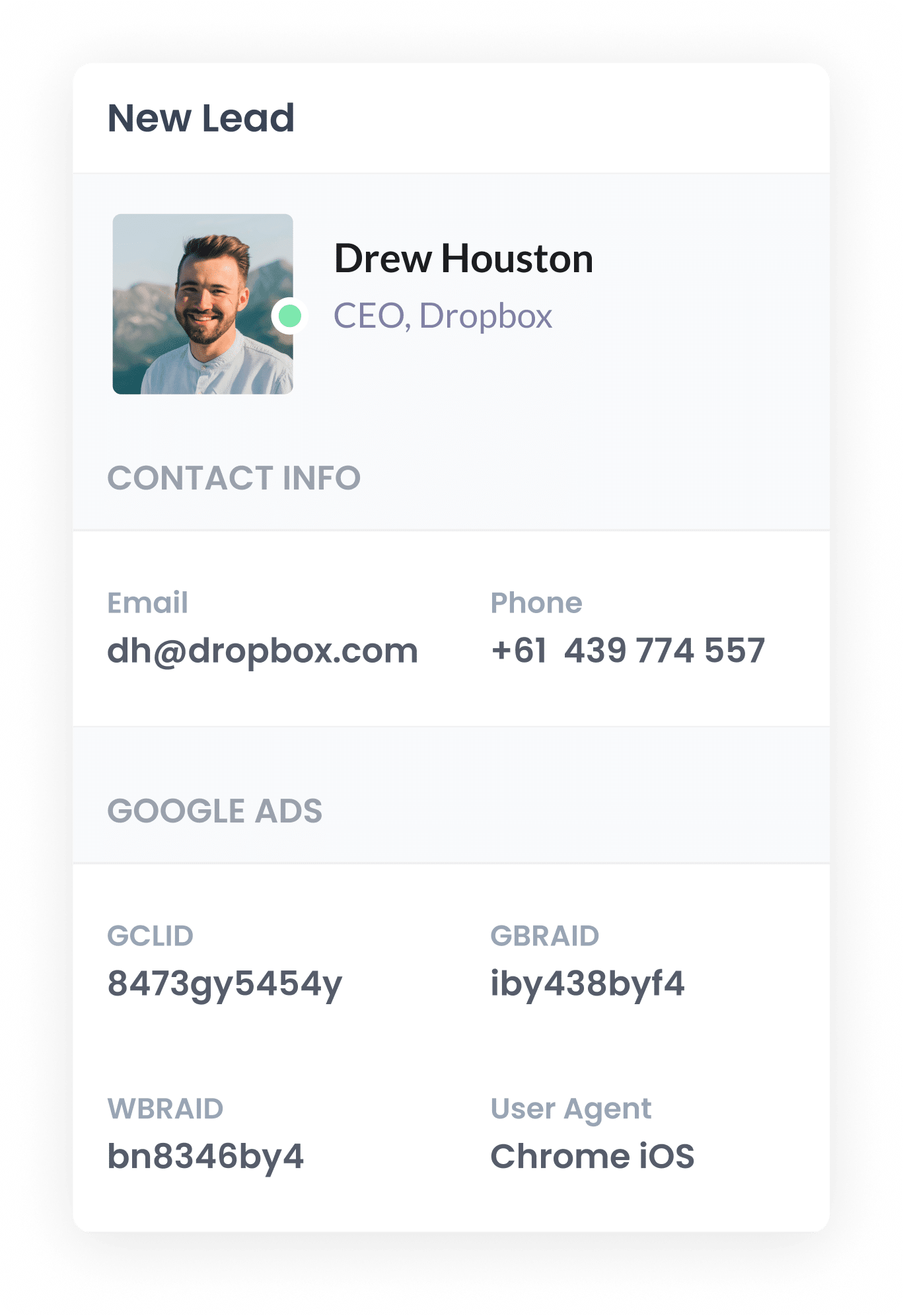
With the data captured as part of the submission, it can flow into your CRM together with the lead's name, email, phone number and anything else they typed into the form. You can move it across using your form plugin's built-in integrations or a third-party connector like Zapier or Make.
From there, it sits on the contact or lead record in your CRM, ready for whenever you need it.
4. Send the data to Google Ads
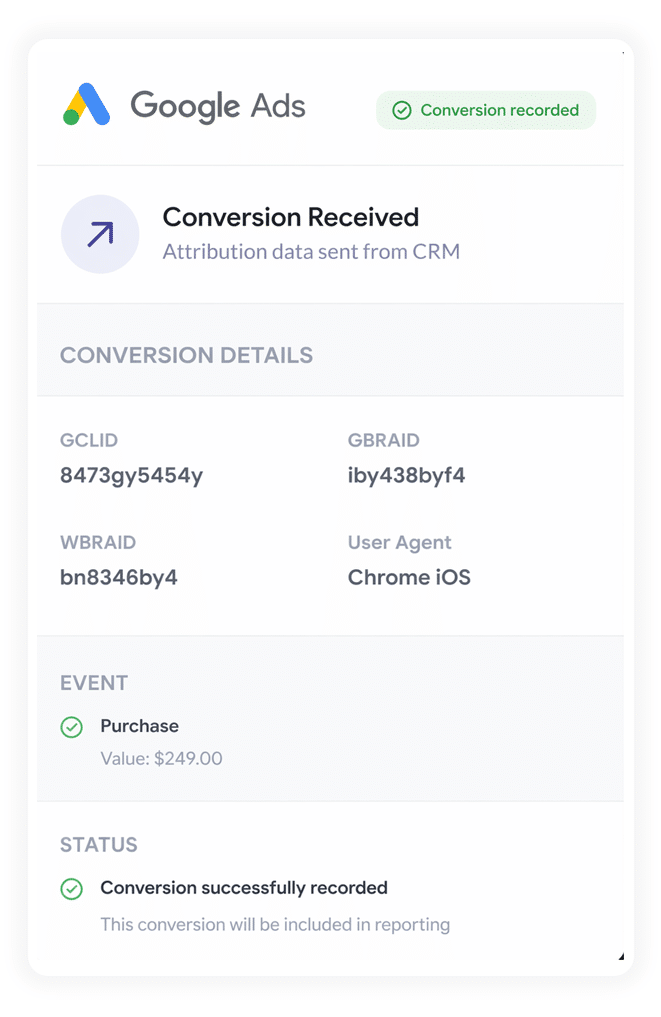
Once a lead hits a milestone that matters to you (a deal being created, or the lead converting into a customer), you can push all of that data back to Google Ads to record a conversion.
Zapier and Make are ideal here. They plug into pretty much any CRM and can fire the conversion in Google Ads at whatever moment you choose, whether that's when a deal is created, when it's marked as won, or any other stage.
They also give you a simple interface for mapping the values Attributer captured (GCLID, GBRAID, WBRAID, User Agent and the rest) onto the matching fields in Google Ads.
Why sending server-side conversions to Google Ads is the best approach
Why is server-side tracking so much more accurate? It comes down to where the tracking actually happens.
Client-side tracking runs entirely in the visitor's browser, and you have no control over it. Server-side tracking, on the other hand, sends the conversions straight to Google's servers (and no ad blockers or privacy settings can impact that).
Here are the main four reasons why it's better:
1. Overcomes Ad Blockers
The older approach hinges on a tracking script running inside the visitor's browser, and that is exactly where it falls down. A large share of people now browse with privacy protections switched on or an ad blocker installed, and either one can quietly stop that script from ever firing.
In fact, studies have shown that more than 30% of internet users run an ad blocker of some kind.
Server-side tracking avoids the whole problem by sending the conversion data directly to Google's servers, somewhere ad blockers simply cannot reach, so every lead is counted.
2. Bypasses Safari & iOS Privacy Limitations
Apple's Intelligent Tracking Prevention (ITP) can wipe tracking cookies within a day or two. So if a visitor doesn't convert the same day they click, the link between that click and the eventual conversion is gone.
Server-side tracking sidesteps this by using the lead's email (and other data) as a permanent identifier. So instead of hoping the cookie is still there days later, Google uses their name, email, IP address, etc., to tie the conversion back to their original ad click, no matter how much time has passed.
3. Works across devices
A lead might first discover your site on one device, say their phone, but hold off on filling out a form until they're sitting at a computer, and browser-based tracking has no way to link those two visits because they happen on separate devices.
Sending identity data, such as their name and email, server-side lets Google "stitch" the sessions together, so your ads finally get the credit they deserve for kicking off the journey.
4. Eliminates duplicate and messy data
On top of everything above, browser-based tracking is prone to other slip-ups, like double-counting when someone refreshes the page, or dropping data altogether because of slow load times and patchy connections.
Server-side tracking is far more precise because it only records a conversion when a form is genuinely completed, not when a thank you page happens to load. That keeps your Google Ads conversion counts much closer to the real number of leads you're getting.
3 reports you can run when you properly send conversions to Google Ads from your WordPress forms
I've spent the last 15 years running marketing for all kinds of companies, which has meant pouring millions into Google Ads and building report after report to see what was actually working.
Of all of them, these are the 3 I kept coming back to:
1. Conversions by Keyword
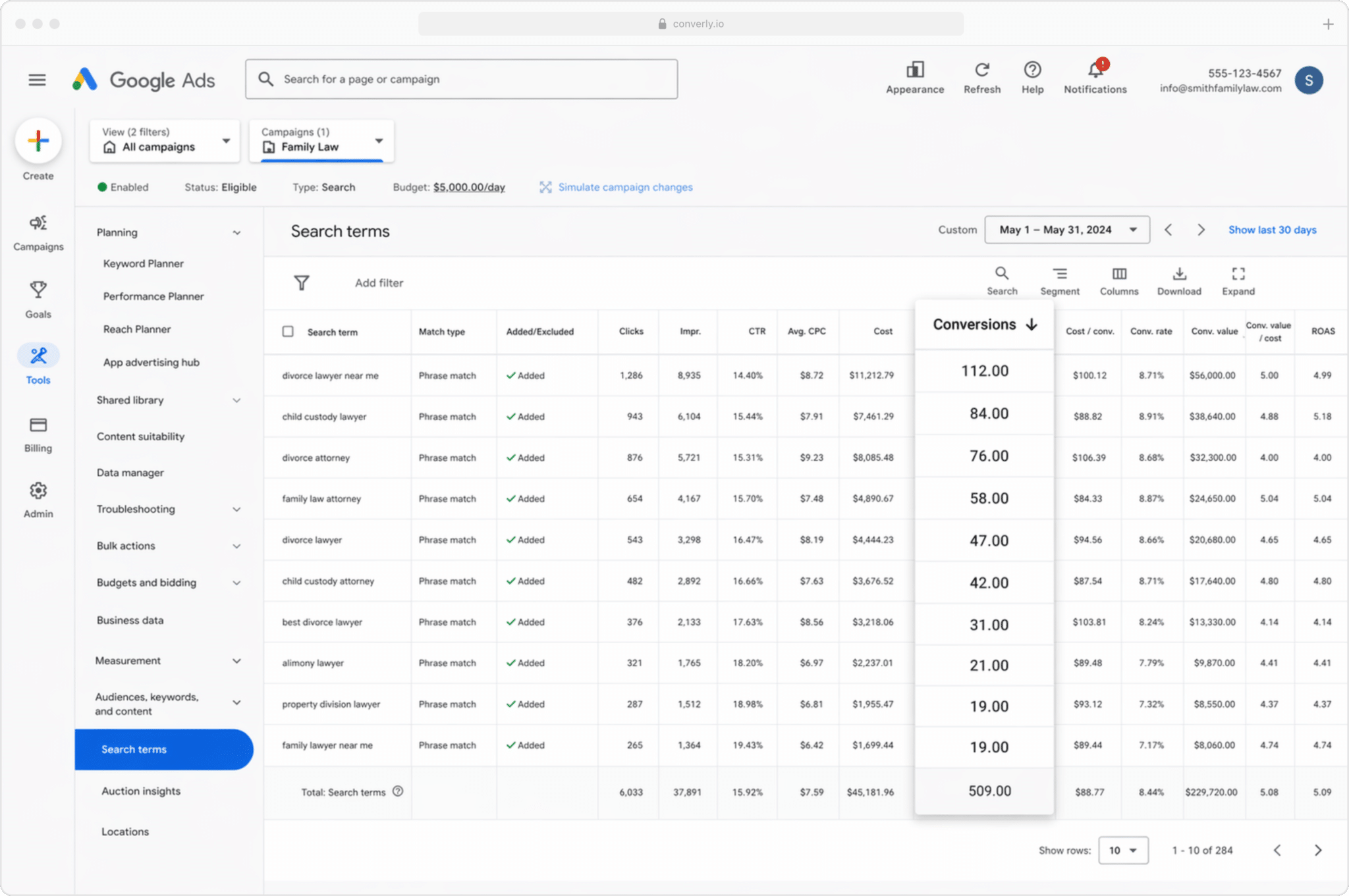
Like most businesses, you're probably bidding on a range of keywords spread across different campaigns (perhaps for the different services you offer, like bathroom renovations versus full home builds).
If that sounds familiar, this report shows you which keywords are actually producing conversions, rather than just racking up impressions and clicks that never turn into real leads.
It helps you see which keywords are pulling their weight and which aren't, so you know exactly where it's worth putting more budget to bring in more clicks.
2. Conversion Value by Campaign
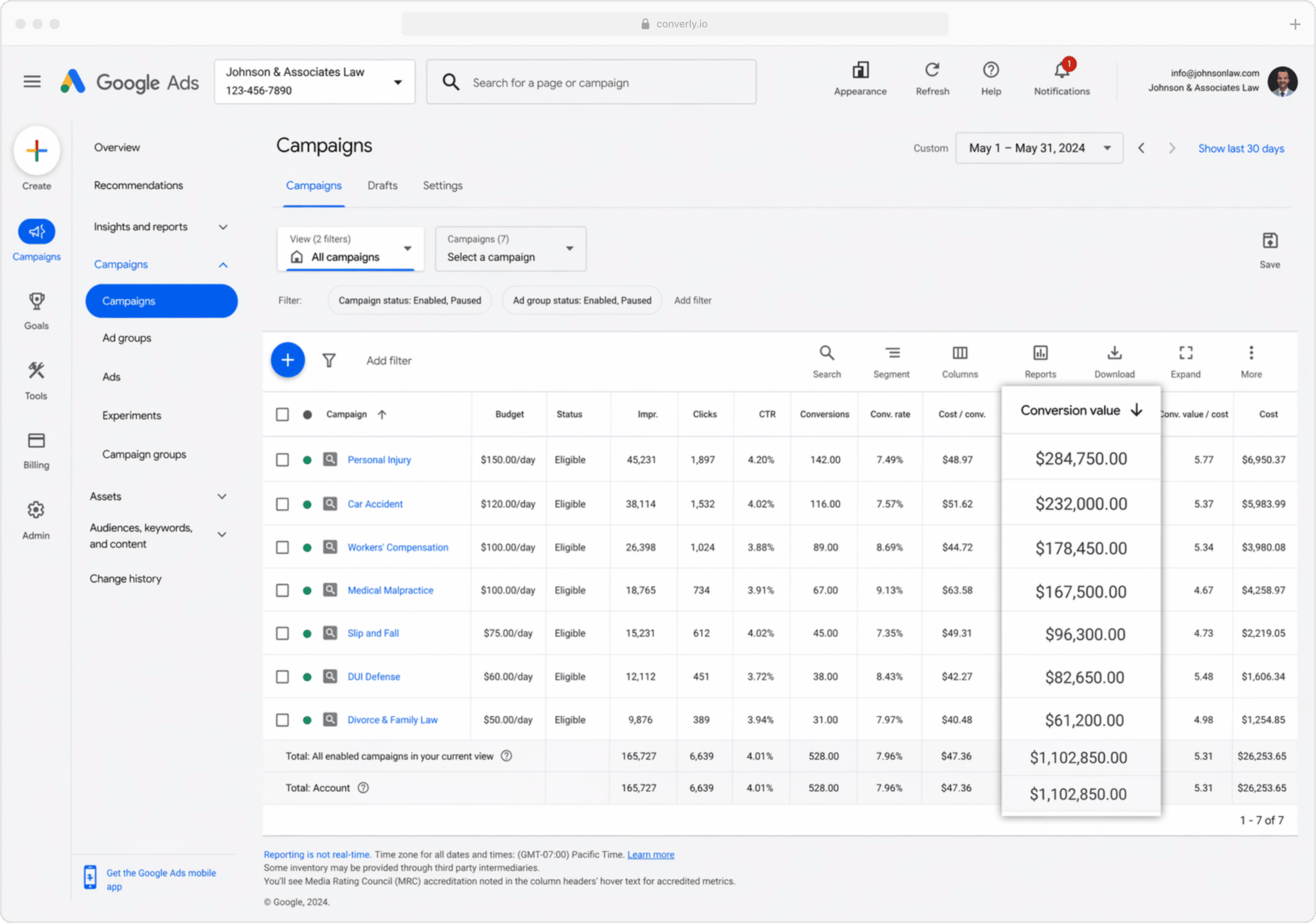
When you send conversions back to Google Ads from your CRM, you can attach a value to each one (pulled from the size of the deal or opportunity in your CRM).
That matters because not every customer is worth the same. Picture an accounting firm. A client who came in through the 'individual tax return' campaign is usually far less profitable than one won through the 'outsourced CFO' campaign, so treating those two conversions as equals would be a mistake.
By passing a conversion value from your CRM into Google Ads, you can run reports showing exactly how much revenue came from each campaign. With that in front of you, it's much easier to decide which campaigns genuinely deserve more of your budget.
3. Conversions by Geography
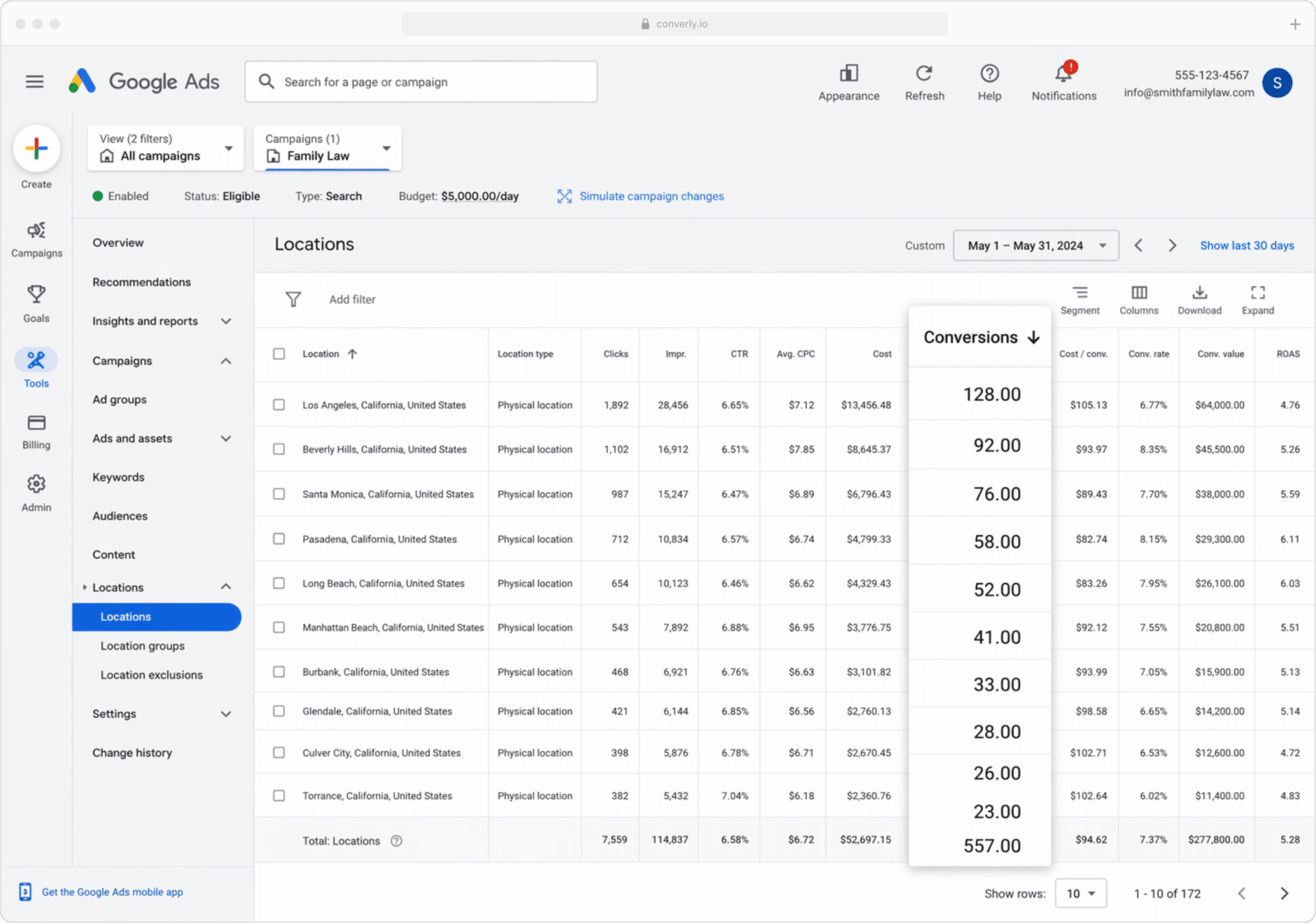
This one is especially handy for businesses that win most of their work locally (roofers, HVAC contractors, removalists, or any firm that serves a defined area), and it breaks down how many conversions you got by geographic region.
You can look at it from a high level (country, state or city) or drill all the way down to an individual postcode. That makes it easy to see whether your leads are genuinely coming from the areas you service, or whether budget is leaking into suburbs that are too far away for you to take on profitably.
Armed with that, you can put Location Bid Adjustments to work. You tell Google to bid harder in the postcodes that are most profitable for you, and ease off (or stop spending entirely) in the areas that generate plenty of clicks but never any completed forms.
Wrap Up
Good conversion data changes what Google Ads can do for you. On your side, it tells you where to step in by hand, like lifting your bids on the keywords or locations that are pulling their weight. On Google's side, it gives the automated bidding something accurate to optimise against.
The flip side is that bad data does the opposite. Track thank you page visits or fire events in the browser through Google Tag Manager, and the numbers you feed Google won't be trustworthy, which drags your performance down.
So regardless of whether you choose to send the conversions on the initial form submission or from your CRM later on, just make sure to send it server-side. That's what will help you get the best results from Google Ads.
Get Started For Free
Start your 14-day free trial of Attributer today!

About the Author
Aaron Beashel is the founder of Attributer and has over 15 years of experience in marketing & analytics. He is a recognized expert in the subject and has written articles for leading websites such as Hubspot, Zapier, Search Engine Journal, Buffer, Unbounce & more. Learn more about Aaron here.