
The best way to track Tally Forms submissions as conversions in Google Ads
Track your Tally Forms submissions in Google Ads using server-side tracking. Capture up to 23% more conversions in Google Ads as a result.

Use Attributer to capture the GCLID and the other Google Ads identifiers with each of your Tally Forms submissions, then send them back to Google Ads as to mark a conversion. You can send the conversion when the form is submitted, or hold off until the lead becomes a paying customer in your CRM.
Google Ads is a great way to bring in new leads and customers for your business, but it can be quite hard to set up conversion tracking.
Even tools like Google Tag Manager don't really help. You still have to write custom code to listen for form submissions, send the lead's details into the DataLayer, setup Variables to retrieve it, and then configure triggers, tags and filters to send the conversion to Google Ads.
And basic approaches like tracking thank you page visits can result in up to 30% of your conversions being missed, thanks to things like ad blockers, privacy features built into modern browsers (especially Safari), and people clicking your ad on one device but completing your Tally Form on a different device later on.
Fortunately though, there is a solution.
In this article, we'll show you two easy ways to set up proper conversion tracking in Google Ads when someone submits a Tally form on your website. We'll use a method called server-side tracking (or Enhanced Conversions in Google Ads speak).
Why server side tracking in Google Ads matters
Common approaches to tracking conversions in Google Ads, such as tracking thank you page visits or firing events through Google Tag Manager, have some serious flaws. In fact, studies show that these methods can result in missing up to 30% of your actual conversions.
This happens for a number of reasons:
- Ad blockers: Most Ad blockers prevent the Google Tag from loading on your website. And if it isn't loaded when the visitor arrives on your site, nothing they do can be tracked (including form submissions or thank you page visits).
- Privacy features in browsers: Web browsers like Safari have built in technologies that block the Google Tag from tracking visitors for more than a day or two. So if a person clicks your ad and converts 5 days later, it won't be tracked.
- Using multiple devices: People might click your ad on their work computer but later convert on their home computer (or on their mobile device), which means their original ad click can't be tied to their later conversion.
This is why you need to be doing server side tracking. Instead of relying on things to happen in the browser (like the user visiting a thank you page) and hoping the Google Tag can track it, the conversion data is sent from your form tool or CRM straight to Google's servers, which means ad blockers and privacy settings can't get in the way.
This has been proven to work significantly better. In fact, Google's own data shows that server side tracking typically results in a 23% average increase in total recorded conversions and a 10% reduction in cost per conversion (because when Google's algorithms have accurate conversion tracking, they understand what a 'good' lead looks like for you and can serve your ads to more of those people).
How to track Tally Forms submissions in Google Ads using server side conversion tracking
As mentioned earlier, there are basically two ways to set up server-side conversions tracking in Google Ads, and the best one largely comes down to when you want to send the conversion to Google Ads. Do you want to send it when a visitor initially submits your Tally Form and becomes a lead? Or do you want to send it later in the sales cycle (like when the lead actually becomes a customer)?
Option 1: When a lead submits the form
If you're happy to send the conversion when the user submits your Tally Form, then using a tool like Converly is probably the easiest way to do it. It's purpose built for sending server side conversions to Google Ads, and works well with Tally Forms.
Without it, you'd be writing custom JavaScript inside Google Tag Manager to listen for the submit event and pipe the lead's contact details in the DataLayer, then you'd have to hash them with SHA-256, then post the result to Google's API. That's a lot to build yourself, particularly when Converly does the same job through a simple, visual flow builder.

You simply pick a trigger (like a Tally Forms submission on your site) and pick the action you want to follow it (a conversion sent to Google Ads).
Then when a visitor lands on your site, it captures a heap of information about the user and how they got to your site, including the Google Click ID (GCLID), GBRAID, WBRAID, UTM parameters, User Agent, and more.
Then when the visitor submits the Tally form on your site, it grabs their name, email, phone, etc from the form submission, secures it with SHA-256 (required by Google), combines it with the GCLID and other information it captured earlier, and ships it through to Google Ads.
This combination of the user's details plus the GCLID, UTMs, etc gives Google a huge amount of information about the lead, which makes it much more likely that they can match the conversion back to the original ad click.
By using Converly, you get all benefits of server side tracking (a 23% average lift in total recorded conversions, a 10% reduction in cost per conversion) without needing to write custom code, learn what SHA-256 actually does, or figure out how to send events to Google's API yourself.
Option 2: When a lead becomes a customer
If you collect leads through Tally and then push them through to a CRM like Salesforce, HubSpot, or Pipedrive, you can also wait until later in the sales cycle (like when the lead actually becomes a paying customer) to fire the conversion back to Google Ads.
This works by capturing some extra context with each form submission, sending it through to your CRM, and then triggering a conversion from your CRM when the right milestone is reached. Here's how it works:
1. Install Attributer on your website and add a hidden field

When you sign up for a 14 day free trial of Attributer, you'll get a small snippet of code to add to your website (you can usually add it through your sites Settings area).
Once that's in place, head into your Tally form and add a few hidden fields. The four you need are:
- GCLID
- WBRAID
- GBRAID
- User Agent
If you need help adding the hidden fields, there is full step-by-step documentation (with screenshots) on Attributer's help site.
2. Attributer writes data into the hidden fields
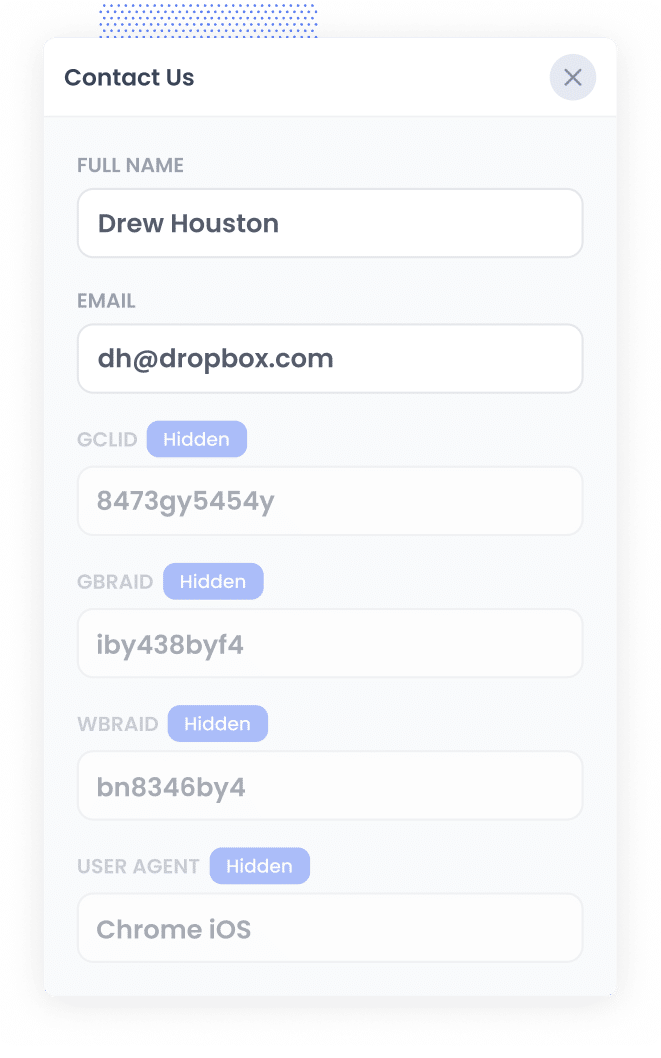
Once Attributer's code is on your site, it'll start tracking where every visitor is coming from automatically.
So when someone clicks one of your Google Ads and lands on your site, Attributer will know they came from your Google Ads and will capture everything Google Ads needs for a server side conversion (GCLID, GBRAID, WBRAID, User Agent, etc) and store it in the visitor's browser.
Then when that visitor completes one of your Tally forms, Attributer writes the data into the hidden fields you set up earlier, and it's captured along with the rest of the form submission.
3. Data is sent to your CRM
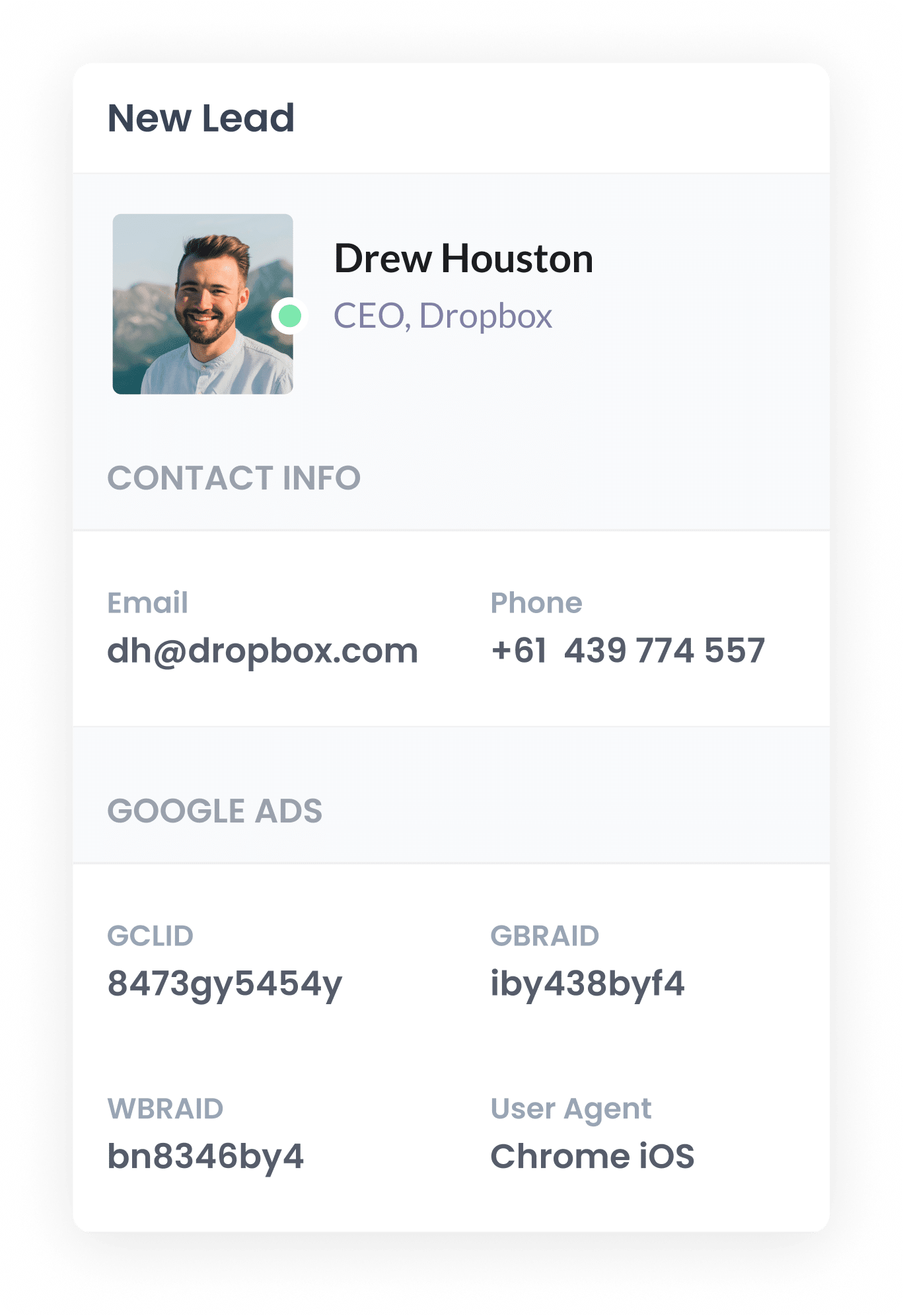
Once the data is captured with the form submission, you can send it through to your CRM alongside the lead's name, email, phone number, and any other information they entered into the form.
Tally has native integrations for Pipedrive, HubSpot, Salesforce, ActiveCampaign, and most of the other major CRMs through its Connect feature, plus a Zapier and Make integration as a fallback for anything else.
The data then sits on the contact/lead record in your CRM, ready to be used when it's time to fire the conversion back to Google Ads.
4. Send the data to Google Ads
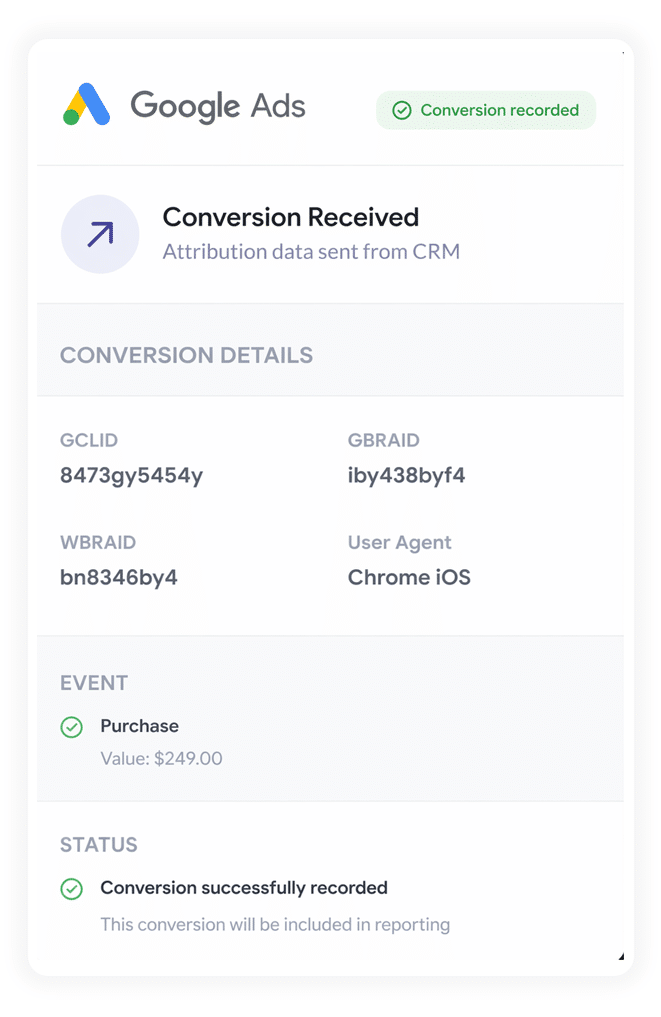
Whenever the lead reaches a certain milestone in your CRM (like a new deal getting created or an opportunity being marked closed won), then you can use that as a trigger to send the conversion back to Google Ads.
Tools like Zapier and Make make this nice and easy. Both connect to almost any CRM, and you can configure them to trigger the Google Ads conversion at whichever point in the sales cycle makes sense for your business (new deal created, deal marked as won, etc). They also give you a nice mapping UI for matching the values Attributer captured (GCLID, GBRAID, WBRAID, User Agent, and so on) back to the right fields in Google Ads.
Why sending server side conversions to Google Ads is the best approach
Server-side conversion tracking ultimately means you have significantly more accurate conversion tracking. And there are a whole lot of benefits to that:
1. More accurate reporting
When you have accurate conversion tracking set up, you can look in your Google Ads account and see how many conversions you got, the conversion rate, your cost per conversion, return on ad spend, and a long list of other metrics.
You can also slice those numbers by campaign, ad group, keyword, individual ad, country, and plenty of other dimensions.
This gives you a huge amount of insight into how your Google Ads are performing, which campaigns are working best, which keywords are driving leads and more. You can then use this to make smart decisions about how to allocate your budget and get more leads.
2. Better automated bidding
When you use manual bidding, you are essentially telling Google "I'm willing to pay $3 a click" and Google will bid up to $3 in any keyword auction you are eligible for.
But with smart bidding, you can tell Google how much you are willing to pay per conversion (I.e. 'I am willing to pay $45 per lead'), and then Google's machine learning algorithms will handle the bidding for you.
It take into account everything it knows about the person searching (age, gender, location, device, purchase history, interests, etc) and decides whether to bid high or low based on how likely it thinks they are to convert.
It's a great way to get more leads at a lower cost, but the whole system only works if your conversion data is reliable. Without it, Google has no way of knowing what a "good" searcher looks like for you, and tends to bid aggressively on the wrong people (which eats through your ad budget and drives costs up).
Server-side tracking makes Google's smart bidding technologies work properly for you. When you send accurate conversion data to Google, their machine-learning algorithms can truly understand what a good lead looks like for you, and can adjust bids to get you more of them (which ultimately means you get more leads at a lower cost because you're not buying clicks from people who would never actually convert).
3. Better retargeting
When Google Ads is receiving accurate conversion data, you can build an accurate remarketing list that includes people who landed on your site but didn't convert. From there, you can re-engage those people in a few different ways:
- Search: You can bid higher (or lower if it makes sense) on those people the next time they search for your keywords.
- Display: You can run Display Network campaigns aimed only at this audience, keeping your brand in front of them as they browse the web.
- YouTube: You can serve YouTube Ads exclusively to these people, so your videos pop up whenever they're watching content on YouTube.
Display and YouTube Ads are cheap, so targeting people who visited your site but didn't convert can be a good way to get additional conversions from the search ads that drove them there in the first place.
3 reports you can run when you properly send conversions to Google Ads from Tally
I've been running marketing teams at various businesses for over 15 years. In that time, I've spent millions of dollars in Google Ads and built hundreds of reports to try figure out which campaigns, ads, keywords, etc were generating the most leads and customers for us.
Out of all of them, here are the 3 reports I've found most consistently useful:
1. Conversions by Keyword
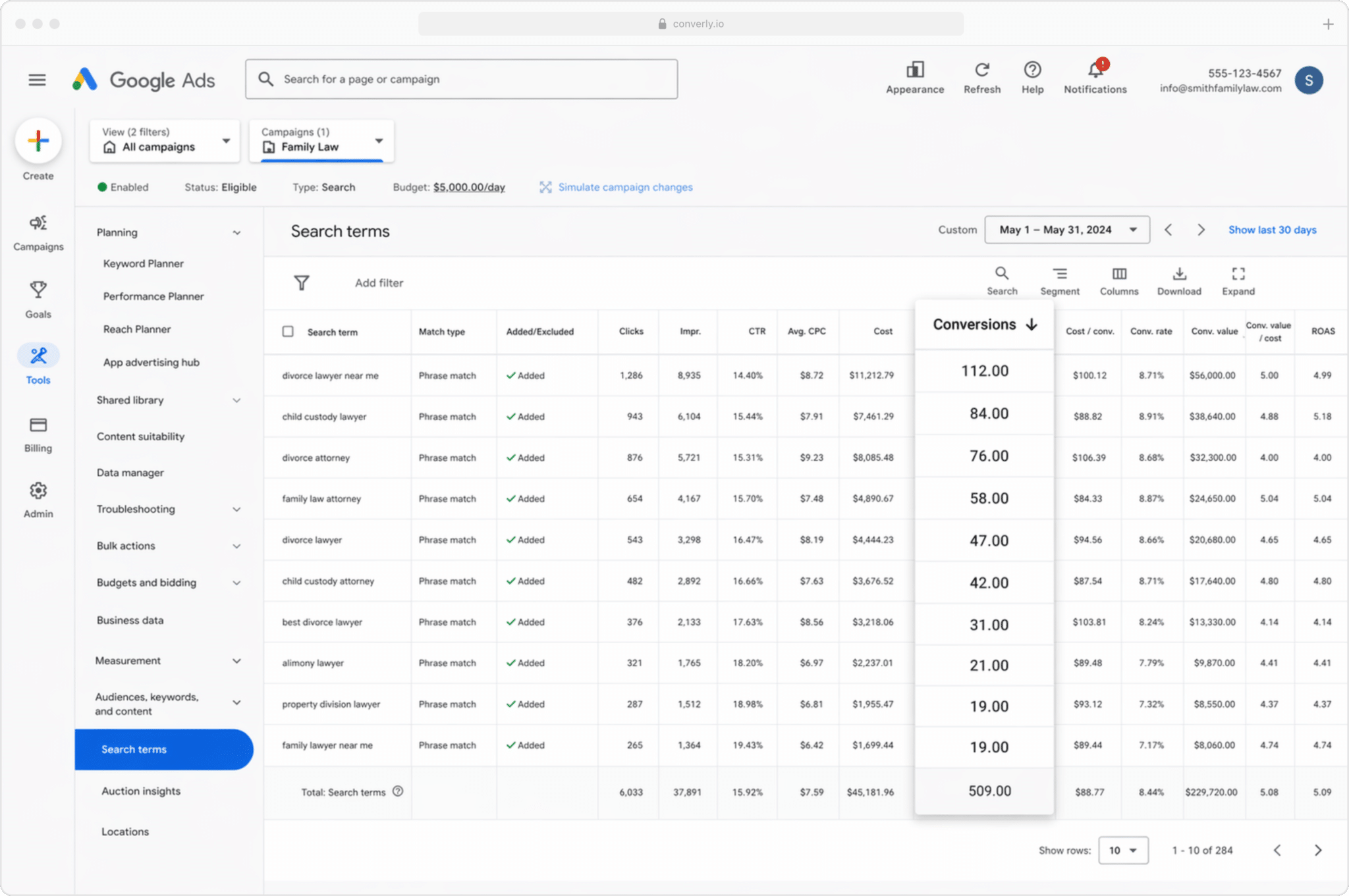
Most businesses running Google Ads end up bidding on multiple keywords across multiple campaigns (often broken out by the type of different services they offer, like a recruiting firm having a campaign for 'legal recruitment' and another one for 'hospitality recruitment').
This report shows you which of those keywords are actually generating conversions, instead of just impressions and clicks that go nowhere.
It helps you understand which keywords are profitable and which ones aren't, so you know where to put more budget for the best return.
2. Conversion Value by Campaign
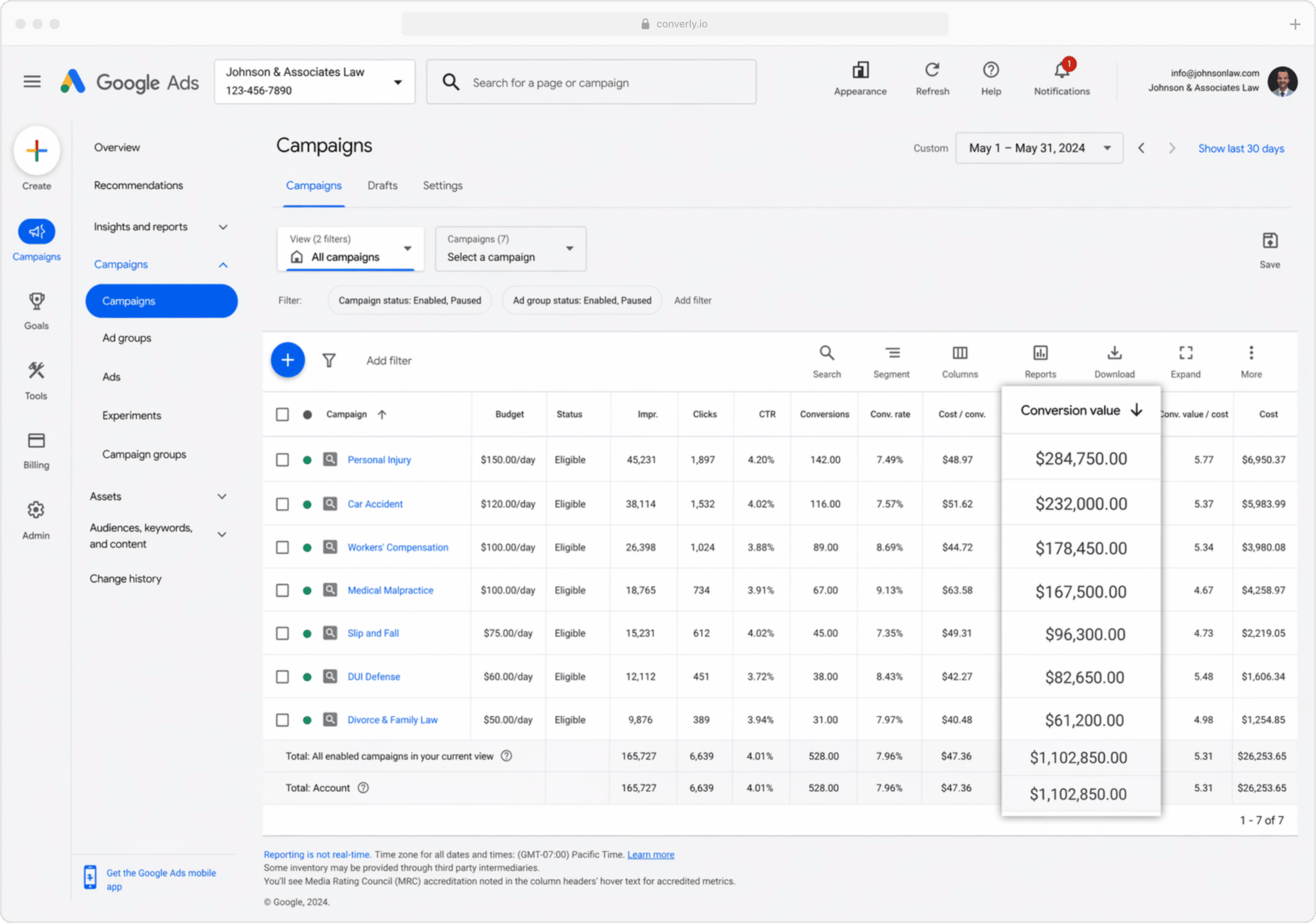
If you're sending conversions back to Google Ads from your CRM, you can also include the value of each conversion (which would normally be populated from the value of the deal or opportunity attached to the lead in your CRM).
This is important because not all customers are equal. Continuing the recruiting example from above, getting a new client from the 'legal recruiting' campaign is likely far more profitable than winning a client from the 'hospitality recruiting' campaign (lawyers get paid more, so the commission is higher). Because of this, you really shouldn't treat those two conversions as equals.
But if you send a conversion value from your CRM to Google Ads, you can run reports that show much actual revenue you generated from each campaign you're running. That makes it much easier to decide which campaigns to put more budget into and which ones to cut (because you can literally see on the screen how much revenue you're making from each one versus how much you've spent on it).
3. Conversions by Geography
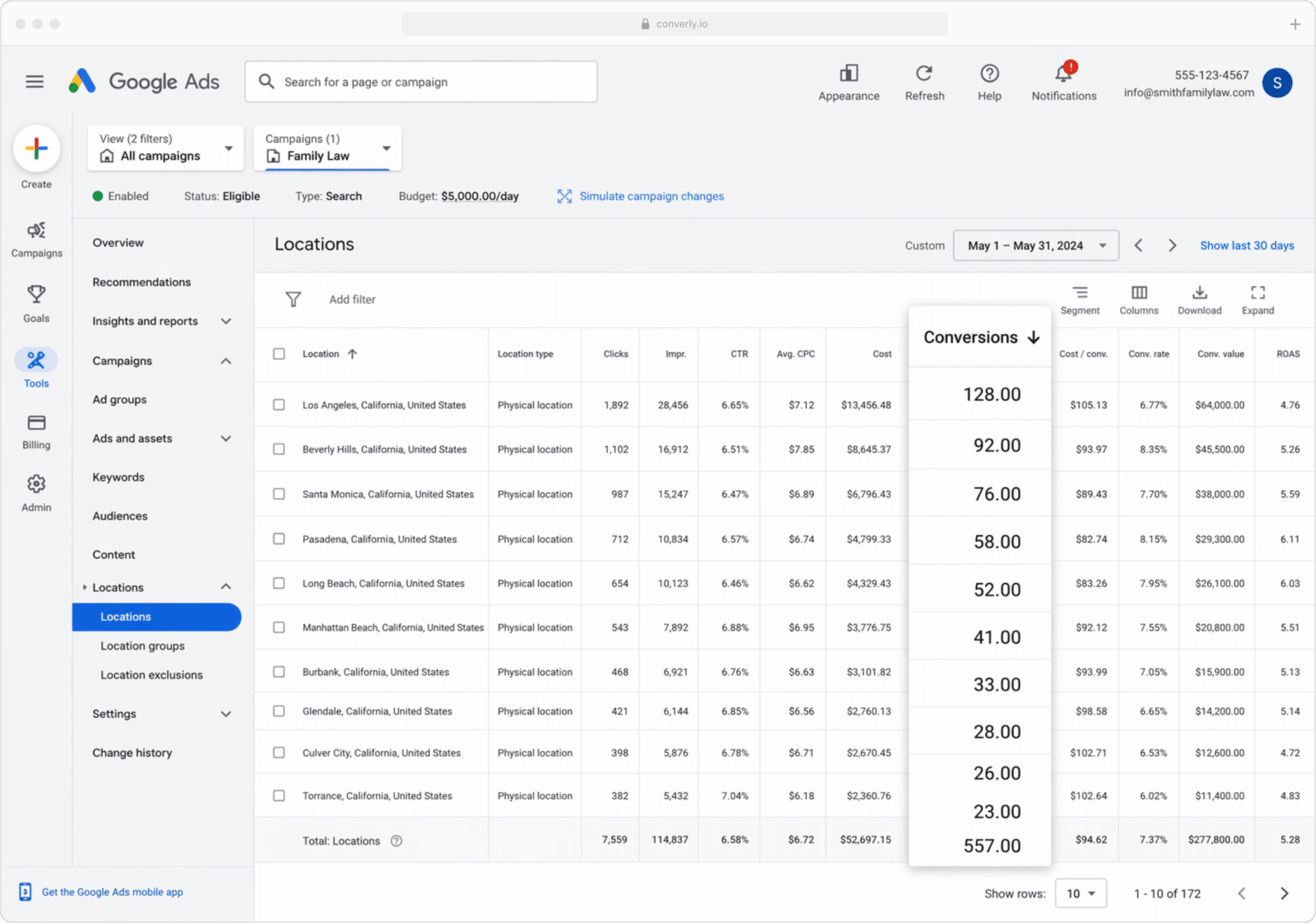
This report is especially useful for businesses that earn most of their revenue locally (like driving schools, music schools, dance studios, martial arts schools, and so on). It breaks your conversions down by geographical region.
You can view the numbers at a high level (country, state, or city), or drill all the way down to a specific postcode. That tells you whether you are actually getting leads from people in your area, or whether you're paying for clicks from people in suburbs too far away to actually become paying customers.
From there, Google's Location Bid Adjustments give you a way to act on it. Tell Google to bid more aggressively in the postcodes that consistently produce paying customers, and pull bids back (or cut them entirely) in the areas that aren't working for you.
Wrap up
Sending server side conversions to Google Ads ensures you get the best possible results from your Google Ads.
Not only does it give you accurate reporting on the amount of conversions you're getting per campaign, keyword, etc, it gives Google's algorithms the data they need to make smarter automated bidding decisions for you.
But it only works well if the conversion data going in is accurate. If you're tracking thank you page visits or firing events in the browser through Google Tag Manager, you're not really sending proper data, and your Google Ads performance will reflect it.
So whether you fire the conversion the second the form is submitted (using Converly) or hold off until the lead becomes a paying customer (using Attributer + your CRM + Zapier), make sure you're sending conversions to Google Ads server side. That's where the real lift in performance comes from.
Get Started For Free
Start your 14-day free trial of Attributer today!

About the Author
Aaron Beashel is the founder of Attributer and has over 15 years of experience in marketing & analytics. He is a recognized expert in the subject and has written articles for leading websites such as Hubspot, Zapier, Search Engine Journal, Buffer, Unbounce & more. Learn more about Aaron here.