
Track leads & customers from AI in SugarCRM
Learn how to track how many leads & customers AI tools like ChatGPT are generating in SugarCRM
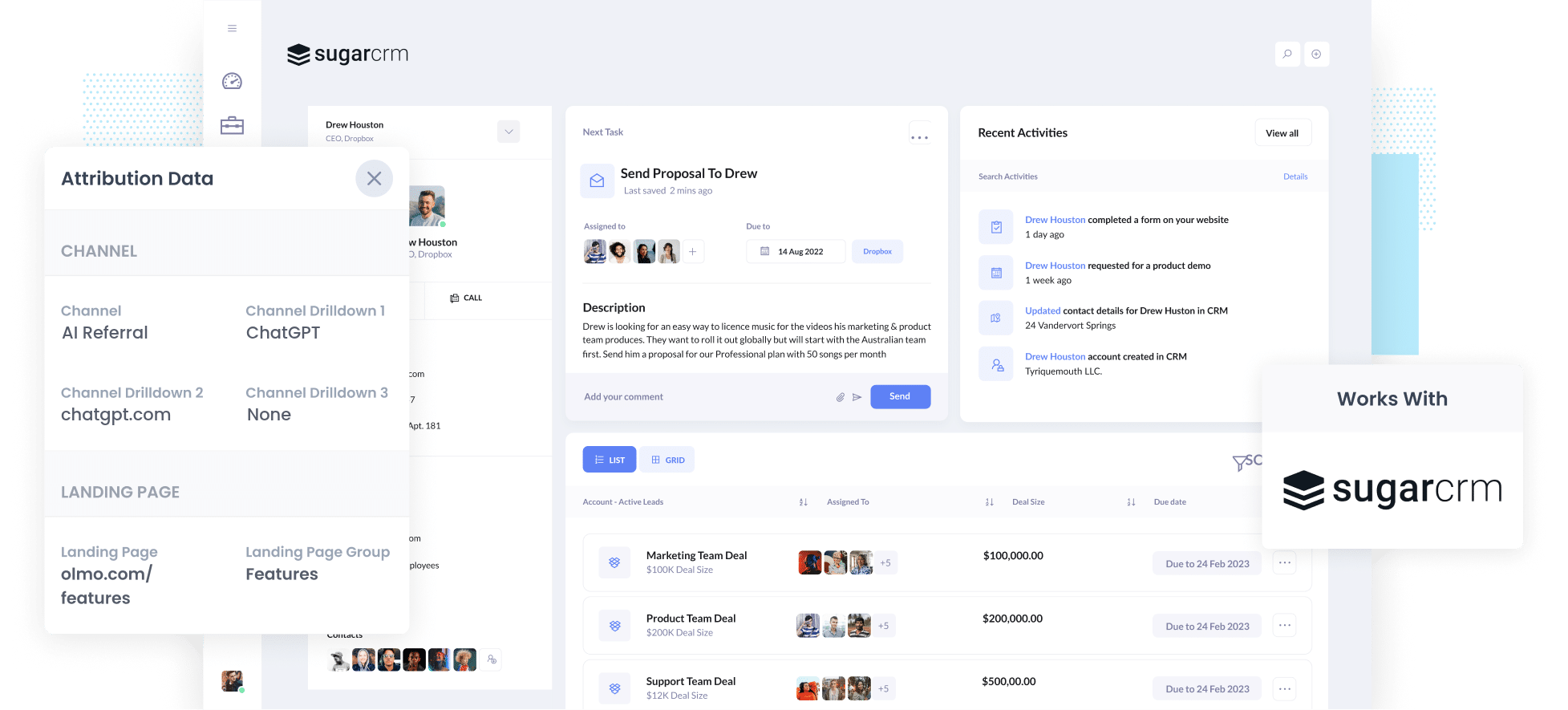
Use Attributer to capture AI referral data (like the fact a lead arrived from ChatGPT) with every form submission, pass it into SugarCRM, and then run reports showing how many leads and customers AI chatbots are actually generating for your business.
Can you tell where a new lead in SugarCRM actually came from? Was it a paid search ad, did they come from Facebook, or maybe ChatGPT sent them your way?
It may well be the latter. Buyers are increasingly starting their research inside AI tools, and that trend has nowhere to go but up. But most AI tracking tools only tell you how often your brand gets mentioned in those conversations; they won't tell you how many of those mentions turned into leads, how many became paying customers, or how much revenue was generated.
There's a simple way to close that gap, though.
This guide walks through how to use Attributer to capture AI referral data with every new lead that lands in SugarCRM, plus we'll show you a few reports you can build to see exactly what ChatGPT, Claude and Gemini are contributing to your pipeline.
4 steps to track leads & customers from AI in SugarCRM
Getting AI referral data into SugarCRM with Attributer is a straightforward process. Here's what it looks like:
1. Install Attributer and add hidden fields
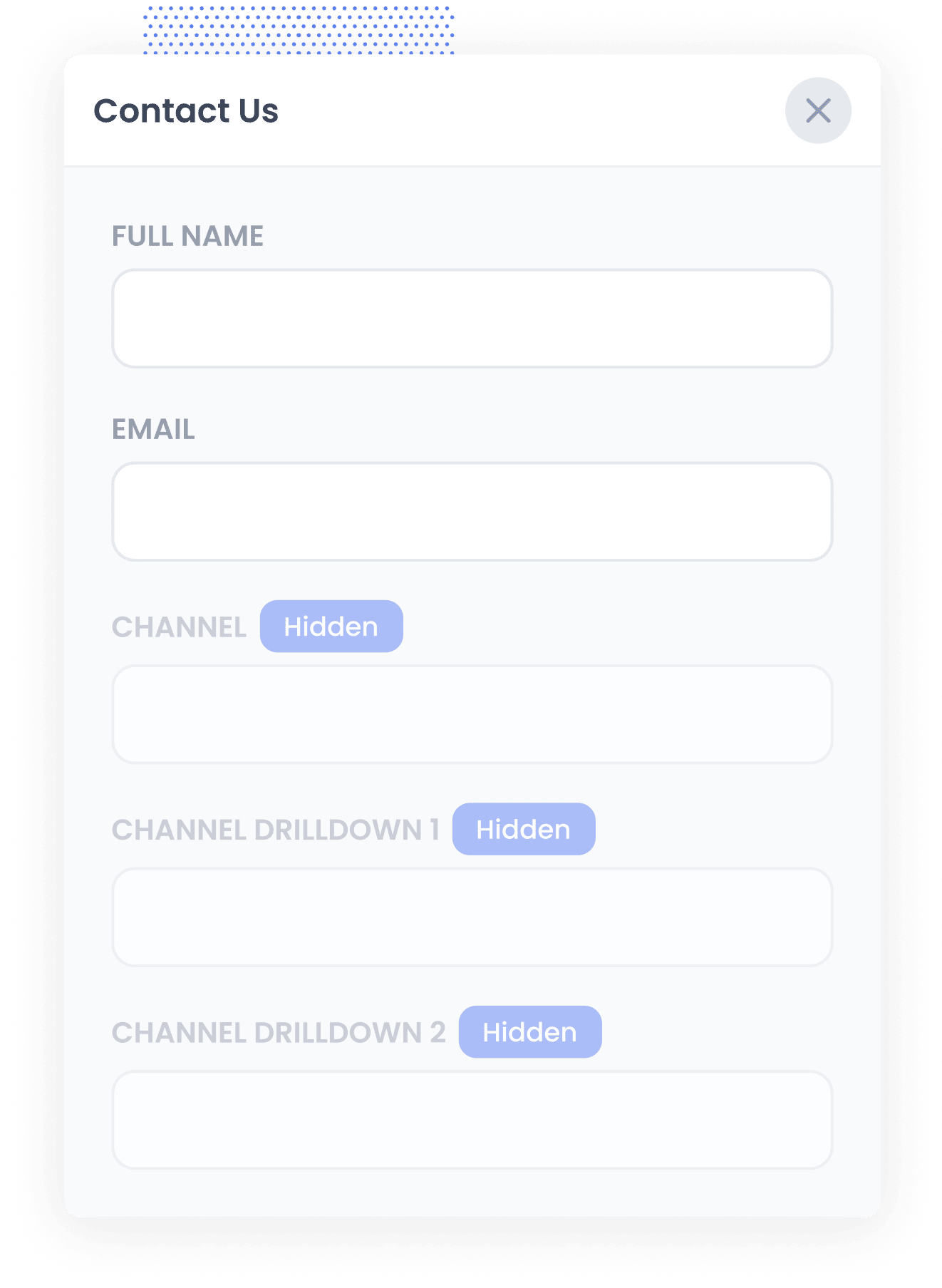
When you start a 14-day free trial of Attributer, you'll be given a snippet of code to add to your site. You'll find instructions for that here.
Once the code is added, add four hidden fields to the forms on your site that you use to capture leads:
- Channel
- Channel Drilldown 1
- Channel Drilldown 2
- Channel Drilldown 3
Most form builders make this straightforward. You can usually either add a dedicated hidden field, or you can add a regular text field and set it to be hidden in the field settings. Step-by-step guides covering Gravity Forms, Wix Forms, Webflow Forms, and dozens more are here.
2. Attributer writes AI data into the hidden fields
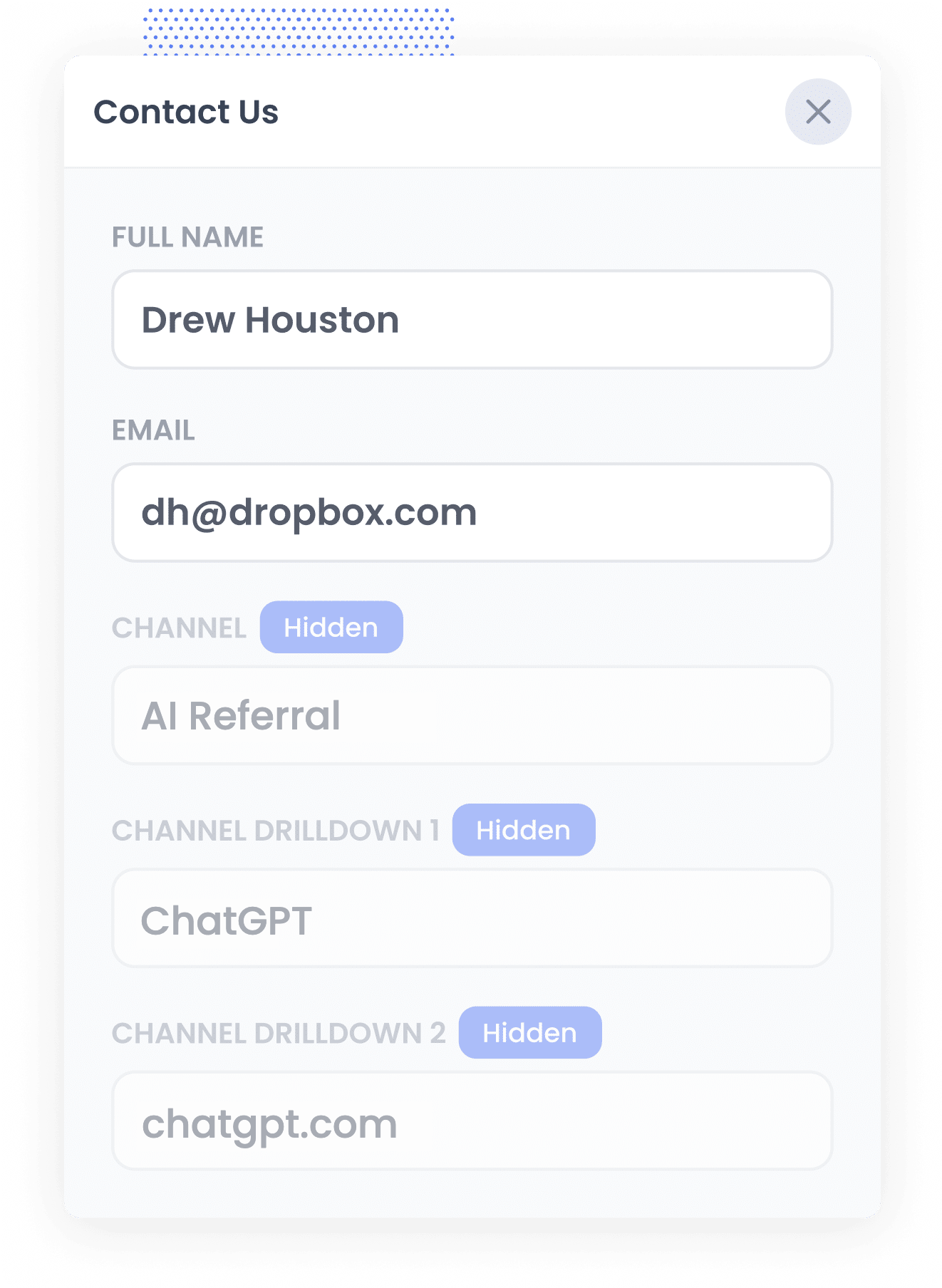
As soon as a new visitor lands on your site, Attributer looks at a bunch of technical signals (UTM parameters, referring domain, etc) to work out where they came from.
It then assigns that visitor a channel (like AI Referral, Organic Search, Paid Search, Paid Social, etc) and stores the data on where they came from in the visitor's browser.
When the visitor eventually fills out a form (like a 'Book a Demo' or 'Request a Quote' form), Attributer writes what it knows about their source straight into the hidden fields.
3. AI data is captured with each lead
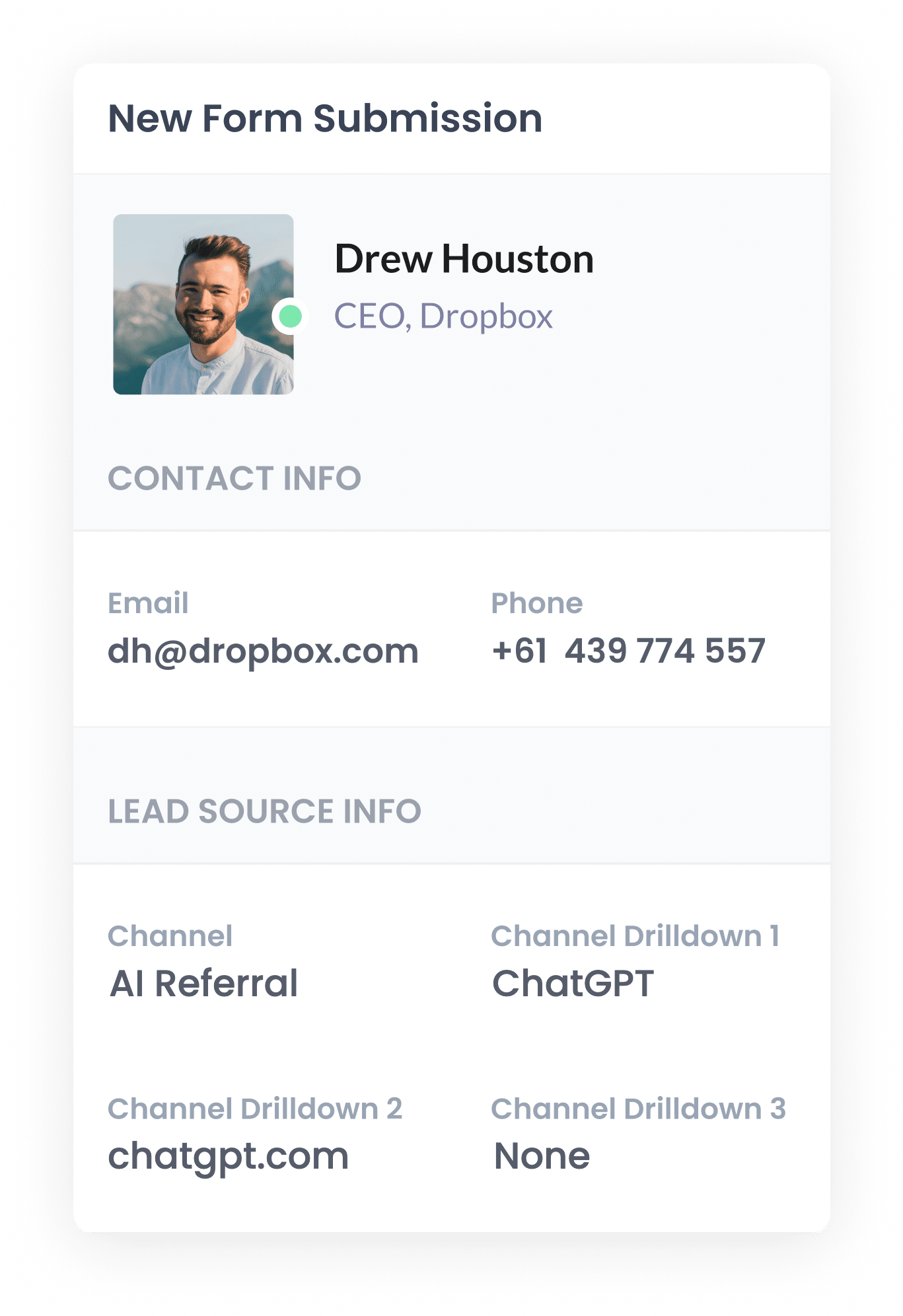
When the form is submitted, everything Attributer wrote into those hidden fields gets captured by your form tool right alongside the lead's name, email, phone number, and so on.
Attributer plugs into more than 50 form builders, scheduling tools, and chat products, including Gravity Forms, Contact Form 7, Wix Forms, Webflow Forms, Typeform, Jotform, Calendly, and more.
4. AI data is sent to SugarCRM
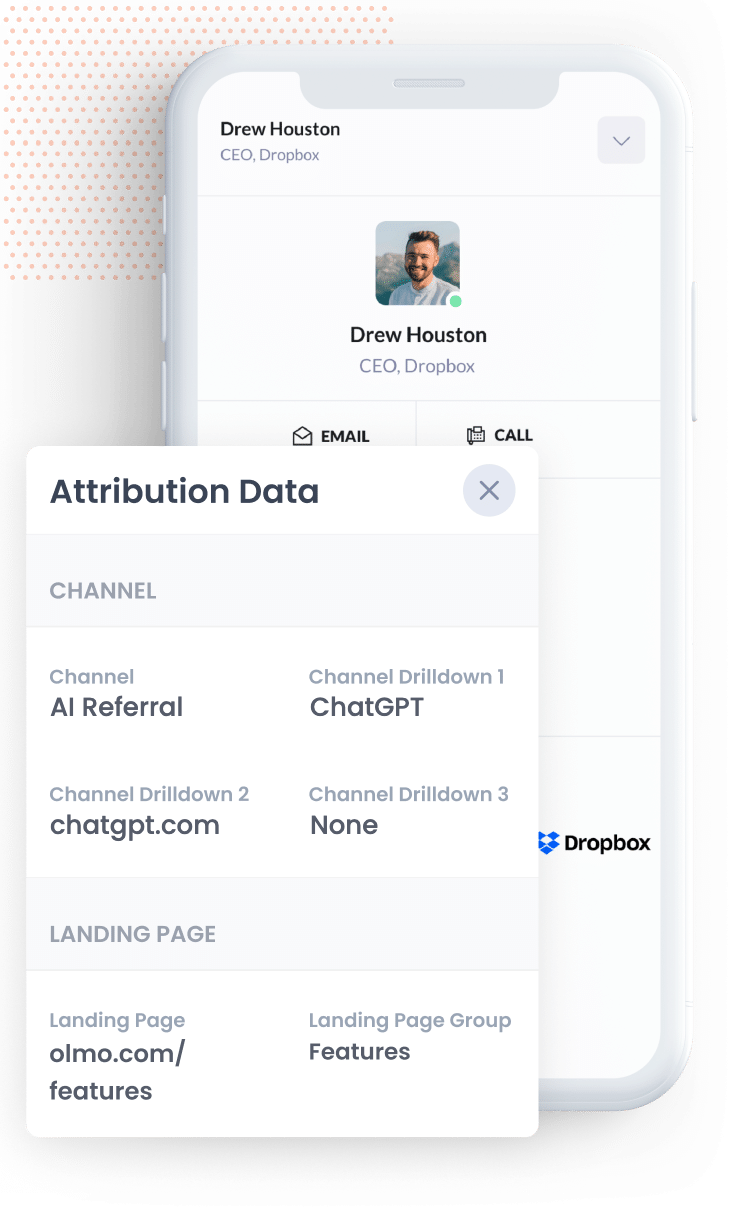
From here, that data has to make its way from your form tool into SugarCRM.
Many form builders come with a native SugarCRM integration you can turn on, so each new submission automatically creates a record in Sugar with all the details attached. For the ones that don't have a built-in connection, Zapier or Sugar's REST API can bridge the gap instead.
Once it's landed in SugarCRM, the AI referral data sits on the record next to the lead's name, email, phone number and everything else you already capture, ready for reporting.
When you're ready to run some reports to see how many leads you get from AI tools, Sugar's built-in Reports module is a good place to start. And if you want to go further, connecting an analytics tool like Looker Studio, Databox or Microsoft Power BI lets you slice the data however you need (or you can connect tools like ChatGPT or Claude to your SugarCRM account and have it run the analysis for you).
What data gets captured
Attributer passes through two kinds of information about each lead. There's how they arrived at your site (the channel), and what content brought them there (the landing page).
Say you handle marketing for a commercial real estate agency. If someone asked ChatGPT for help finding office space in a particular market, then clicked through and submitted an enquiry, here's what Attributer would capture:
- Channel = AI Referral
- Channel Drilldown 1 = ChatGPT (whichever AI tool referred them)
- Channel Drilldown 2 = chatgpt.com (the domain they arrived from)
- Channel Drilldown 3 = None (there's no further detail to capture for an AI referral, so this comes through as None)
You'd also capture the page they first landed on. Continuing the example, that might be:
- Landing Page = meridianrealty.com/listings/downtown-office-space
- Landing Page Group = /listings
The landing page shows you exactly which pages AI tools are citing, which tells you what topics are worth building more content around.
4 example reports you can run when you capture AI data in SugarCRM
I've spent over 15 years in marketing, and I've built more reports than I'd care to count trying to work out which channels actually move the needle. Below are four I think are useful for tracking AI referral:
1. Leads by Channel
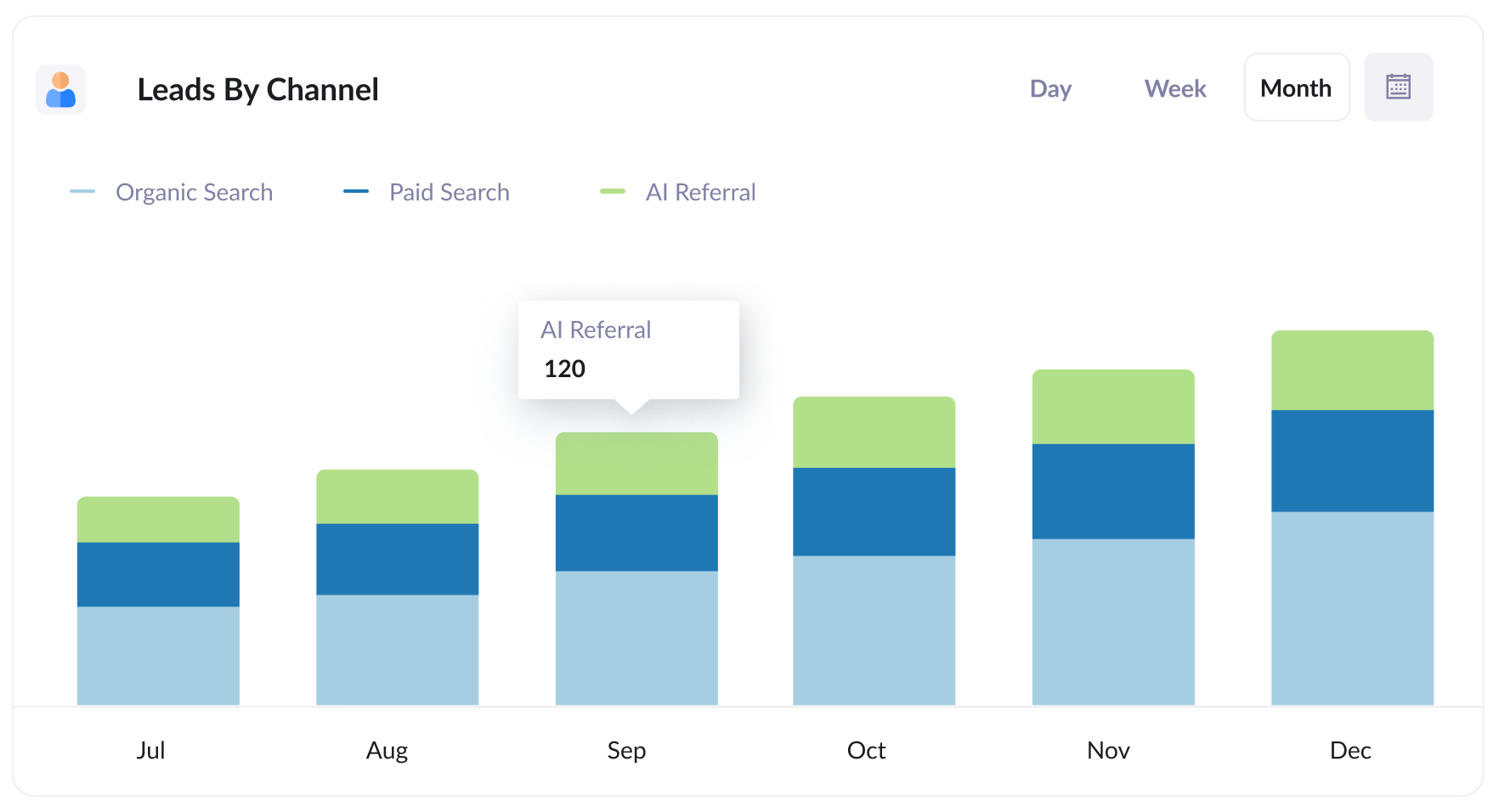
This report shows how many leads you're bringing in each month broken down by channel, so AI Referral sits right alongside Organic Search, Paid Search, Paid Social, and all your other channels.
It's a fast way to see how AI Referral stacks up against every other channel driving leads for your business.
2. Customers by AI tool
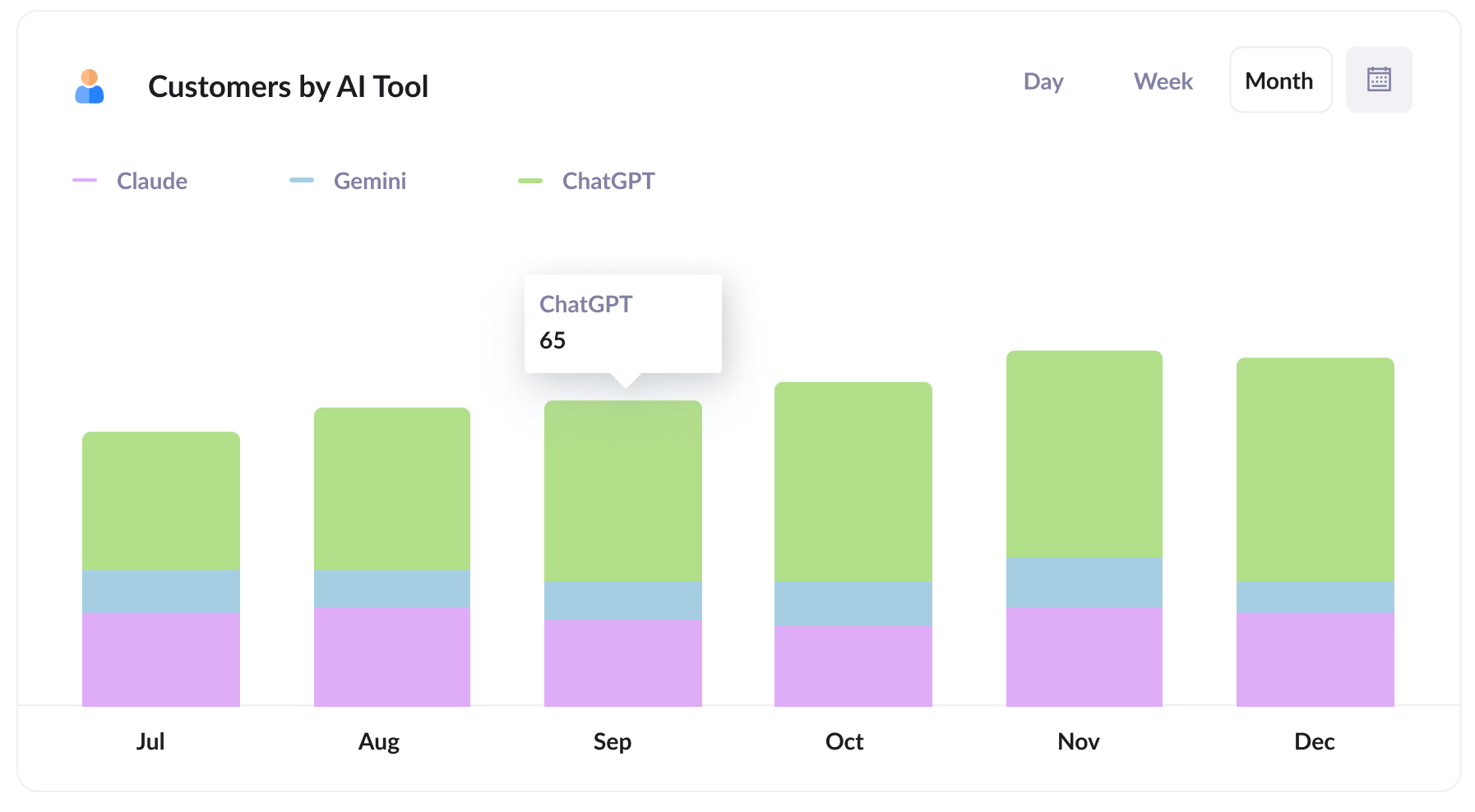
This one shows how many new customers you've received from AI referral, broken down by the AI tool that actually sent them. It allows you to see whether ChatGPT is outperforming Claude and Gemini, or the other way around.
Knowing which tool converts into paying customers, rather than just driving traffic or mentions, tells you where to focus. If most of your AI customers come through a single tool, that would probably suggest it's the one your target customers are using the most (and therefore it's the one worth doubling down on).
3. Close rate by channel
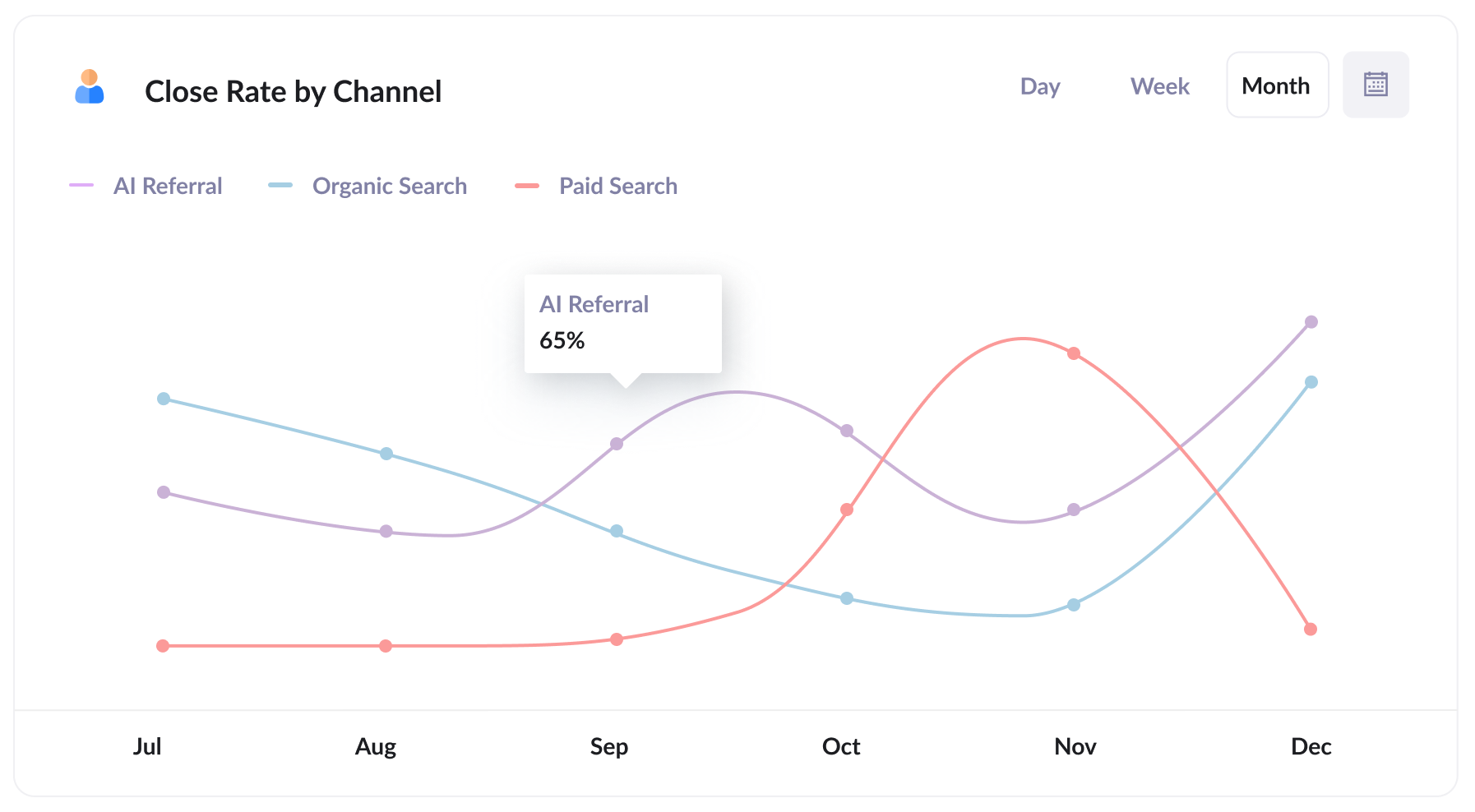
This report shows your lead-to-customer conversion rate broken down by channel.
It's worth watching because the channel a lead comes from often shapes how likely they are to convert. You could well find that 35% of your AI Referral leads become customers, versus 10% from Organic Search and 7% from Paid Search. This tends to happen because a lead coming from an AI tool has usually already had their basic questions answered before they ever land on your site, so they show up more qualified.
Ultimately, this would mean an AI lead is worth several times more than one from paid search, which can change where your next dollar of budget goes.
4. Revenue from AI by landing page
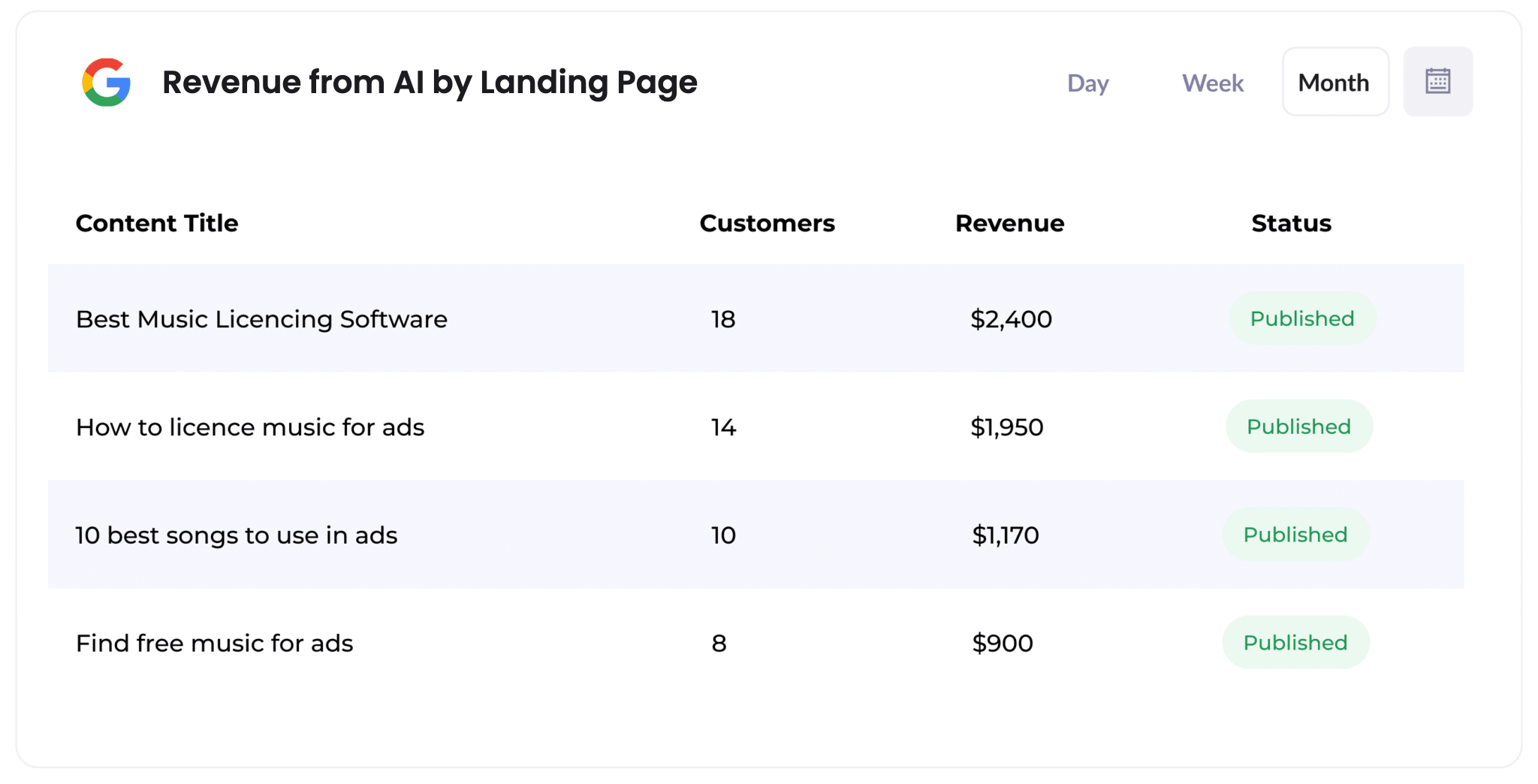
This report shows how many customers (and how much revenue) each page on your site has generated from AI referrals.
It's the clearest way to see which pages AI tools are actually sending qualified buyers to. If most of your revenue traces back to a handful of pages, you've got a pretty clear brief for what to write next.
Wrap Up
If you've been guessing at how many of your leads and customers are actually coming from AI tools, using Attributer with SugarCRM is a simple way to get a real answer.
Attributer is free to start with, and setup usually takes less than 10 minutes. Start your 14-day free trial today!
Get Started For Free
Start your 14-day free trial of Attributer today!

About the Author
Aaron Beashel is the founder of Attributer and has over 15 years of experience in marketing & analytics. He is a recognized expert in the subject and has written articles for leading websites such as Hubspot, Zapier, Search Engine Journal, Buffer, Unbounce & more. Learn more about Aaron here.