
Track leads & customers from AI in Ninja Forms
Here's how to find out how many leads you're actually generating from AI tools like ChatGPT, Claude & Gemini through your Ninja Forms.
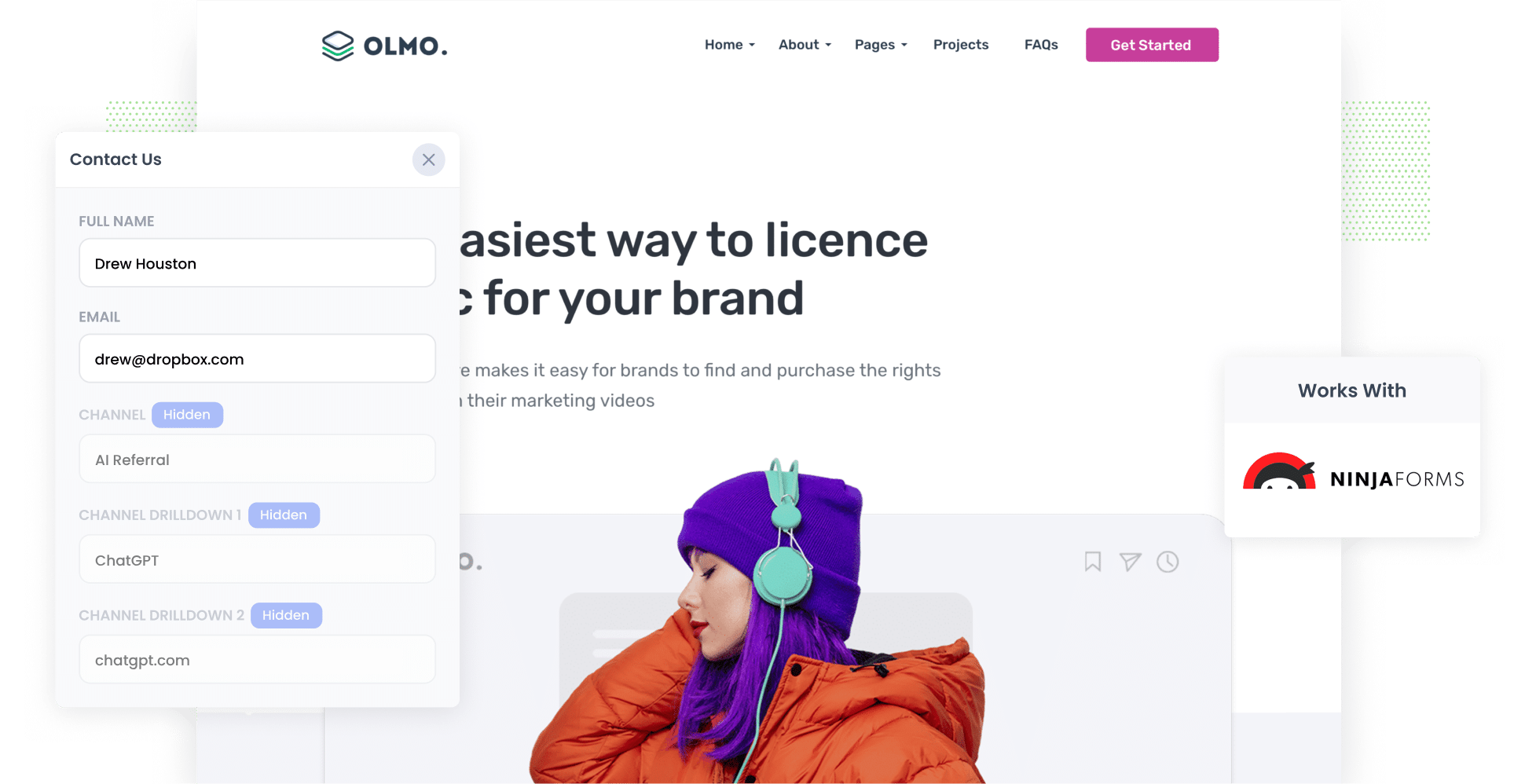
Attributer captures AI referral data (like the fact a lead came from ChatGPT) with every Ninja Forms submission. You can then pass it on to your CRM and other tools, and run reports showing how many leads and customers AI is really sending you.
How many of your leads are actually coming from AI tools like ChatGPT, Claude and Gemini?
Most of the conversation right now is about earning 'mentions' and 'citations' in AI answers. But the numbers that really matter are how many leads AI sends you, how many of those turn into customers, and how much revenue they're generating for you.
So how do you get those numbers?
In this article, we'll show you how to use a tool called Attributer to capture AI referral data with every Ninja Forms submission. We'll also walk through a few reports you can run to see exactly how many leads and customers AI is bringing in.
4 steps to track leads & customers from AI in Ninja Forms
Using Attributer with Ninja Forms makes it simple to see how many leads AI tools are sending your way. Here's how it works:
1. Install Attributer and add hidden fields to your forms
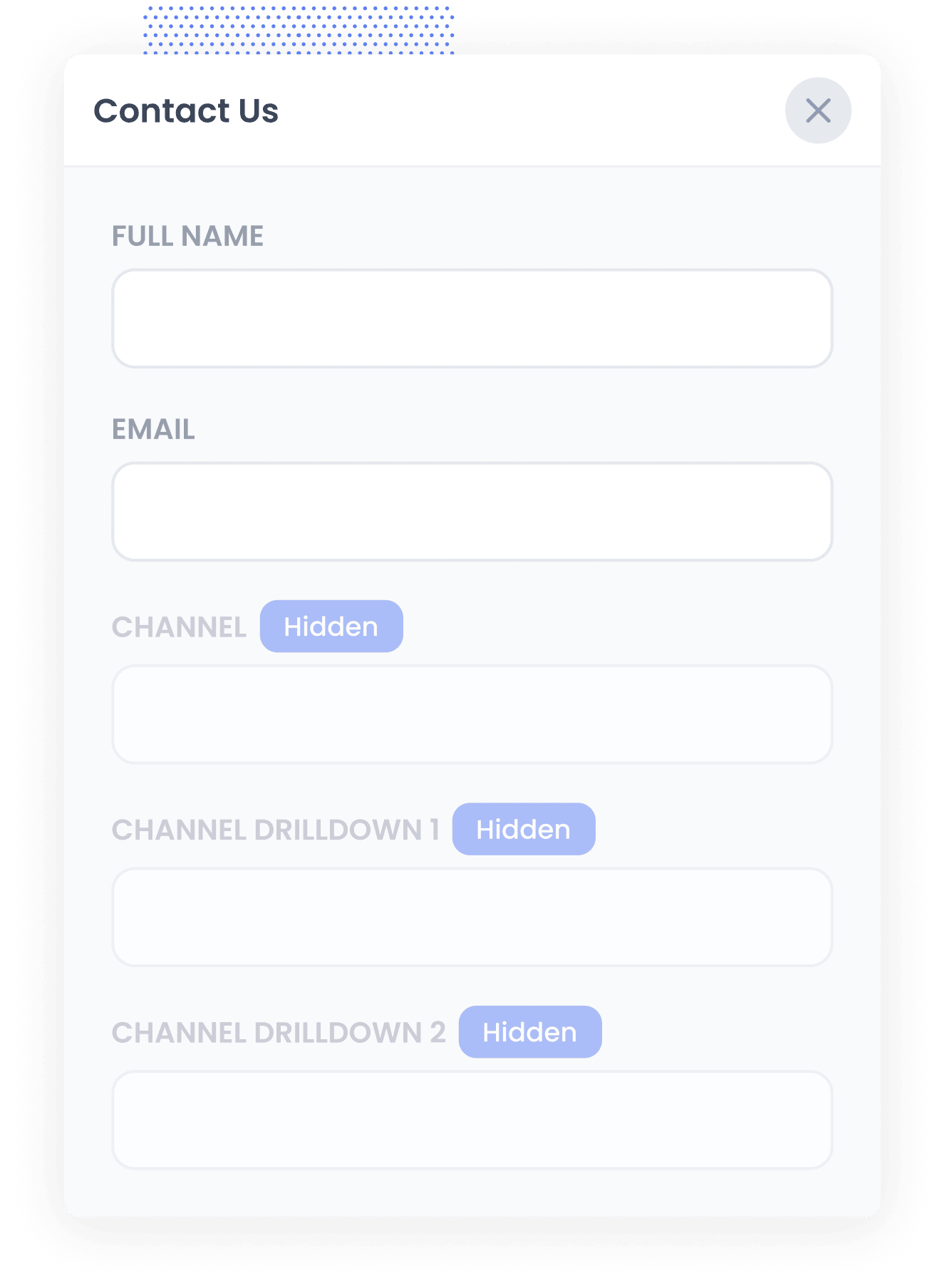
When you sign up for a 14-day free trial of Attributer, you'll be given a small snippet of code to add to your website. You can find instructions for installing it here.
Once that's installed, you need to add a set of hidden fields to the Ninja Forms you want to track. These are:
- Channel
- Channel Drilldown 1
- Channel Drilldown 2
- Channel Drilldown 3
- Landing Page
- Landing Page Group
To add them, open your form from the Ninja Forms menu in your WordPress admin and drag 6x 'Hidden' fields into it. Then click on each one to give it a label and a default value (you'll find the exact values in the setup guide that is available here).
2. Attributer works out where each visitor came from
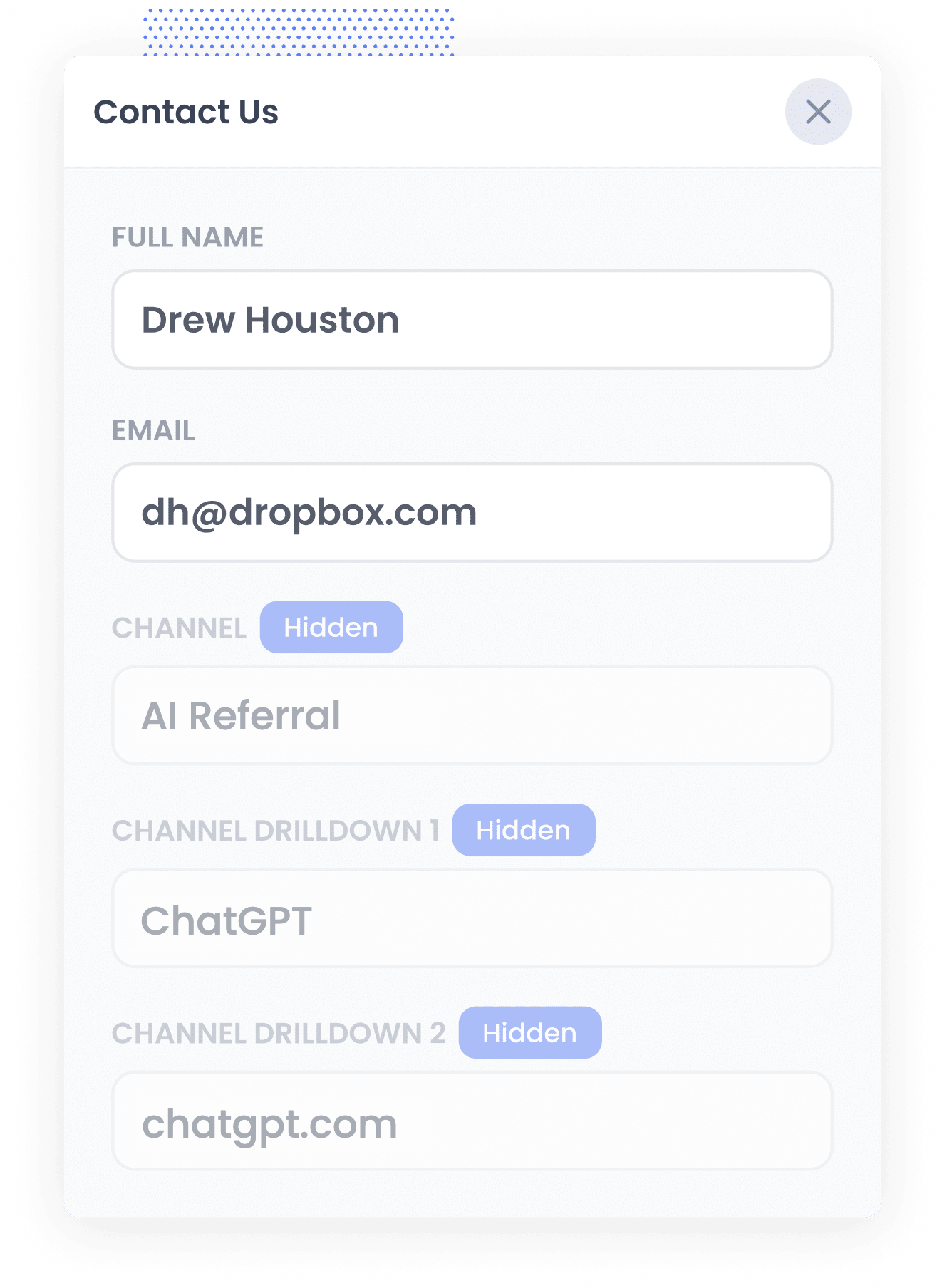
Every time someone lands on your website, Attributer looks at a range of signals to work out how they found you.
From there, it categorises the visitor into a channel like AI Referral, Organic Search, Paid Search or Paid Social, and stores that in their browser.
Then, when that same visitor fills in one of your Ninja Forms (for example your 'Request a Quote' or 'Contact Us' form), Attributer writes the details of where they came from into the hidden fields.
3. AI data is captured with the submission
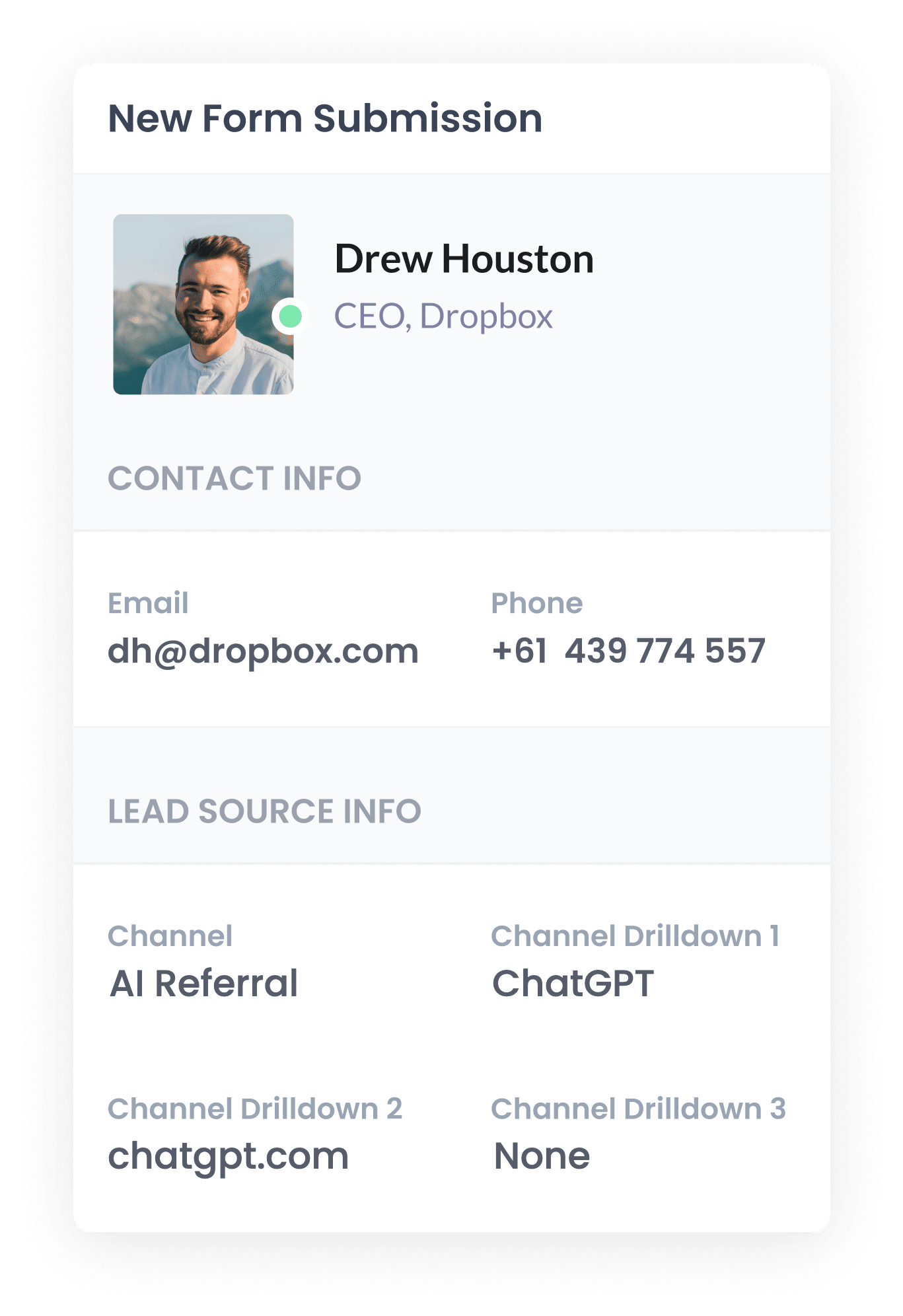
When the form is submitted, Ninja Forms captures the AI referral data that Attributer wrote into the hidden fields with each form submission (alongside the lead's name, email and anything else they entered).
You'll then be able to see it against each entry under Ninja Forms > Submissions in your WordPress dashboard, and you can add it to the email notifications Ninja Forms sends whenever a new lead comes through.
You can also send it on to your CRM and other tools (like a spreadsheet or email marketing platform) using Ninja Forms' add-ons for tools like HubSpot, Salesforce and Zoho. If you don't use one of those, then you can use third-party integration tools like Zapier or Make to send the data to your CRM with each new lead.
4. Report on AI leads
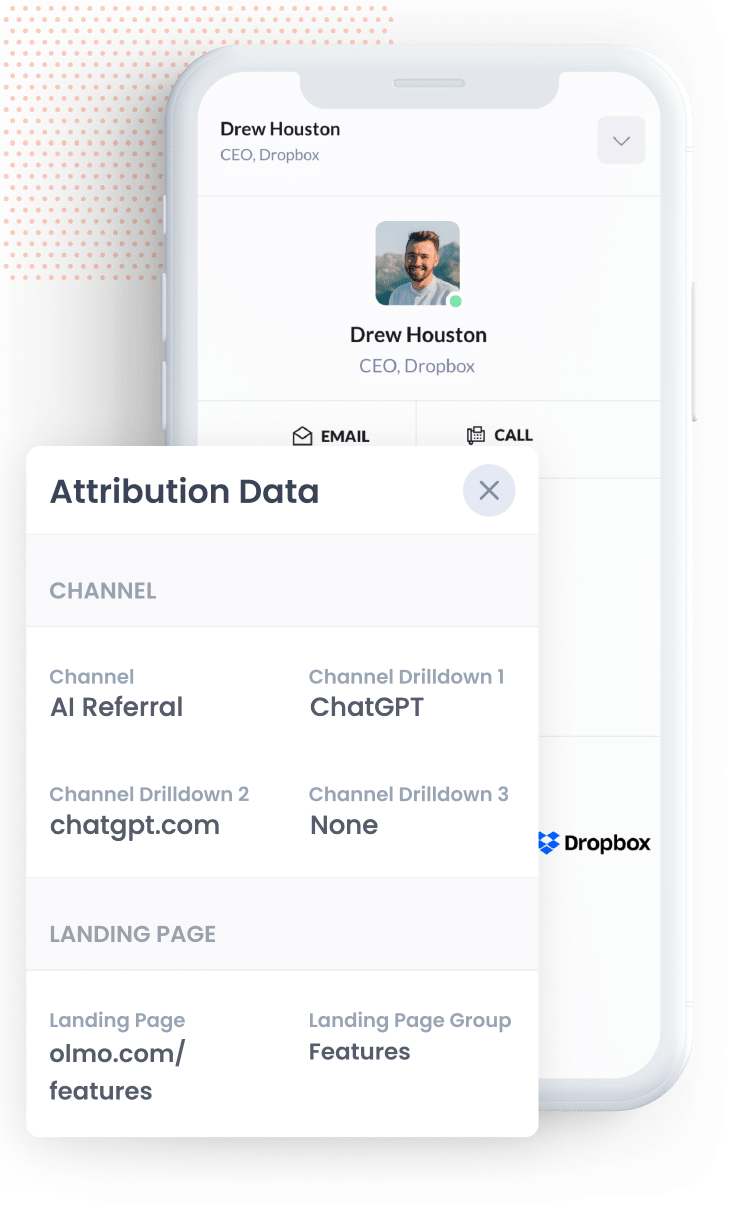
With the data in your CRM (or wherever you store your leads), you can run reports showing how many leads and customers came from AI, which AI tools referred them, what content drew them in, and how much revenue they produced.
The built-in reporting in most CRMs is more than enough for these reports, though you can also connect a dedicated tool like Tableau, Google Data Studio or Microsoft Power BI and build them there.
And if you'd prefer to just ask the question, connect Claude or ChatGPT to your CRM and type "How many leads came from AI referral this month?"
What data gets captured
For each lead, Attributer passes through two kinds of information. The first is how they reached your site (the channel), and the second is which content brought them there (the landing page).
Imagine you run marketing for a construction firm, and a property developer asks ChatGPT to suggest a nearby commercial builder with experience. They follow the link to your site and fill in your Ninja Forms quote request. Here's what would be captured with the submission:
- Channel = AI Referral
- Channel Drilldown 1 = ChatGPT (or whichever AI tool referred them)
- Channel Drilldown 2 = chatgpt.com (the domain they arrived from)
- Channel Drilldown 3 = None (an AI referral has no further level of detail, so this shows as None)
You'd also see the first page they landed on. In the same example, that might look like this:
- Landing Page = harlowconstruction.com/sectors/healthcare
- Landing Page Group = /sectors
The landing page data shows you which pieces of your content AI tools are reading and recommending, so you know where to focus your next round of content.
4 example reports you can run when you capture AI data in Ninja Forms
In 15 years of marketing, I've built countless reports trying to work out which channels were pulling their weight and which weren't. These are the 4 I've found most useful (each one is easy to run once you're sending the AI data provided by Attributer to your CRM):
1. Leads by Channel
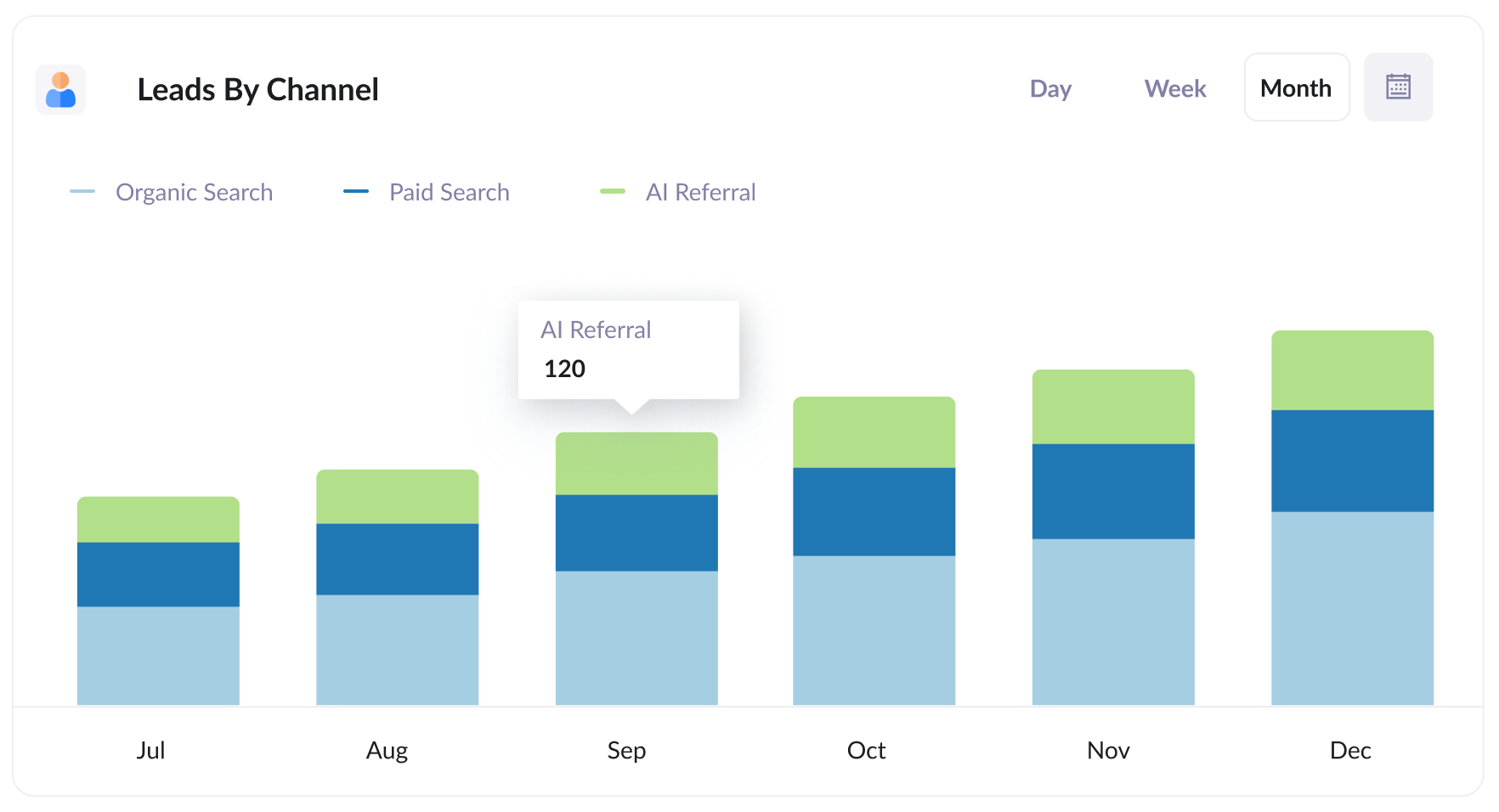
This report shows how many leads you generate each month, broken down by the channel they came from (AI Referral, Organic Search, Paid Search, Paid Social, and so on).
It shows exactly how many leads AI is sending you, and lets you compare that with your other channels so you can judge how much it really matters to your business.
2. Customers by AI tool
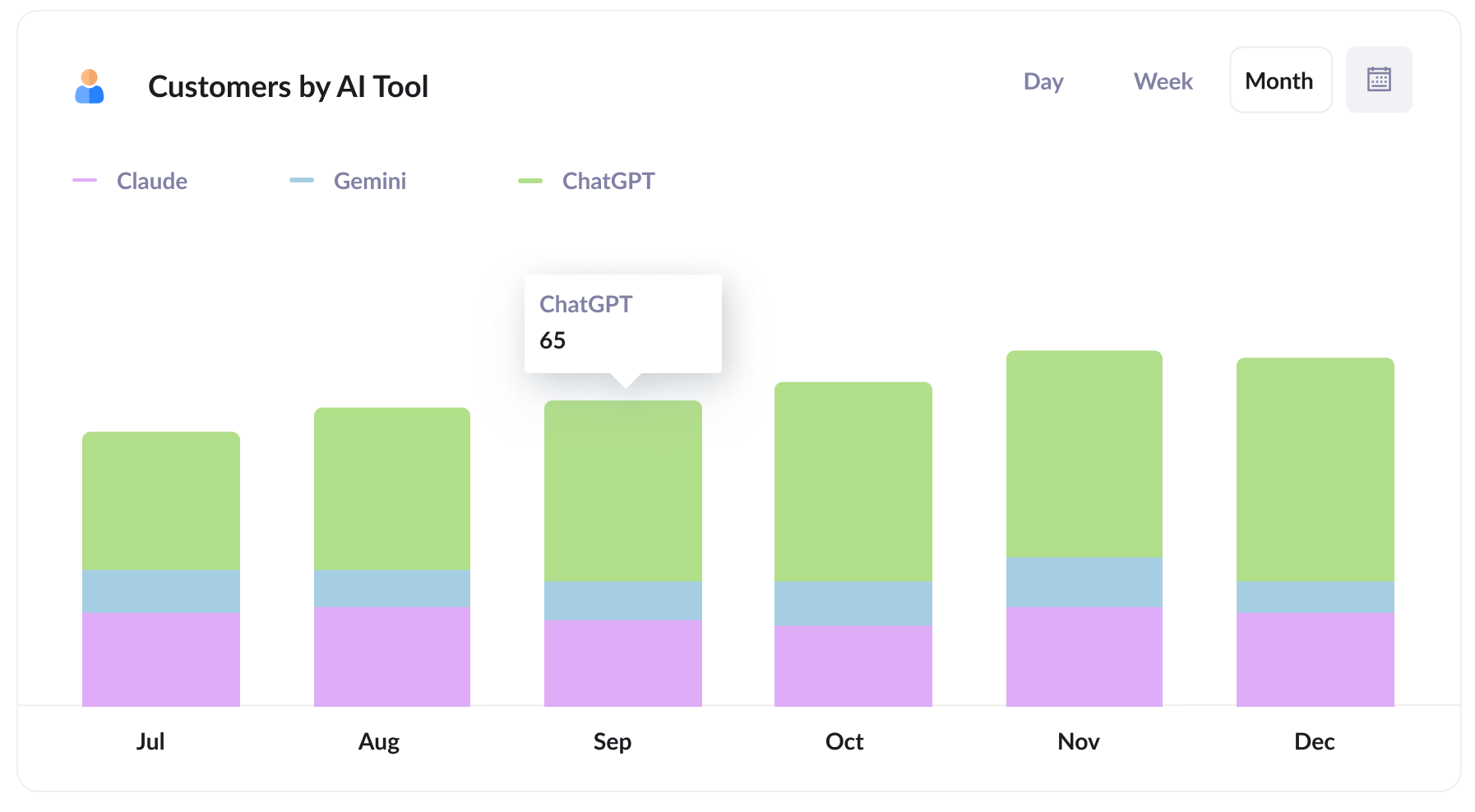
This report shows how many new customers you win each month from AI, broken down by the AI tool that referred them.
It lets you compare ChatGPT with tools like Claude and Gemini to see which ones deserve your focus. If most of your leads come from ChatGPT, for instance, that's probably the tool your target market relies on, and it's likely where your efforts will deliver the best return.
3. Close rate by channel
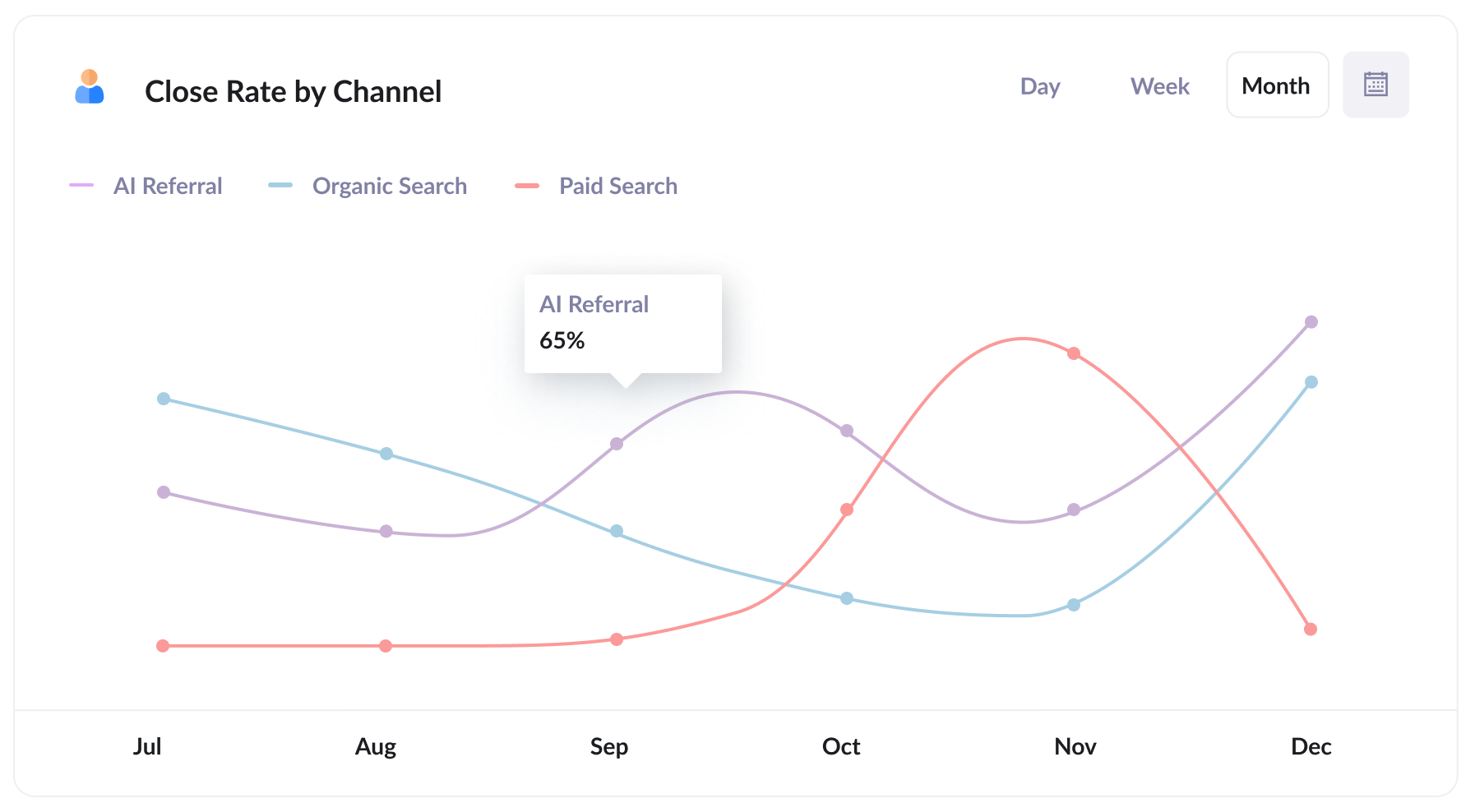
This report shows how often leads become customers, broken down by the channel they came from.
This is an interesting report to run, because you might find that something like 35% of your AI Referral leads become customers, compared with 10% of Organic Search leads and 7% of Paid Search leads.
If your numbers look anything like that, a lead from an AI tool is worth several times one from paid search, and that should influence where you put your time and budget.
4. Revenue from AI by landing page
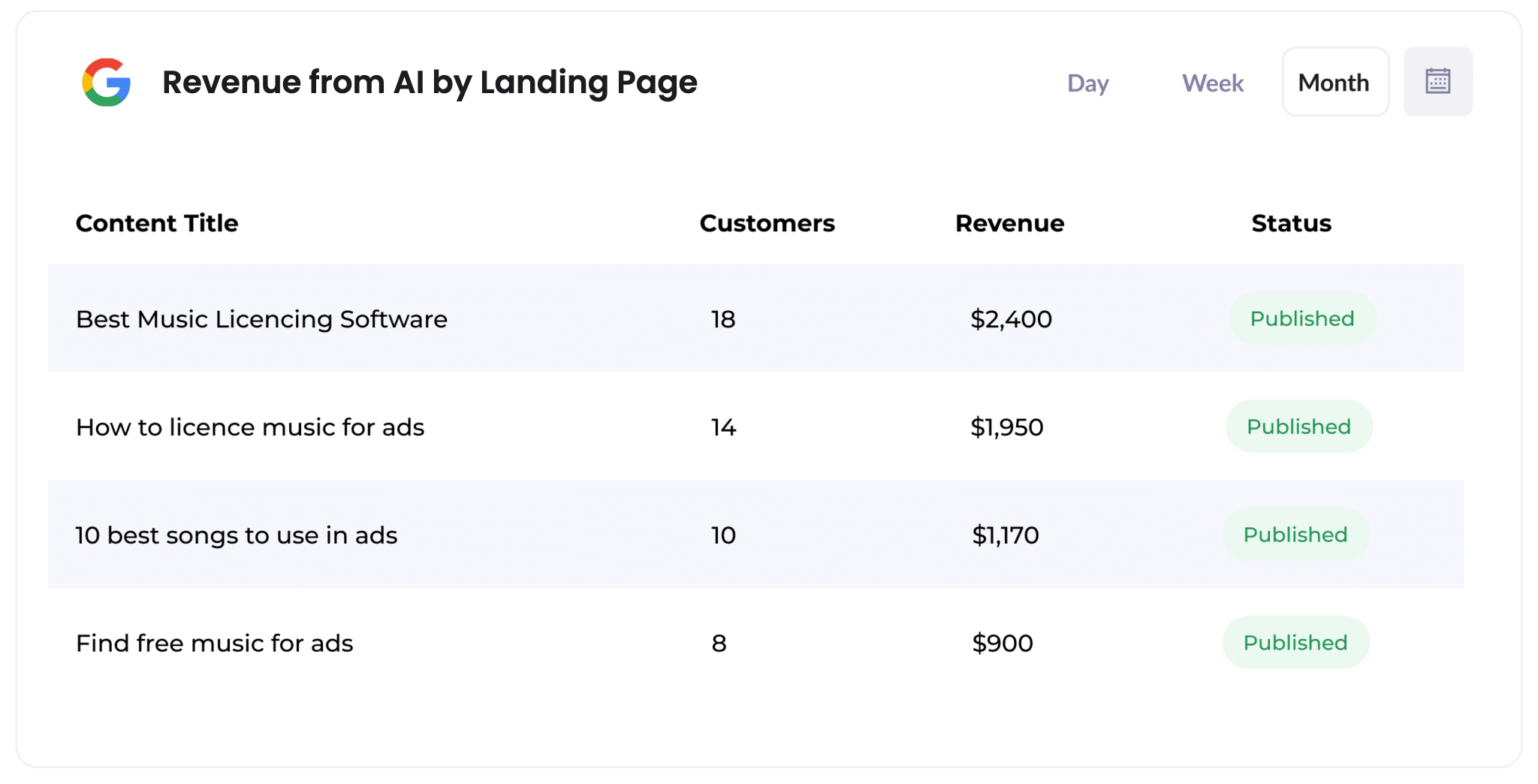
This report shows how many customers, and how much revenue, each page on your website has generated from AI referrals.
It makes it easy to see which pages (like specific blog posts or service pages) AI tools are citing and sending leads to.
Treat it as a guide for what to create next. If a handful of pages are bringing in most of your AI revenue, writing more content along the same lines is likely a smart move.
Wrap Up
If you want to find out how many leads and customers AI tools are really sending you, using Attributer with Ninja Forms is a great way to do it.
Best of all, Attributer is free to get started with and setup usually takes less than 10 minutes. So start your 14-day free trial today!
Get Started For Free
Start your 14-day free trial of Attributer today!

About the Author
Aaron Beashel is the founder of Attributer and has over 15 years of experience in marketing & analytics. He is a recognized expert in the subject and has written articles for leading websites such as Hubspot, Zapier, Search Engine Journal, Buffer, Unbounce & more. Learn more about Aaron here.