
Track leads & customers from AI in GoHighLevel
Learn how to see how many leads & customers AI tools like ChatGPT are sending you in GoHighLevel
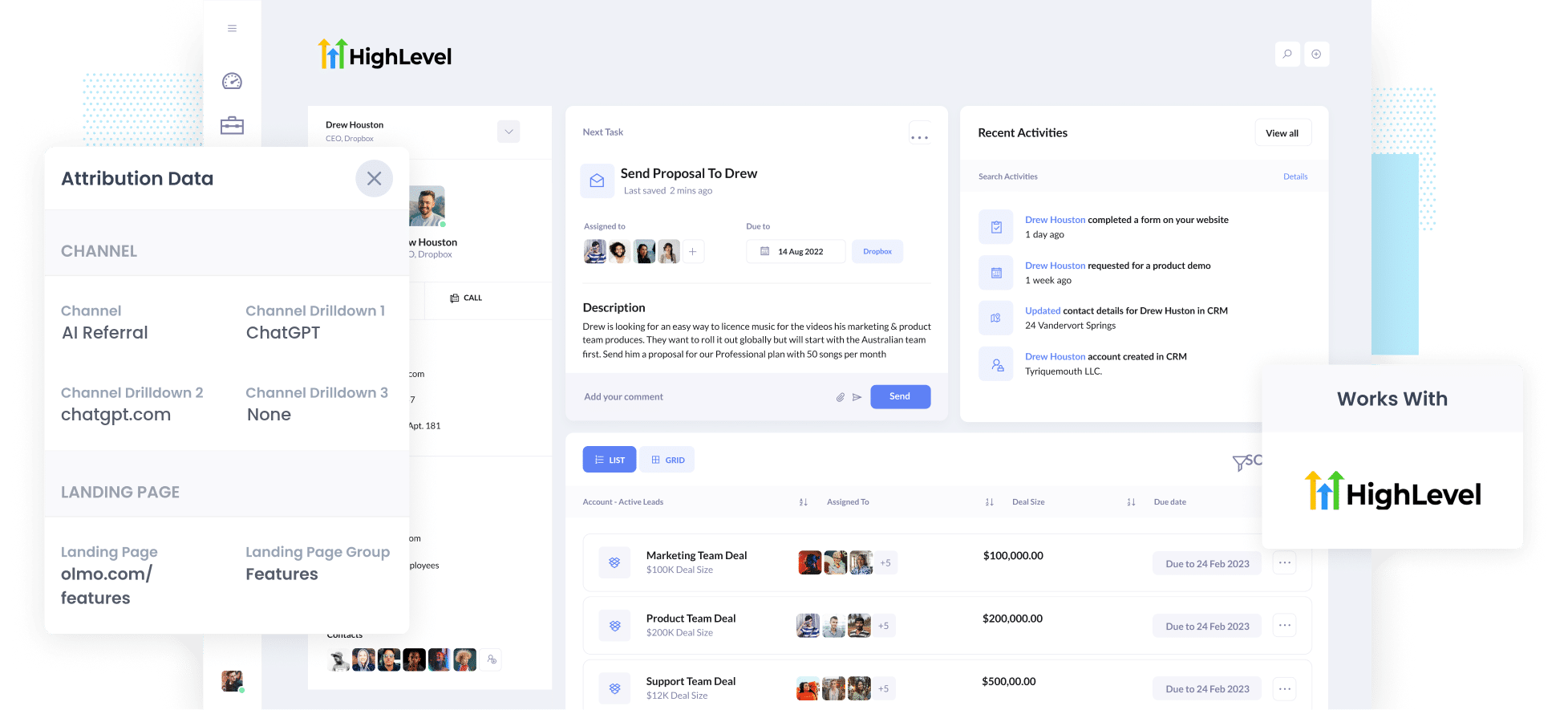
Use Attributer to capture AI referral data (like the fact a lead came from ChatGPT) with every form submission, get it into GoHighLevel, and then build reports that show how many leads and customers AI chatbots are really generating for your business.
When a new lead arrives in GoHighLevel, do you actually know how they found you? Did they click a Google ad, see you on Instagram, or did ChatGPT recommend you?
There's a growing chance it was an AI tool like ChatGPT. More and more buyers now kick off their research by asking an AI tool (and that shift isn't slowing down anytime soon either). The problem is that most AI tracking tools stop at telling you how often your brand is mentioned. They can't tell you how many leads you got from AI tools, how many of those leads became customers, or what that revenue was worth.
Fortunately, closing that gap isn't hard.
In this guide, we'll show you how to use Attributer to capture AI referral data with every new lead that reaches GoHighLevel, and then walk through some reports you can build to see exactly how many leads & customers you are getting from ChatGPT, Claude and Gemini.
4 steps to track leads & customers from AI in GoHighLevel
Getting AI referral data into GoHighLevel with Attributer doesn't take long. Here's how it works:
1. Install Attributer and add hidden fields
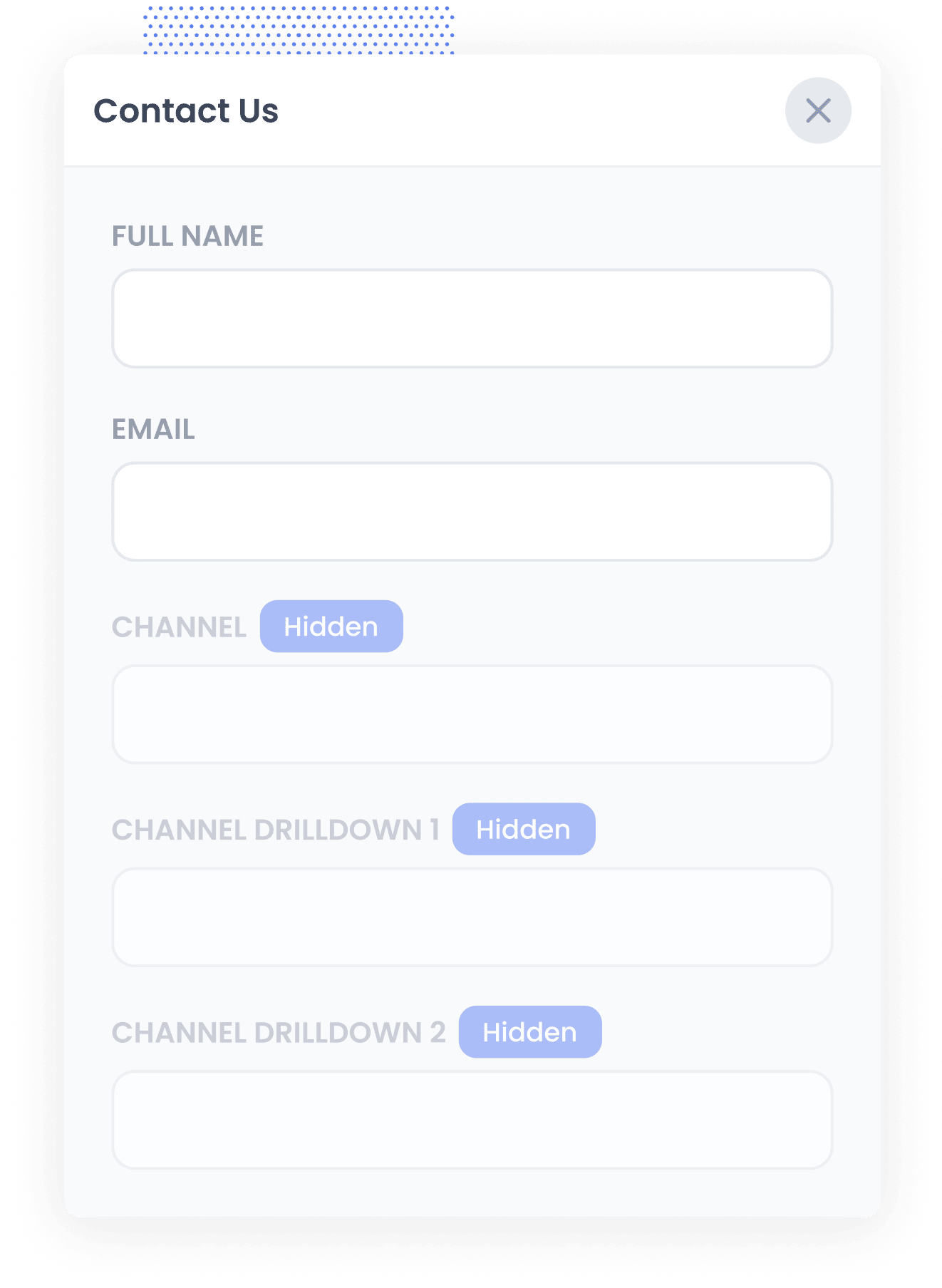
Once you sign up for a 14-day free trial of Attributer, you'll get a small snippet of code to place on your website. Instructions for adding it are here.
With the code in place, the next job is adding four hidden fields to the lead capture forms on your site:
- Channel
- Channel Drilldown 1
- Channel Drilldown 2
- Channel Drilldown 3
This is usually simple to do. Most form builders let you drop in a dedicated hidden field, or add a normal text field and hide it in the field settings. You'll find step-by-step guides for GoHighLevel Forms, Gravity Forms, Wix Forms, Webflow Forms, and dozens of others here.
2. Attributer writes AI data into the hidden fields
Whenever a new visitor arrives on your website, Attributer checks a range of technical signals (UTM parameters, the referring domain, and so on) to figure out where they came from.
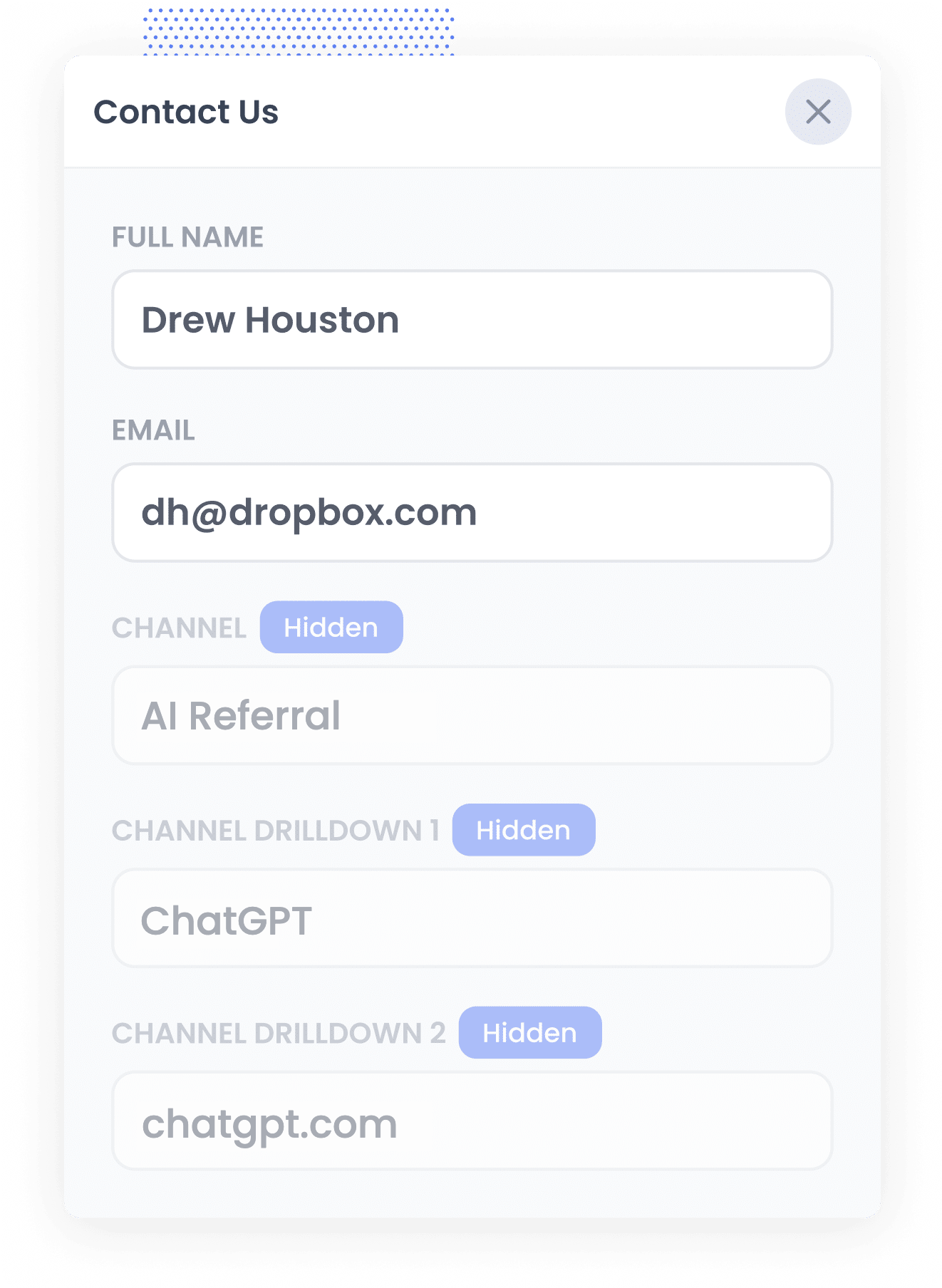
Based on that, it categorises the visitor into a channel (such as AI Referral, Organic Search, Paid Search or Paid Social) and saves the details of where they came from in their browser.
Then, when that visitor completes a form (say a 'Book a Call' or 'Get a Proposal' form), Attributer fills the hidden fields with everything it knows about where they came from.
3. AI data is captured with each lead
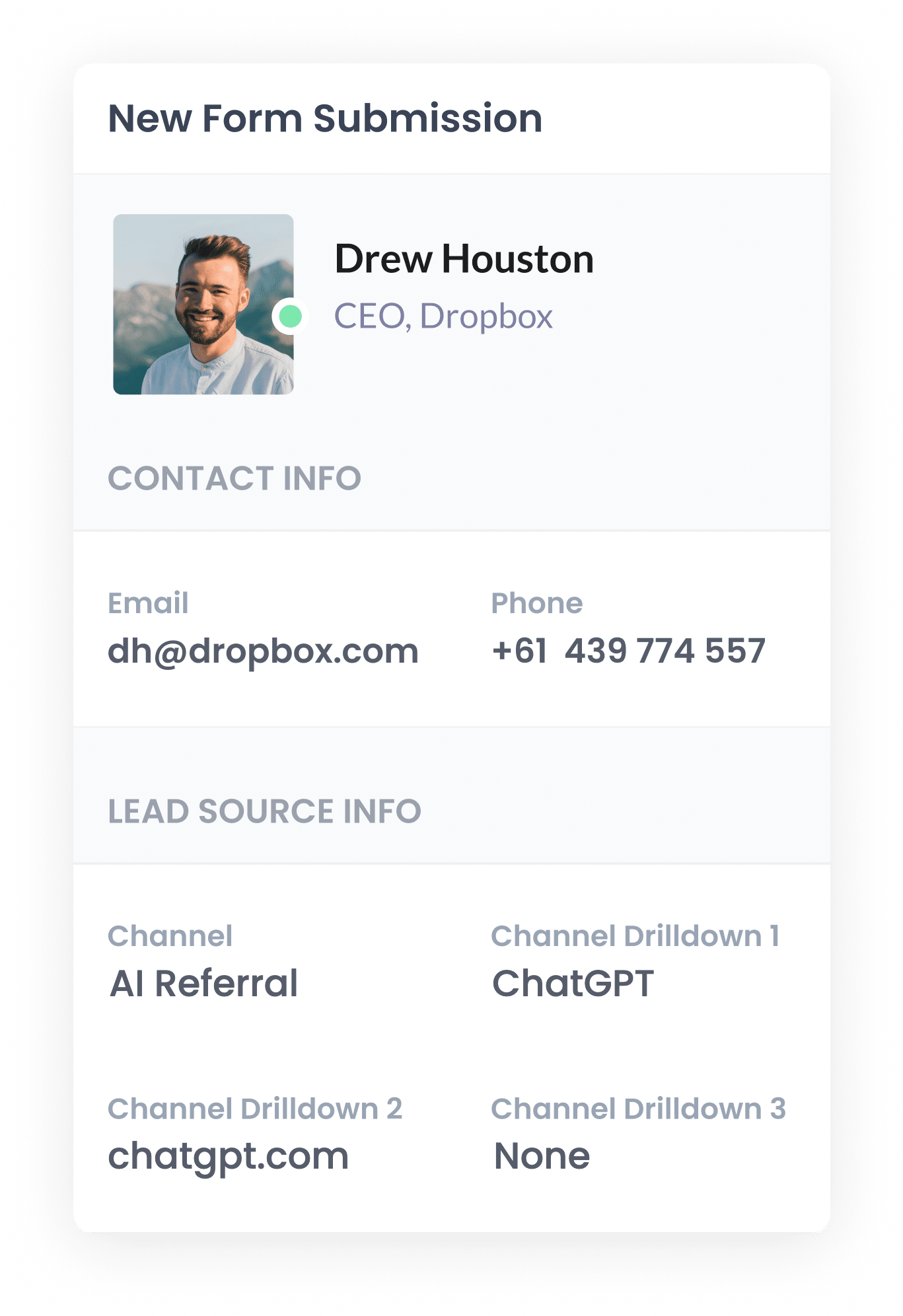
Once the form is submitted, your form tool captures whatever Attributer wrote into the hidden fields, along with the details the lead typed in themselves (their name, email, phone number and so on).
Attributer works with more than 50 form builders, scheduling tools, and chat products, including GoHighLevel Forms, Gravity Forms, Contact Form 7, Wix Forms, Webflow Forms, Typeform, Jotform, Calendly, and more.
4. AI data is sent to GoHighLevel
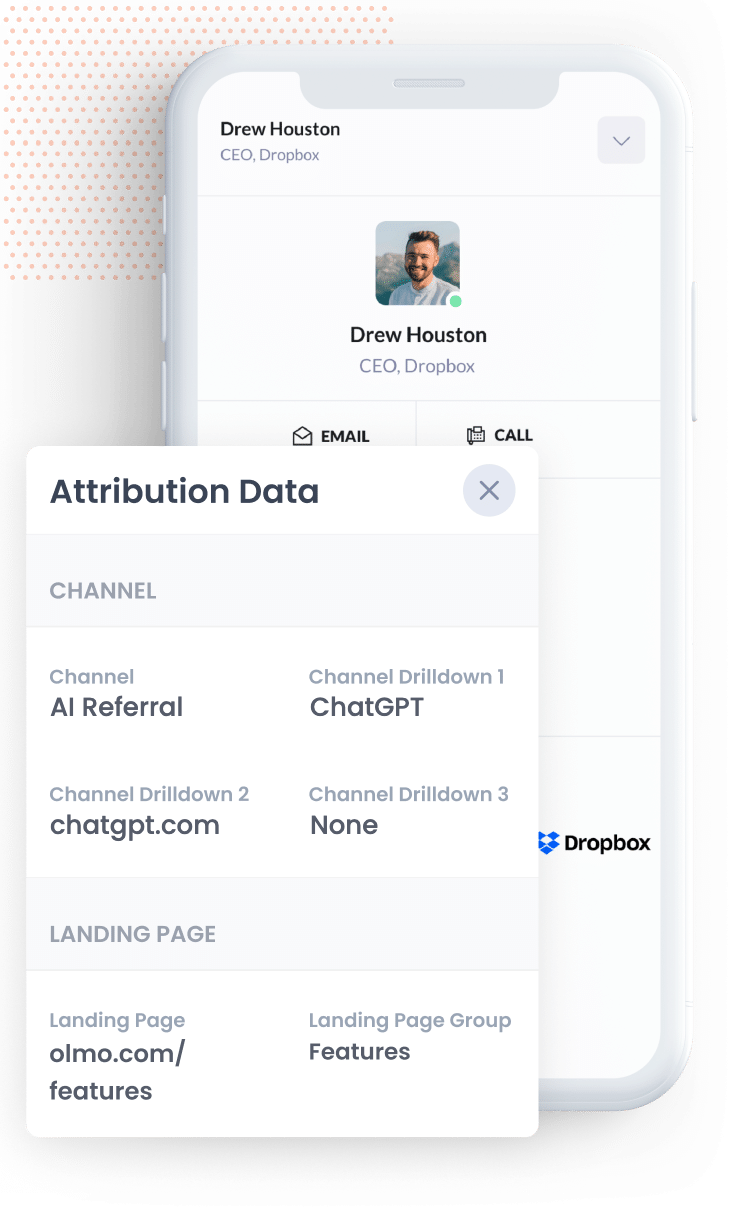
Next, the data needs to get from your form into GoHighLevel.
If you're using GoHighLevel's own form builder, this part takes care of itself. The data Attributer wrote into the hidden fields lands on the Contact record automatically.
If you're using a third-party form builder instead (like Gravity Forms or Typeform), you can send the data across using the form's built-in GoHighLevel integration or through a tool like Zapier or Make.
Either way, once it's in GoHighLevel, the AI referral data sits on the Contact record alongside the lead's name, email, phone number and everything else you collect.
You can then use this data to build reports. GoHighLevel's built-in Reporting and custom dashboards are a great place to begin, but if you want more flexibility, you can connect an analytics tool like Google Data Studio, Databox or Microsoft Power BI and cut the data any way you like (or connect an AI tool like ChatGPT or Claude to your GoHighLevel account and have it do the analysis for you).
What data gets captured
Attributer sends two types of information about every lead. The first is how they got to your site (the channel), and the second is which content brought them there (the landing page).
Imagine you look after marketing for a digital marketing agency. A business owner asks ChatGPT to recommend an agency that specialises in Google Ads for local trades, clicks through to your site, and fills out your proposal request form. Here's what Attributer would capture:
- Channel = AI Referral
- Channel Drilldown 1 = ChatGPT (the AI tool that sent them)
- Channel Drilldown 2 = chatgpt.com (the domain they came from)
- Channel Drilldown 3 = None (an AI referral has no further detail to record, so this is passed through as None)
On top of that, you'd capture the first page they landed on. Sticking with the same example, that could be:
- Landing Page = brightpathmarketing.com/services/google-ads
- Landing Page Group = /services
(Knowing the landing page tells you which pages on your site AI tools are recommending, which in turn shows you what topics are worth writing more about.)
4 example reports you can run when you capture AI data in GoHighLevel
I've worked in marketing for more than 15 years, and in that time I've put together more reports than I can remember trying to figure out which channels really drive results. Here are four I'd recommend for tracking AI referrals:
1. Leads by Channel
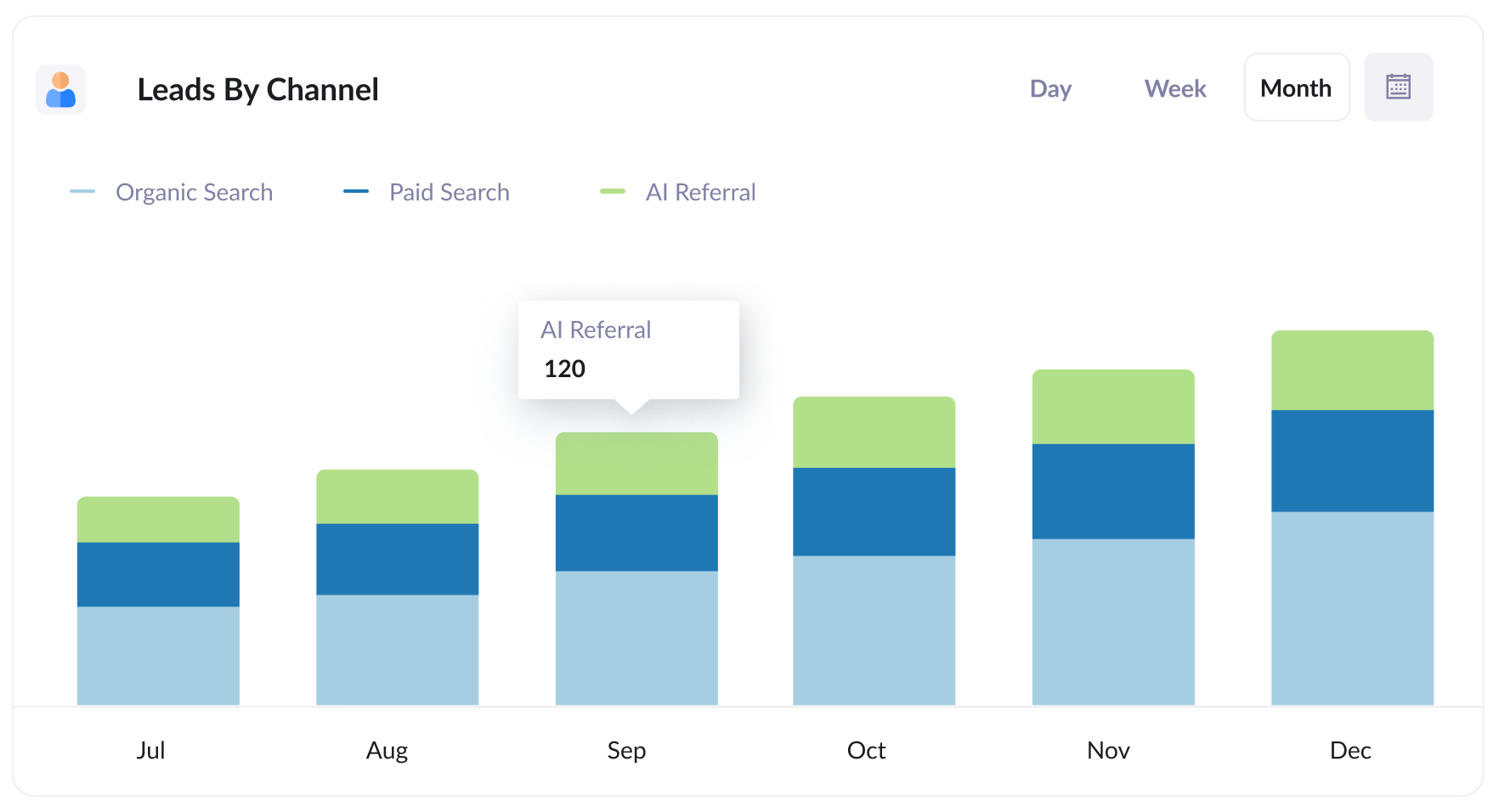
This report breaks down the number of leads you generate each month by channel, so you can see AI Referral side by side with Organic Search, Paid Search, Paid Social and the rest of your channels.
It gives you a quick, high-level understanding of how AI Referral compares to every other channel bringing leads into your business.
2. Customers by AI tool
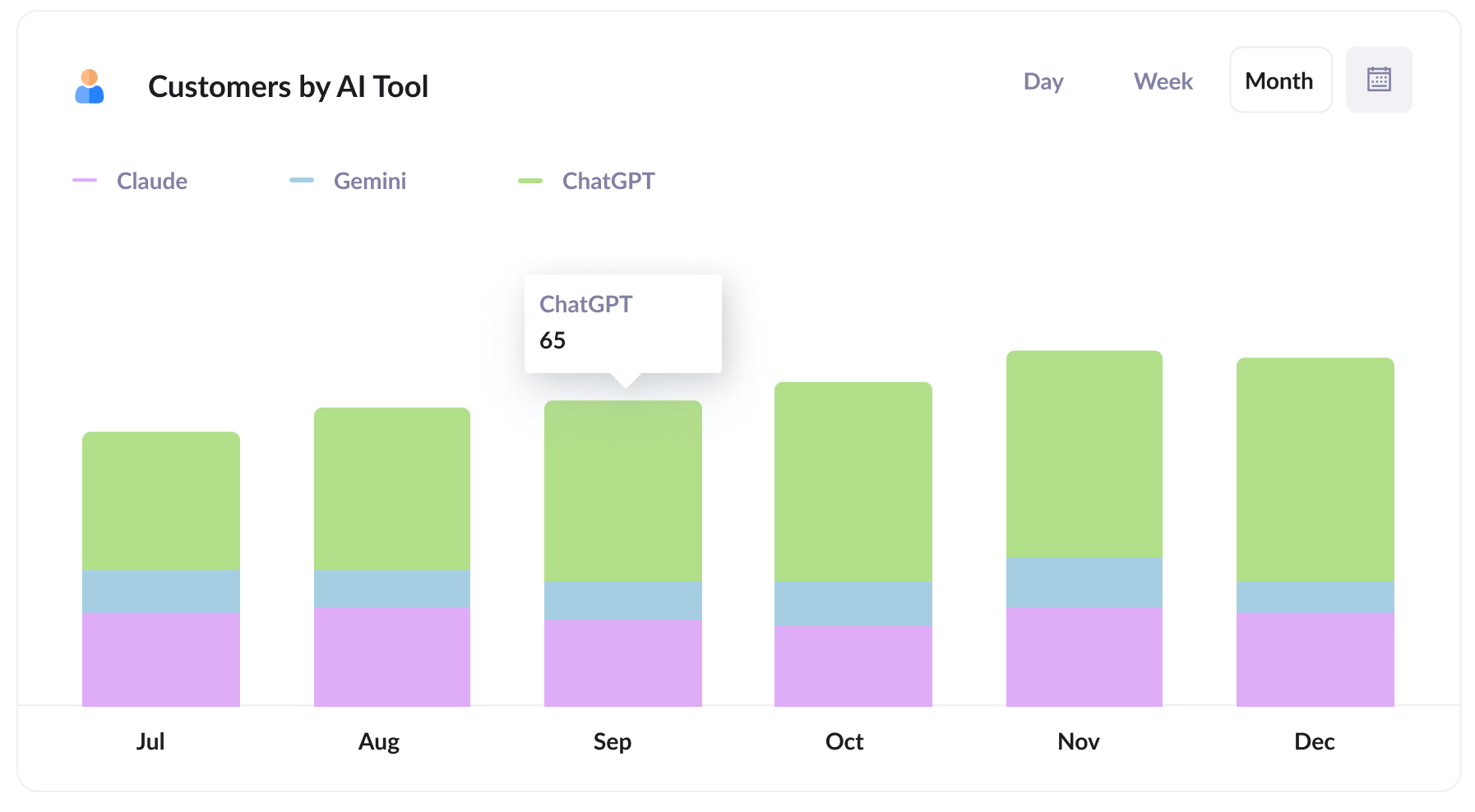
This report shows the number of new customers you've won through AI referral, split by the AI tool that referred them. That way you can tell whether ChatGPT is beating Claude and Gemini, or whether it's the other way round.
Seeing which tool produces paying customers (not just traffic or mentions) tells you where to put your energy. If the bulk of your AI customers come from one tool, it's a good sign that's the one your ideal customers rely on most, which makes it the one worth investing in.
3. Close rate by channel
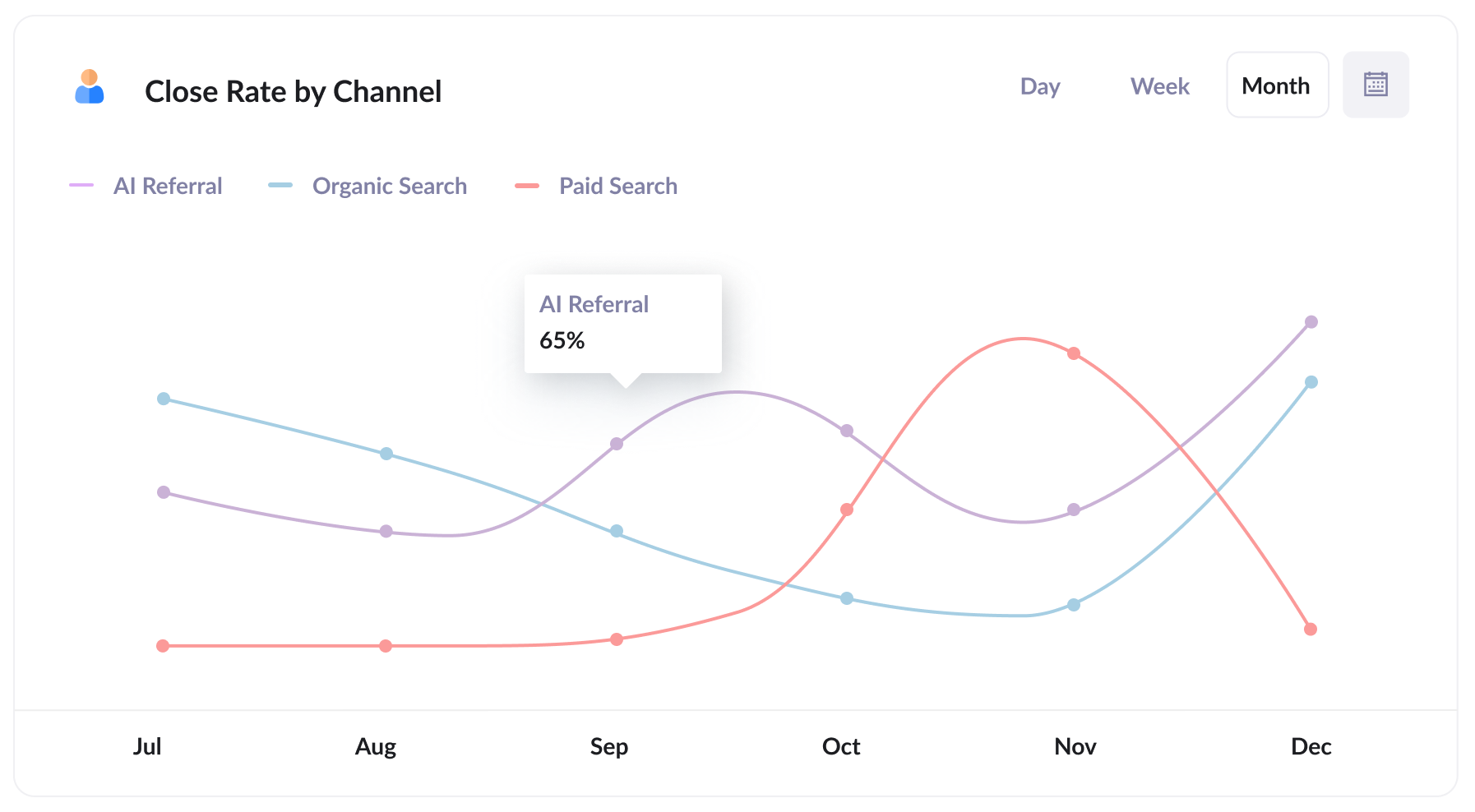
This report shows the percentage of leads that turn into customers, broken down by channel.
It's useful because where a lead comes from often strongly influences how likely they are to buy. You might discover that 35% of your AI Referral leads turn into customers, compared with 10% from Organic Search and 7% from Paid Search (a lead coming from an AI tool has already had their early questions answered before they reach your site, so they turn up far more ready to buy).
In practice, that would make an AI lead worth several times as much as a paid search lead, which could shift where you spend your next marketing dollar.
4. Revenue from AI by landing page
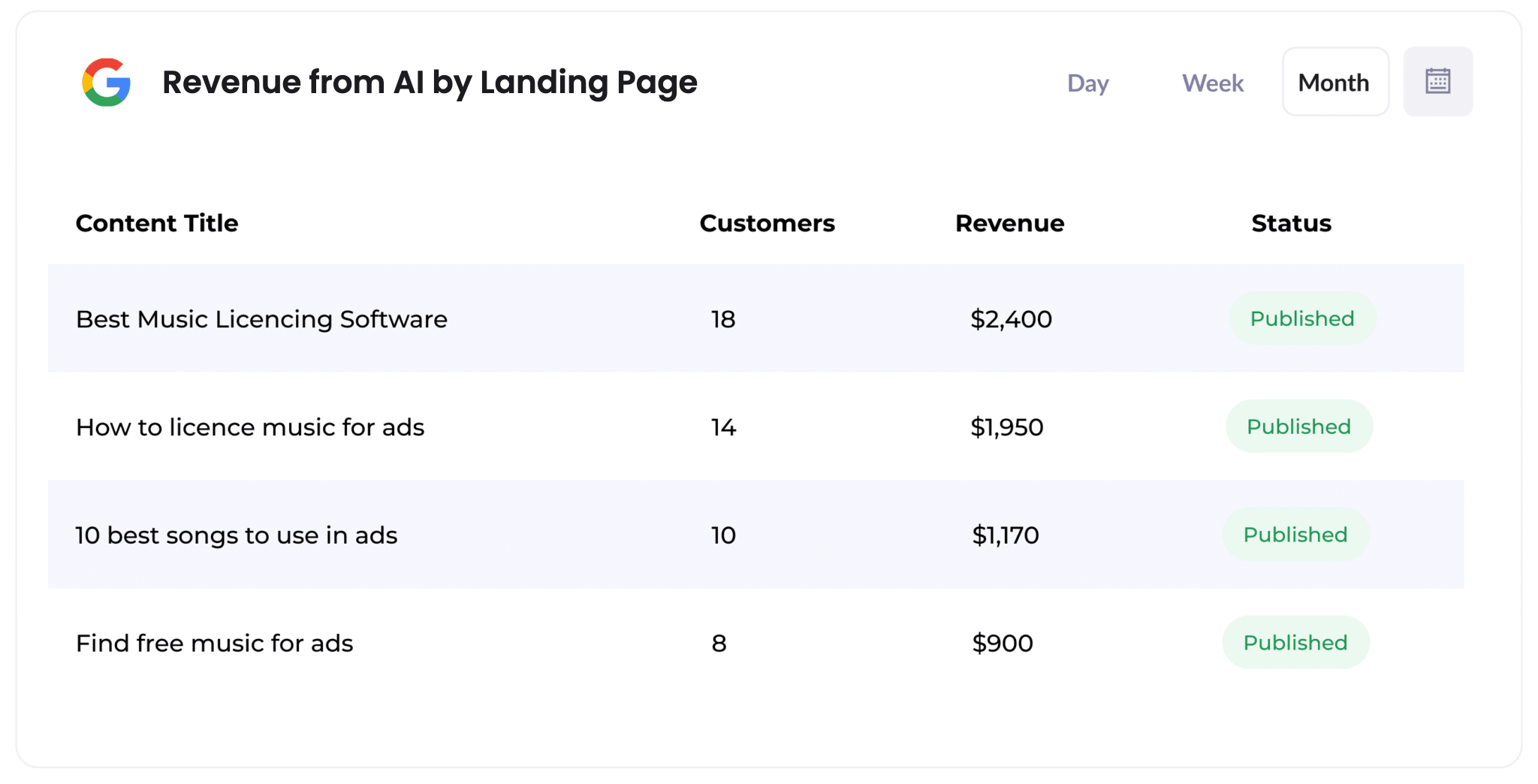
This report shows the number of customers (and the amount of revenue) each page on your website has brought in from AI referrals.
It's the most direct way to see which pages AI tools are sending real buyers to. If a small number of pages account for most of your revenue, you've got a clear idea of what content to create next.
Wrap Up
If you've been struggling to track how many of your leads and customers are coming from AI tools like Claude and ChatGPT, then using Attributer with GoHighLevel is a pretty easy way to solve that problem.
Attributer is free to get started, and setup normally takes under 10 minutes. Start your 14-day free trial today!
Get Started For Free
Start your 14-day free trial of Attributer today!

About the Author
Aaron Beashel is the founder of Attributer and has over 15 years of experience in marketing & analytics. He is a recognized expert in the subject and has written articles for leading websites such as Hubspot, Zapier, Search Engine Journal, Buffer, Unbounce & more. Learn more about Aaron here.