
Track leads & customers from AI in Formidable Forms
Track how many leads you're getting from AI tools like ChatGPT, Claude & Gemini (and how many of them become customers) by using Attributer with Formidable Forms.
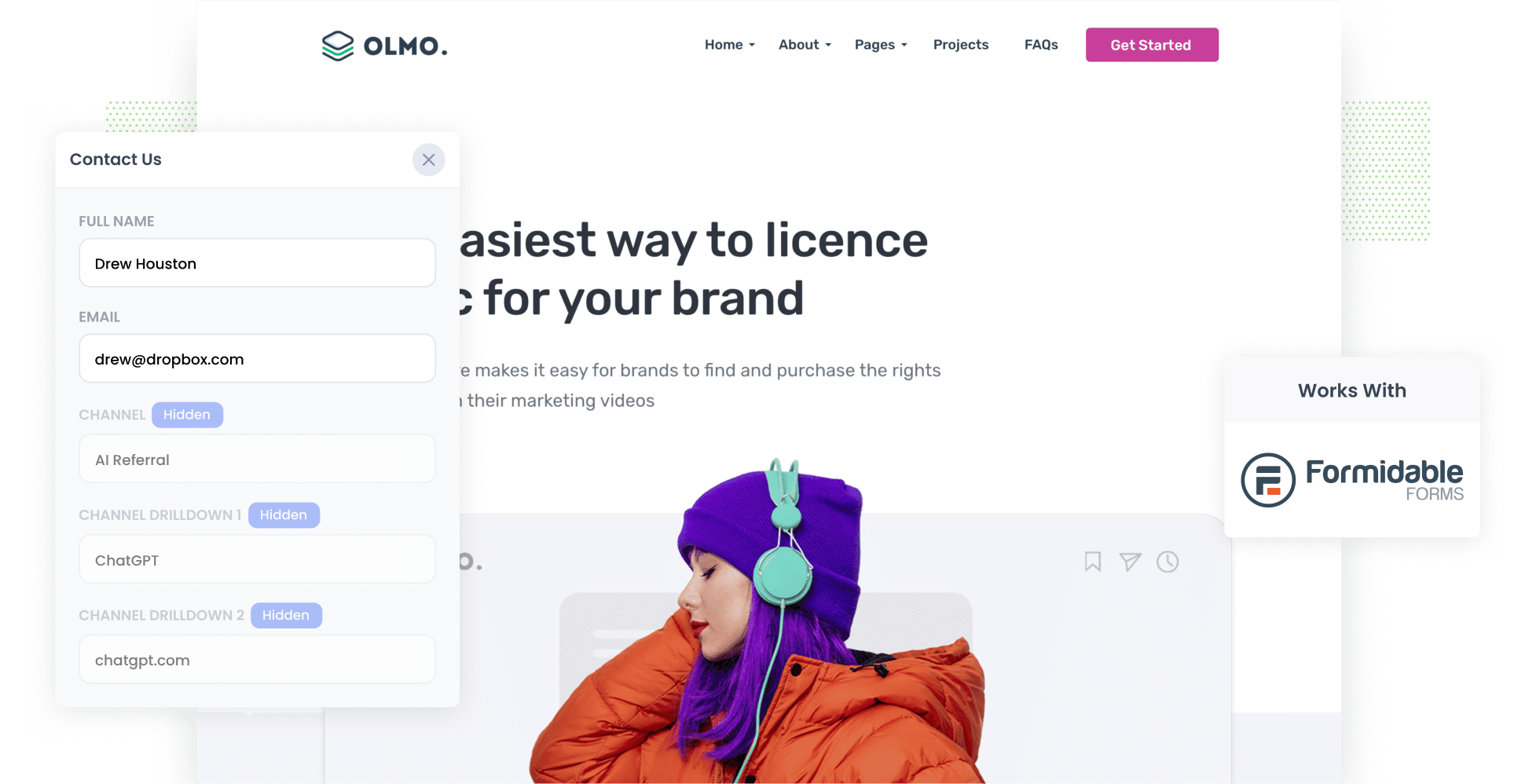
Attributer captures AI referral data (like the fact a lead came from ChatGPT) with every Formidable Forms entry. You can pass it on to your CRM and other tools, then run reports showing exactly how many leads and customers AI is sending you.
Are ChatGPT, Claude and Gemini actually sending you leads? And if they are, how many?
Right now, most of the talk about AI is focused on getting 'mentions' and 'citations' in AI answers. But what really matters to your business is how many leads AI generates, how many of them become customers, and how much revenue they bring in.
So how do you actually measure that?
In this article, we'll walk you through how to use a tool called Attributer to capture AI referral data with every Formidable Forms entry. Then we'll cover a few reports you can run to see how many leads and customers AI is really sending your way.
4 steps to track leads & customers from AI in Formidable Forms
Using Attributer with Formidable Forms gives you a simple way to see how many leads are coming from AI tools. Here's how it works:
1. Install Attributer and add hidden fields to your forms
When you start a 14-day free trial of Attributer, you'll get a small snippet of code to add to your website. The instructions for installing it are here.
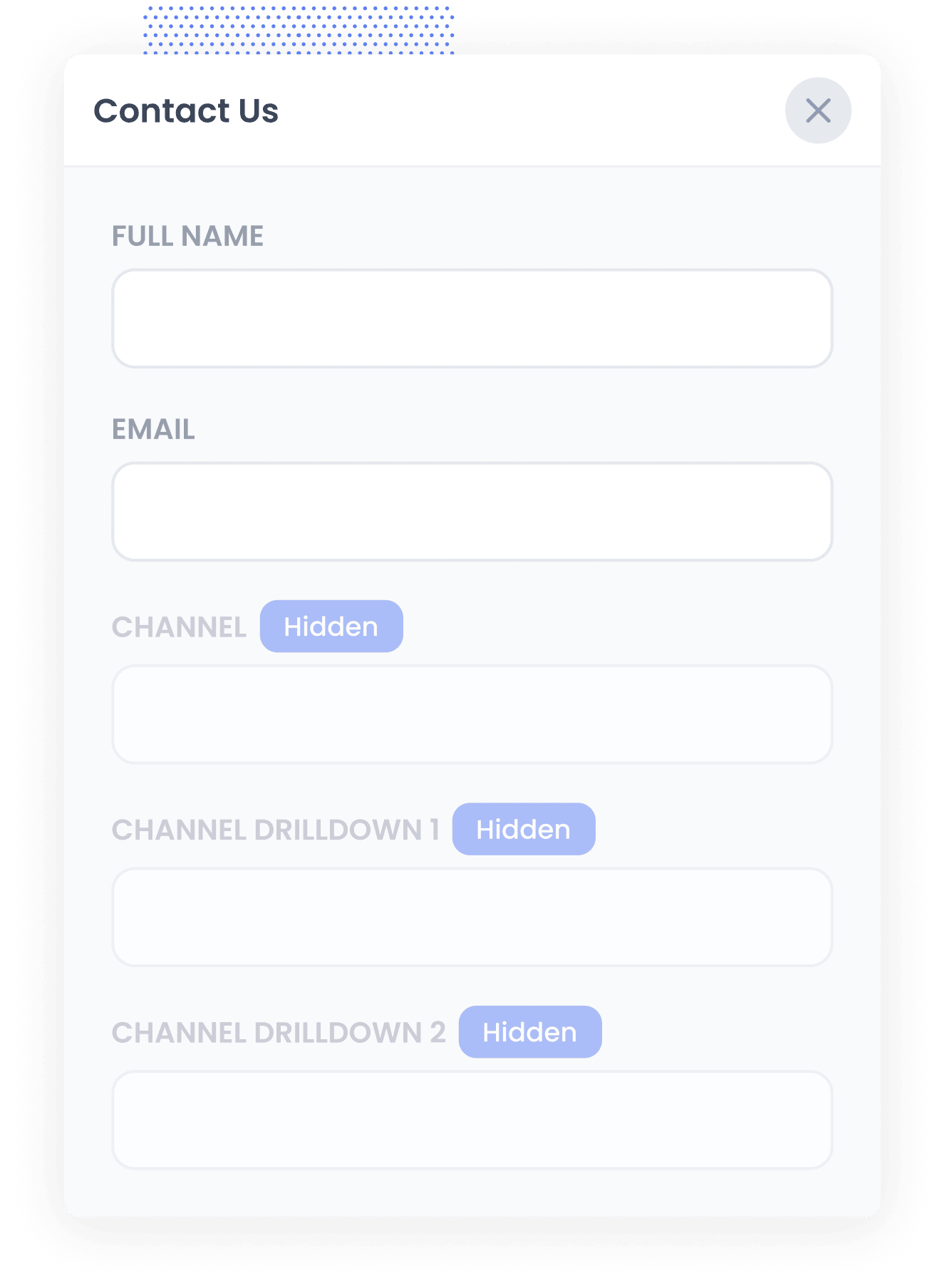
Once that's installed, the next job is adding a set of hidden fields to each Formidable form you want to track. You'll need these 6:
- Channel
- Channel Drilldown 1
- Channel Drilldown 2
- Channel Drilldown 3
- Landing Page
- Landing Page Group
To set them up, go to Formidable Forms in your WordPress admin, open the form, and drag 6x 'Hidden Field' fields into it. Then click each one and give it a specific field label and a default value in the options panel (the exact values are listed in the setup guide available here). Alternatively, you can install our WordPress plugin and it will automatically set everything up for you.
2. Attributer figures out where each visitor came from
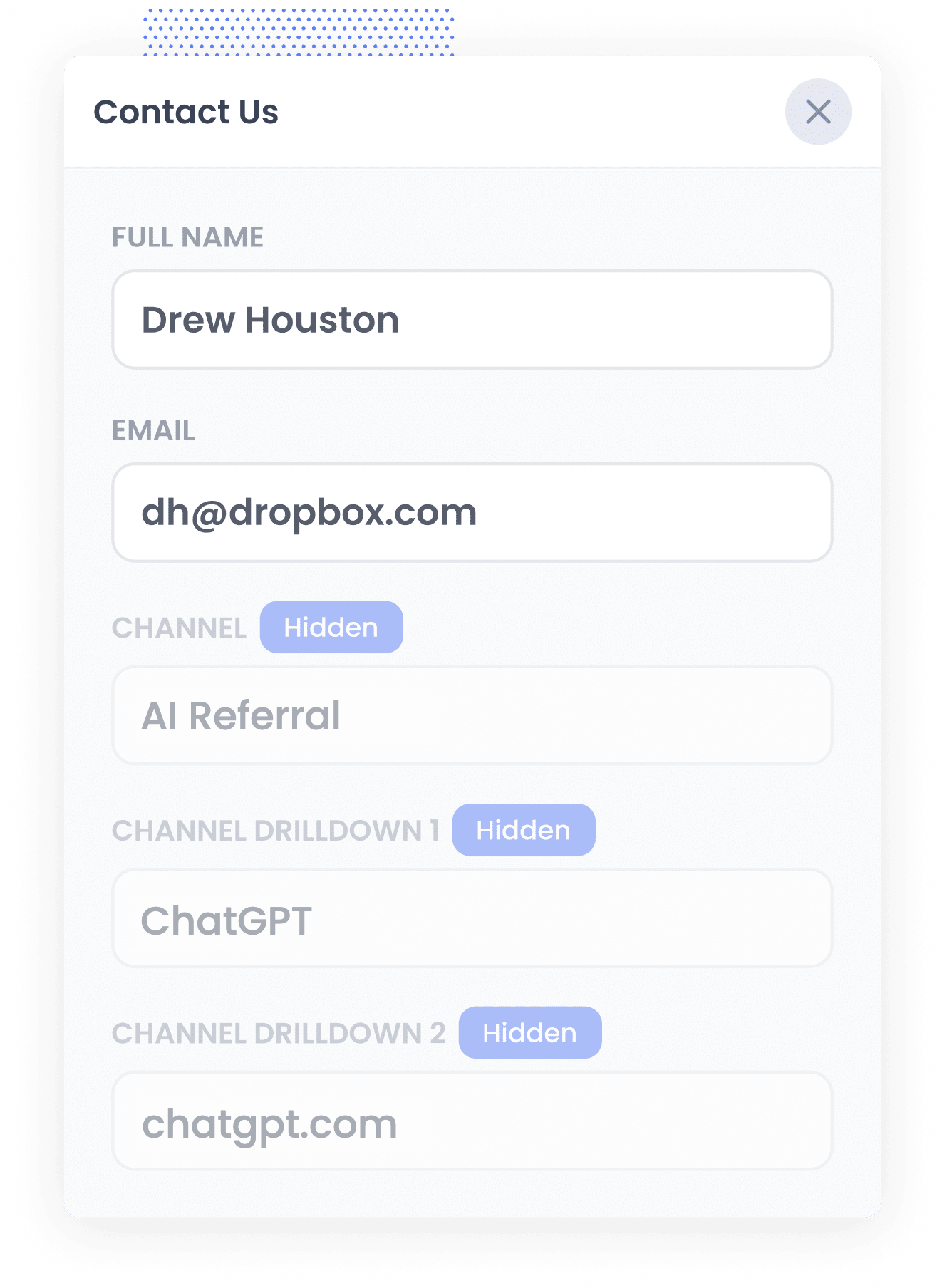
Whenever someone arrives on your website, Attributer checks a range of signals to figure out how they got there (the same signals other analytics tools, like Google Analytics, look at).
It then sorts that visitor into a channel (such as AI Referral, Organic Search, Paid Search or Paid Social) and saves it in their browser.
Later, when that person fills in one of your Formidable forms (like your 'Request a Quote' or 'Contact Us' form), Attributer writes the details of where they came from into the hidden fields.
3. AI data is captured with the entry
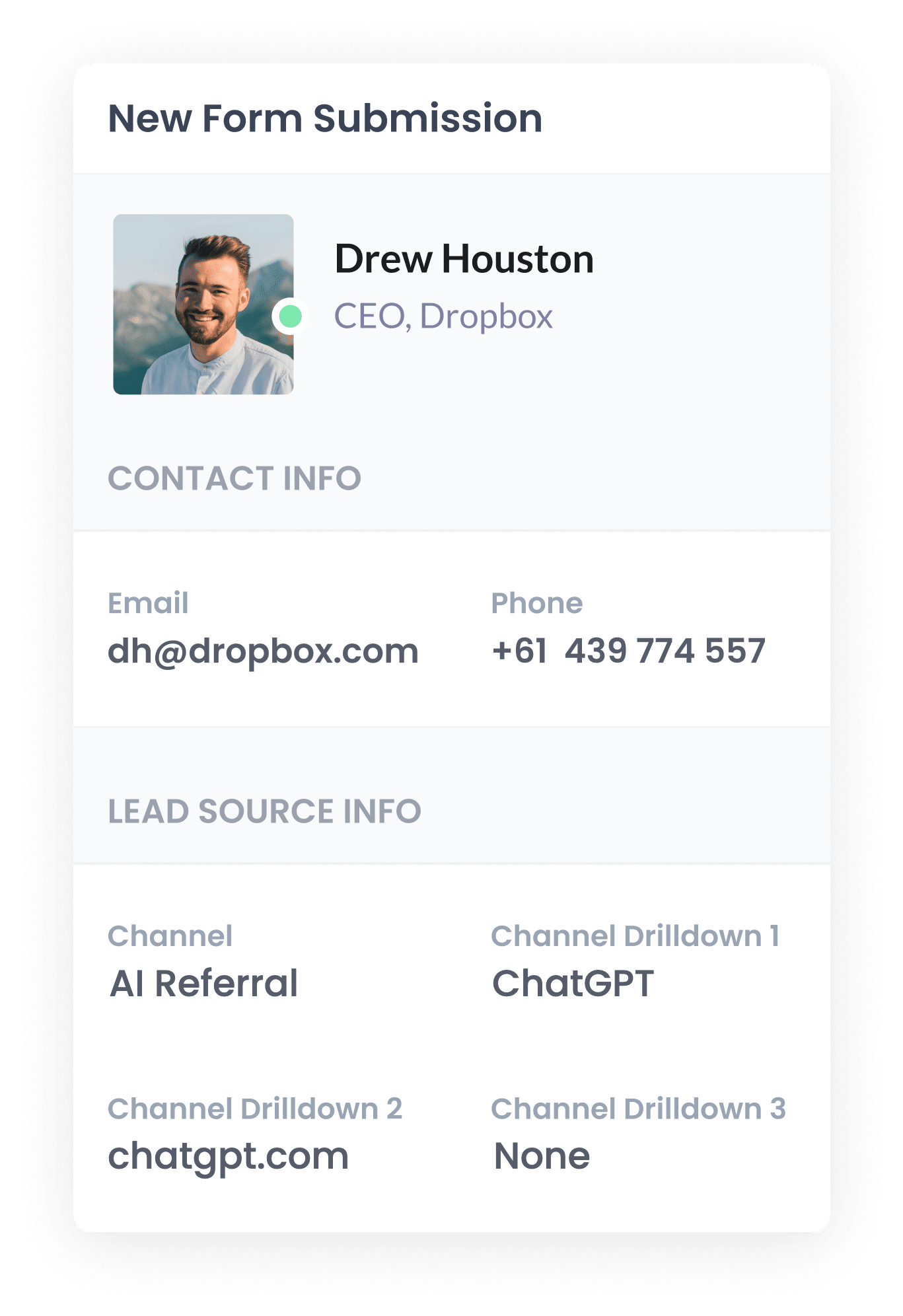
When the form is submitted, Formidable Forms saves the AI referral data from the hidden fields as part of the entry (right next to the lead's name, email and whatever else they filled in).
You can view it on each entry by going to Formidable > Entries in your WordPress dashboard, and you can include it in the email notifications Formidable sends you every time a new lead comes in.
From there, you can pass it on to your CRM and other tools (like a spreadsheet or your email marketing platform) using Formidable's add-ons for tools like HubSpot, Salesforce and ActiveCampaign. If your CRM isn't covered, integration tools like Zapier or Make can send the data across with every new lead.
4. Report on AI leads
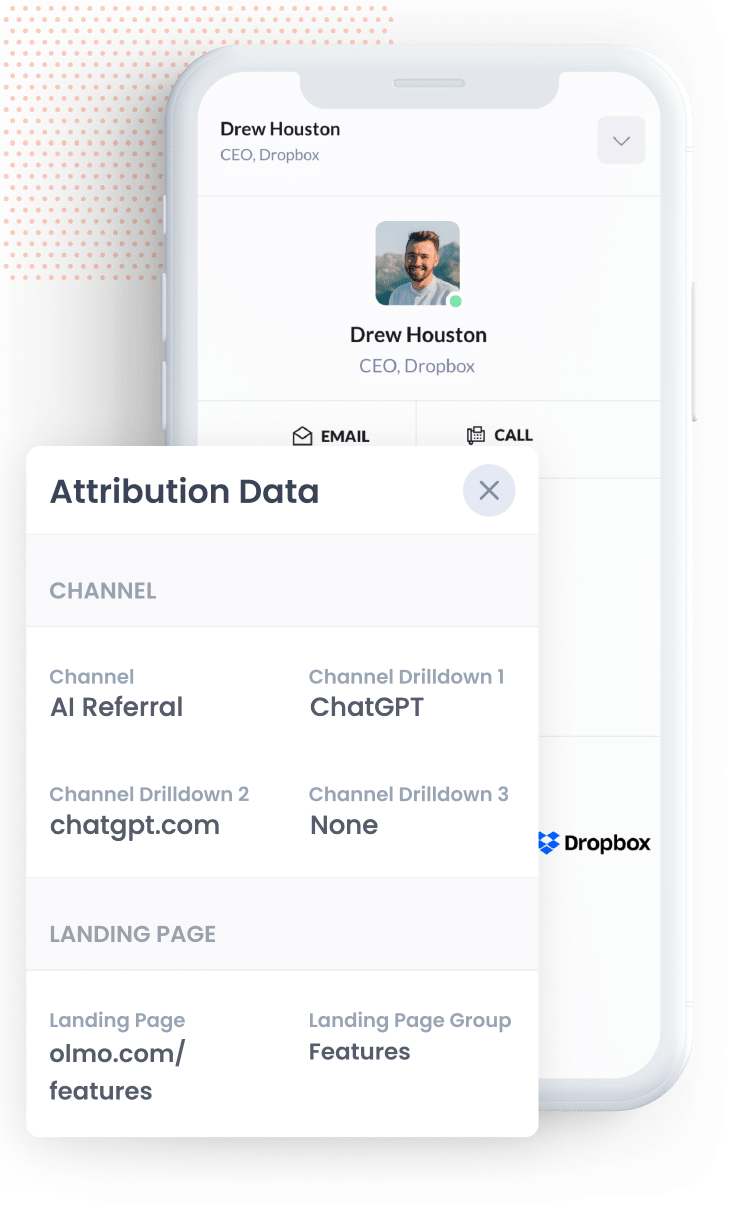
Once the data is sitting in your CRM (or wherever you keep your leads), you can run reports on how many leads and customers came from AI, which AI tools sent them, which content attracted them, and how much revenue they generated.
For most businesses, the reporting built into the CRM will handle these reports just fine. But you can also plug in a dedicated tool like Tableau, Google Data Studio or Microsoft Power BI and build them there.
Or, if you'd rather just ask, connect Claude or ChatGPT to your CRM and type something like "How many leads came from AI referral this month?"
What data gets captured
Attributer passes through two types of information for every lead. The first is how they found your website (the channel), and the second is the content that brought them in (the landing page).
Say you look after marketing for a manufacturing business that does metal fabrication, and someone asks ChatGPT to recommend a local supplier. They click through to your site and fill in your Formidable Forms quote request. Here's what would be captured with the entry:
- Channel = AI Referral
- Channel Drilldown 1 = ChatGPT (or whichever AI tool sent them)
- Channel Drilldown 2 = chatgpt.com (the domain they came from)
- Channel Drilldown 3 = None (AI referrals don't have a further level of detail, so this shows as None)
You'd also capture the first page they landed on. So sticking with the same example, that could look like this:
- Landing Page = kestrelfabrication.com/capabilities/laser-cutting
- Landing Page Group = /capabilities
The landing page data tells you which pages on your site AI tools are reading and recommending, which makes it much easier to decide what to work on next.
4 example reports you can run when you capture AI data in Formidable Forms
Over 15 years in marketing, I've built more reports than I can count trying to figure out which channels were delivering leads for the business and which weren't. These 4 are the ones I keep coming back to (and each is easy to run once the AI data from Attributer is flowing into your CRM):
1. Leads by Channel
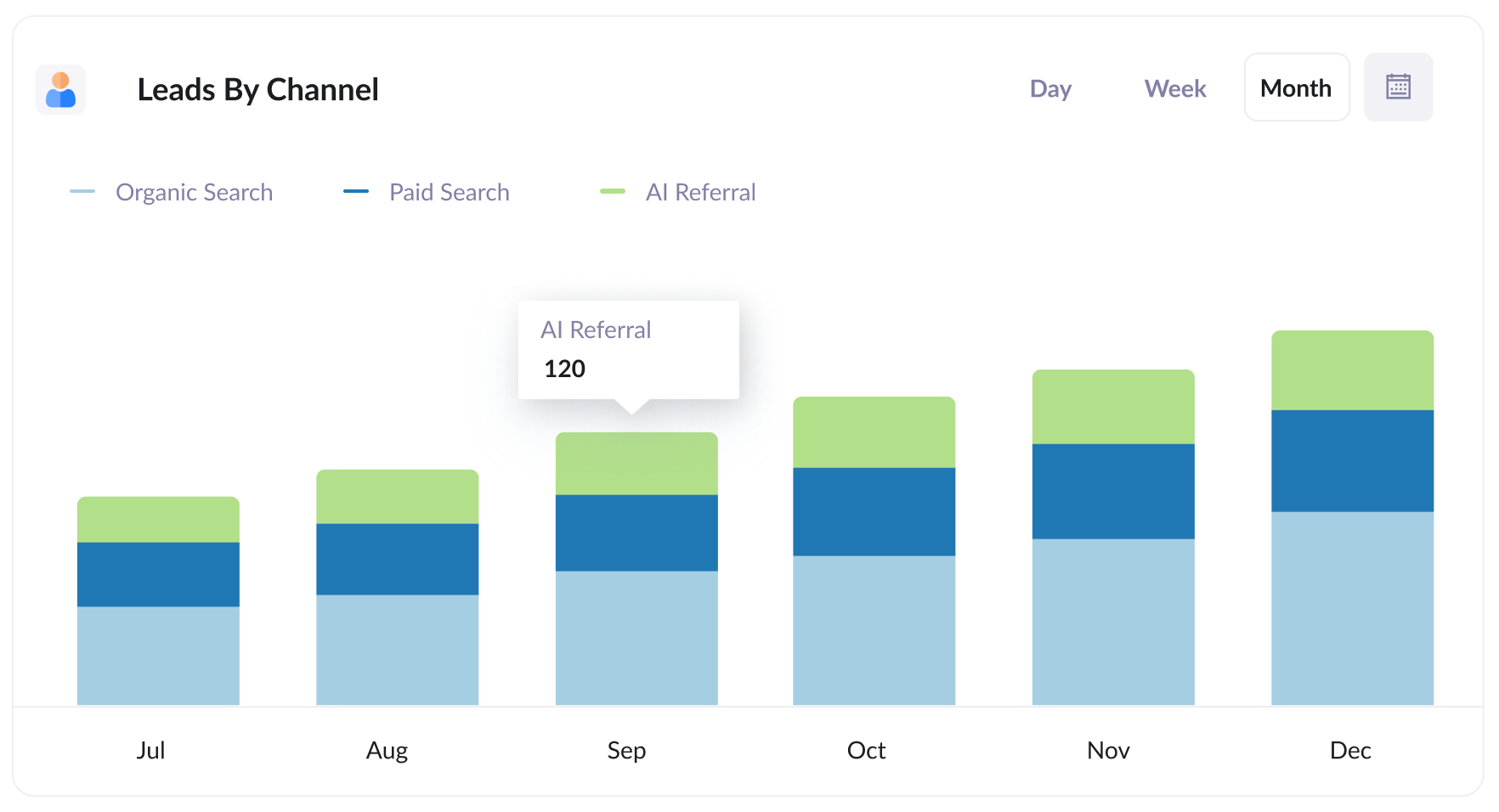
This report breaks down the number of leads you generate each month by the channel they came from (AI Referral, Organic Search, Paid Search, Paid Social and so on).
It tells you exactly how many leads AI is generating for your business, and lets you stack that up against your other channels so you can see how much it actually matters as a channel.
2. Customers by AI tool
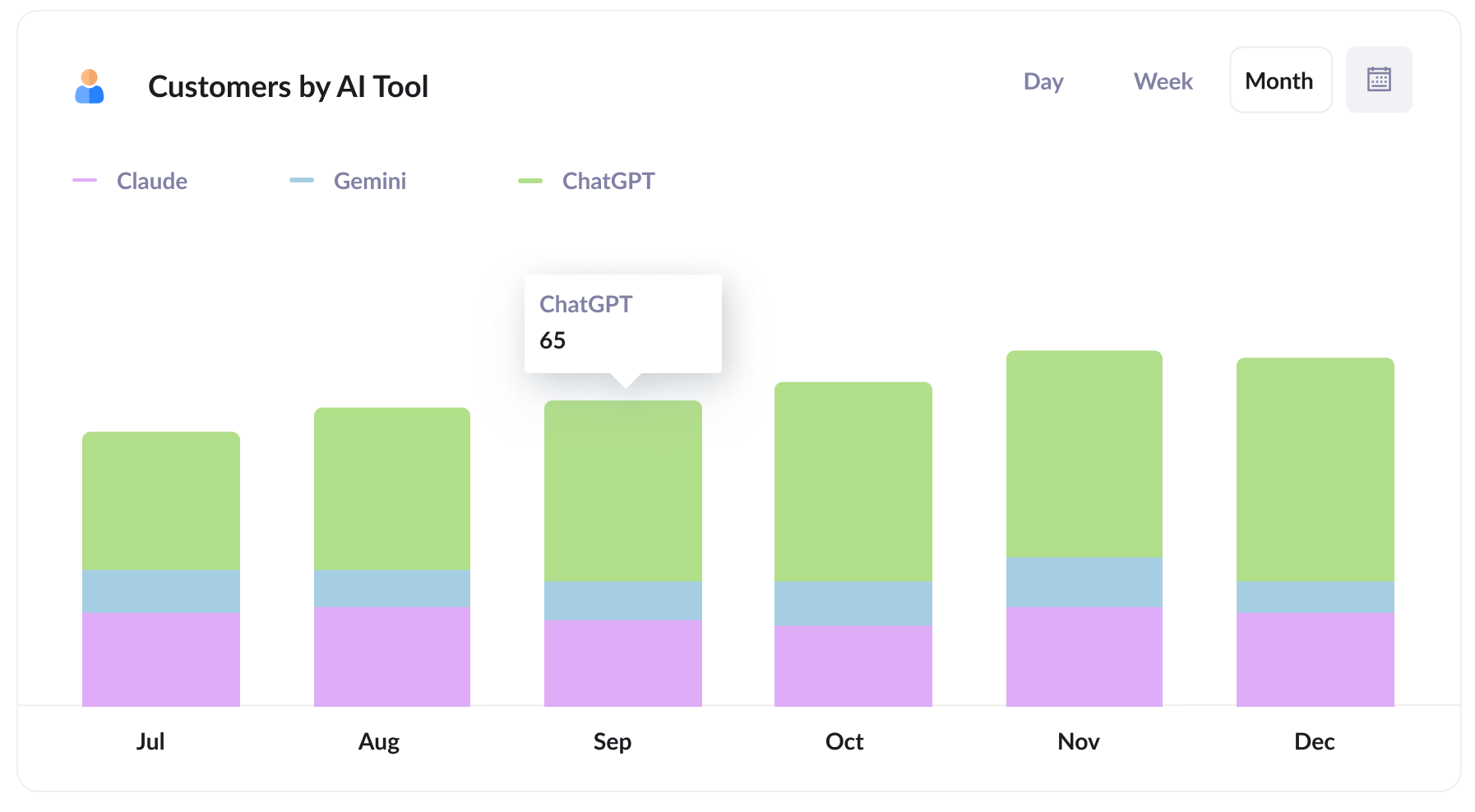
This report shows the number of new customers you win from AI each month, split by the AI tool that sent them.
It helps you compare ChatGPT against tools like Claude and Gemini so you know where to focus. If ChatGPT is sending most of your leads, then that's likely the tool your target market uses most, and probably where your effort will pay off best.
3. Close rate by channel
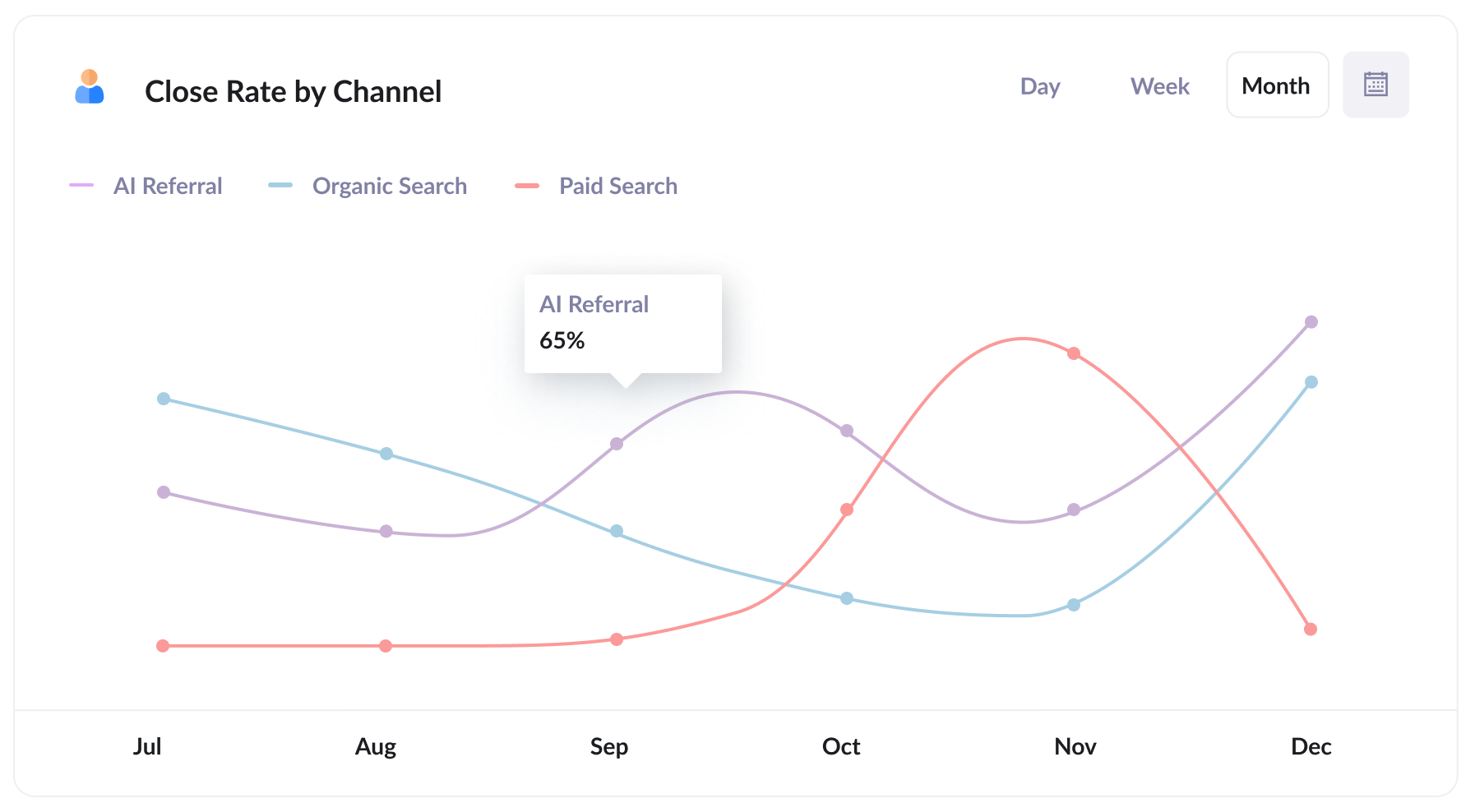
This report shows how often leads turn into customers, split by the channel they came from.
It's a really interesting one to run, because you may discover that something like 35% of your AI Referral leads become customers, while only 10% of Organic Search leads and 7% of Paid Search leads do.
If your numbers come out anything like that, an AI lead is worth several times a paid search lead, and that should shape where you spend your time and budget.
4. Revenue from AI by landing page
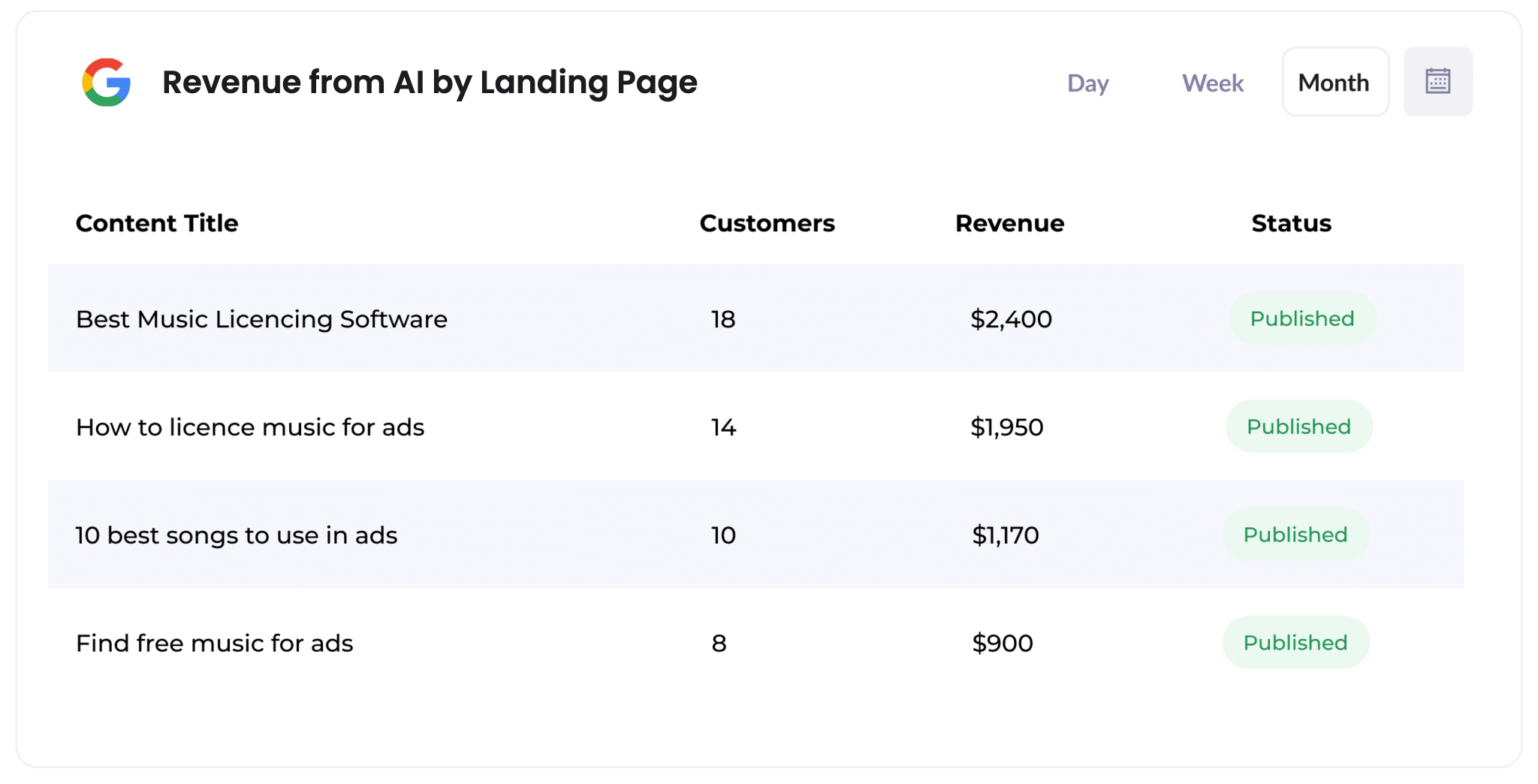
This report shows how many customers, and how much revenue, each page on your site has produced from AI referrals.
It makes it easy to see which pages (like particular blog posts or service pages) AI tools are citing and sending leads to.
You can use it as a guide for what to write next. If a small group of pages is responsible for most of your AI revenue, creating more content along those lines is probably a smart move.
Wrap Up
If you want to know how many leads and customers AI tools are really sending you, using Attributer with Formidable Forms is a great way to find out.
Best of all, Attributer is free to get started with, and setup usually takes less than 10 minutes. So start your 14-day free trial today!
Get Started For Free
Start your 14-day free trial of Attributer today!

About the Author
Aaron Beashel is the founder of Attributer and has over 15 years of experience in marketing & analytics. He is a recognized expert in the subject and has written articles for leading websites such as Hubspot, Zapier, Search Engine Journal, Buffer, Unbounce & more. Learn more about Aaron here.