
The best way to track Forminator submissions as conversions in Google Ads
Track your Forminator submissions the right way and capture up to 23% more conversions in Google Ads.

Use Attributer to capture the GCLID and the other Google Ads identifiers with each Forminator form submission, then send them back to Google Ads as a conversion. You can send the conversion the moment the form is submitted, or hold off until the lead becomes a paying customer in your CRM.
Google Ads is a great way to bring in new leads and customers for your business, but actually setting up conversion tracking properly is hard.
Tools like Google Tag Manager require you to write custom code to listen for form submissions, then configure triggers, tags, variables, and a whole lot of other complicated stuff on top.
And basic approaches like tracking thank you page visits can result in up to 30% of your conversions being missed, thanks to things like ad blockers, privacy features built into modern browsers (Safari being the main culprit), and people clicking your ad on their phone but converting later from their laptop.
So what are you supposed to do?
In this article, we'll show you how to set up proper conversion tracking in Google Ads when someone submits a Forminator form on your website. The approach is known as server side tracking.
Why server side tracking in Google Ads matters
Common approaches to tracking conversions in Google Ads, such as tracking thank you page visits or firing events through Google Tag Manager, have some serious flaws. In fact, studies show that these methods can result in missing up to 30% of your actual conversions.
This happens for a number of reasons:
- Ad blockers: Ad blockers prevent the Google Tag from firing on your website, which means it can't track anything users do once they're on your site.
- Privacy features in browsers: Web browsers like Safari have built in technologies that block the Google Tag from tracking visitors for more than a day or two. So if a person clicks your ad and converts 3 days later, it won't be tracked.
- Using multiple devices: People might click your ad on their work computer but later convert on their home computer (or on their mobile device), which means their original ad click can't be tied to their later conversion.
This is why you need to be doing server side tracking. Instead of relying on things to happen in the browser (like the user visiting a thank you page) and hoping the Google Tag can track it, the conversion data is sent directly to Google's servers, which means ad blockers and privacy settings can't get in the way.
This has been proven to work significantly better. Google's own data shows that server side tracking typically results in a 23% average increase in total recorded conversions and a 10% reduction in cost per conversion (because Google's algorithms have more accurate conversion data to learn from and can serve your ads better).
How to track Forminator submissions in Google Ads using server side conversion tracking
There are two ways to do this, and the choice between them comes down to timing: should the conversion fire on form submission, or later in the sales cycle when the lead actually becomes a customer?
Option 1: When a lead submits the form
If you want the conversion to fire the moment a lead hits Submit, the easiest path is a tool like Converly. It's purpose built for sending server side conversions to Google Ads each time someone submits a Forminator form on your site.
You could write some custom JavaScript inside Google Tag Manager to listen for the submit event, dig the lead's contact details out of the form, hash them with SHA-256, then post the result to Google's API, b ut that's a multi day project for a skilled developer.
Converly does the same job through a simple, visual flow builder.

You pick a trigger (a Forminator submission on your site, in this case) and pick the action you want to follow it (a conversion sent to Google Ads).
From there, Converly automatically detects when a form is submitted, pulls out the user's name, email, phone number, and so on, secures it with SHA-256, and ships it through to Google Ads.
It also captures a heap of other context about the user and how they got to your site (GCLID, GBRAID, WBRAID, User Agent, and more) and bundles it in alongside the conversion. This helps improve Google's ability to match the conversion to the exact campaign, ad, and keyword the lead originally clicked.
The end result: every benefit of server-side tracking (a 23% average lift in total recorded conversions, a 10% reduction in cost per conversion) without ever needing to touch custom code, learn what SHA-256 actually means, or figure out how to send events to Google's API yourself.
Option 2: When a lead becomes a customer
If you collect leads through Forminator and then push them through to a CRM like Salesforce, HubSpot, or Pipedrive, you can also wait until later in the sales cycle (when the lead actually becomes a paying customer, for example) to fire the conversion back to Google Ads.
This works by capturing some extra context with each form submission, sending it through to your CRM, and then triggering a conversion when the right milestone is reached. Here's the full flow:
1. Install Attributer on your website and add a hidden field

First, sign up for a 14 day free trial of Attributer. You'll get a small snippet of code to drop onto your website (it goes in the head section, the same way you'd install Google Analytics or any other tracking script).
Once that's in place, jump into Forminator and add a few hidden fields to the forms you use to capture leads. The four you need are:
- GCLID
- WBRAID
- GBRAID
- User Agent
Forminator handles hidden fields a little differently to most form plugins. Rather than dragging in a dedicated Hidden field type, you add a regular Input field for each one, give it the label Attributer expects, then apply the CSS class 'forminator-hidden' to the field so it stays invisible on the rendered form. The exact labels and the CSS class setup are documented in the Attributer help docs.
2. Attributer writes data into the hidden fields
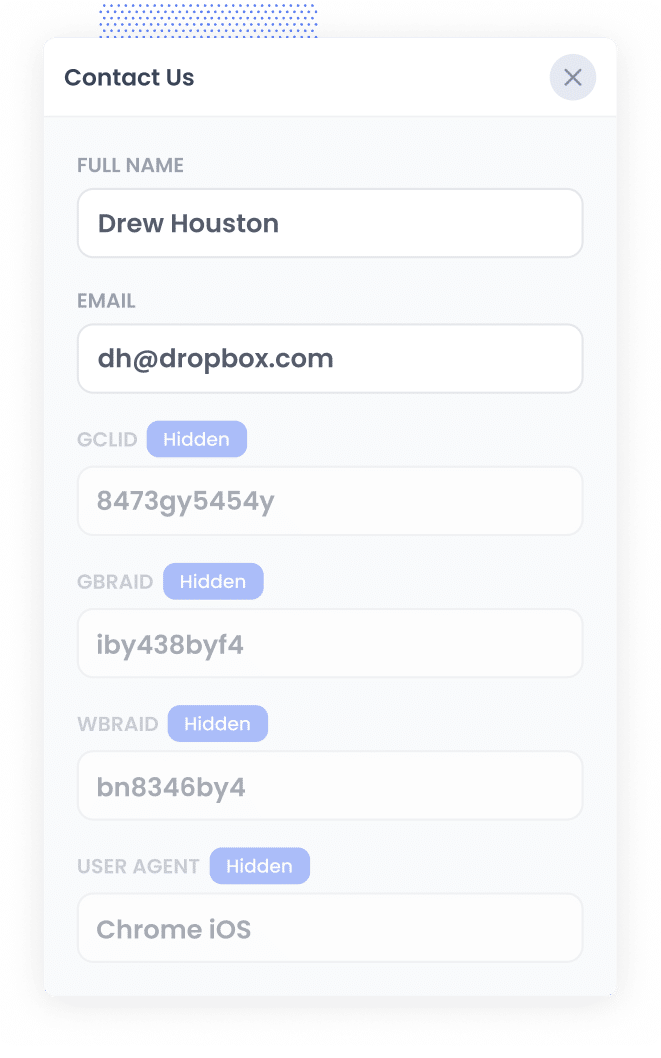
Once Attributer's code is on your site, it'll start watching where every visitor is coming from automatically.
When someone clicks one of your Google Ads and arrives on your site, Attributer captures everything Google Ads needs for a server side conversion (GCLID, GBRAID, WBRAID, User Agent, and so on) and stores it in the visitor's browser.
Then when that visitor submits one of your Forminator forms, Attributer writes the data into the hidden Input fields you set up earlier, and it's captured along with the rest of the form submission.
3. Data is sent to your CRM
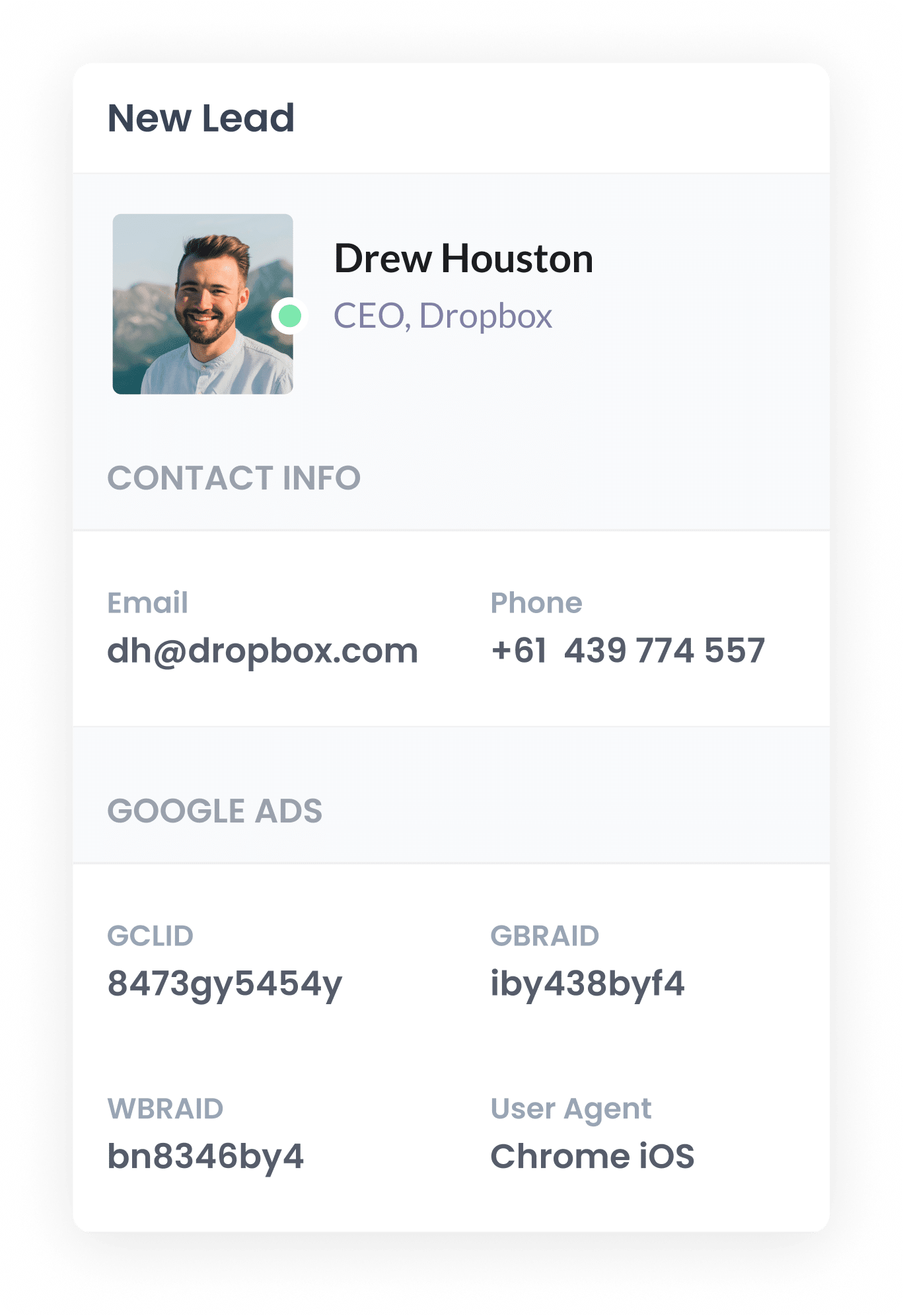
Once the data is captured with the form submission, you can send it through to your CRM alongside the lead's name, email, phone number, and any other information they entered into the form.
Forminator has built-in integrations for HubSpot, ActiveCampaign, Mailchimp, AWeber, and a Zapier add-on for everything else.
The data then sits on the contact/lead record in your CRM, ready to be used when it's time to fire the conversion back to Google Ads.
4. Send the data to Google Ads
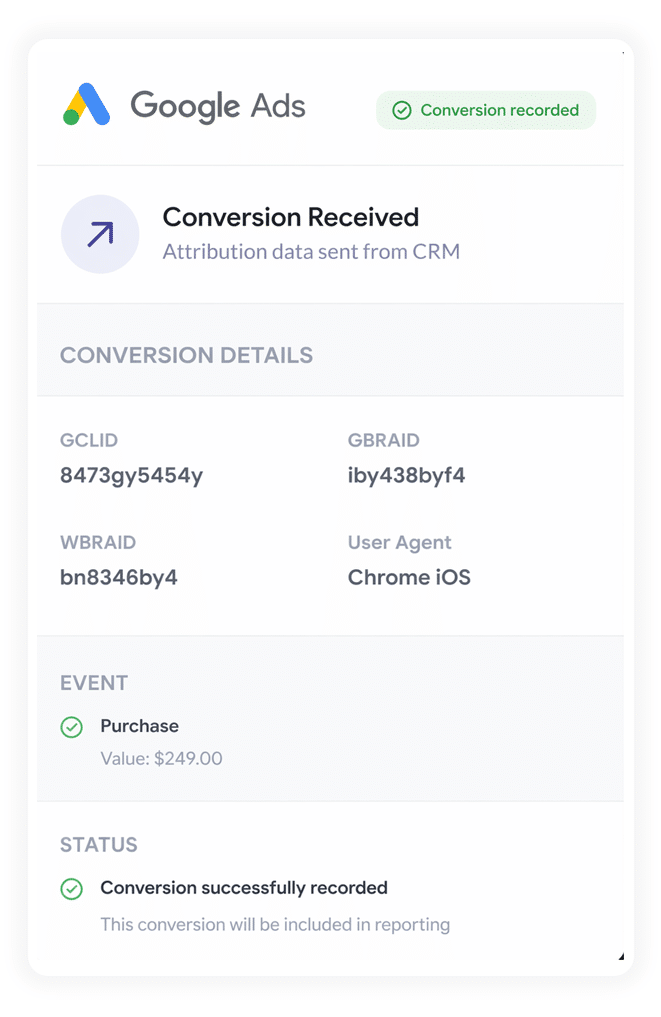
Whenever the lead reaches a meaningful milestone (a new deal getting created, an opportunity being marked closed won, etc), that's the moment to fire all the captured data back to Google Ads as a conversion.
Zapier and Make handle this part of the flow nicely. Both connect to almost any CRM, and you can configure them to trigger the Google Ads conversion at whichever point in the sales cycle makes sense for your business.
They also give you a clean visual mapping screen for matching the values Attributer captured (GCLID, GBRAID, WBRAID, User Agent, and so on) back to the right fields on the Google Ads side.
Why sending server side conversions to Google Ads is the best approach
At a high level, server side tracking gives you much more accurate results than client side tracking (which is just a fancier way of saying browser tracking).
With client side tracking, the conversion event has to fire inside the visitor's web browser, which is a chaotic environment full of ad blockers, privacy settings, and device switches you don't control. Server side tracking sends the conversion event straight to Google's servers, where none of that gets in the way.
Here are the 4 main reasons it's the most effective way to track conversions:
1. Overcomes ad blockers
Traditional tracking methods (like firing a Google Tag Manager event or relying on the standard Google Ads conversion pixel) all depend on scripts loading inside the visitor's browser, but ad blockers and privacy-focused browsers regularly stop those scripts from running in the first place.
And the share of users running an ad blocker isn't small. Recent estimates put it at over 30% of internet users.
Server-side tracking sidesteps the issue entirely. The conversion data is sent straight to Google's servers, where ad blockers can't get in the way, so every lead ends up accurately counted.
2. Bypasses Safari & iOS privacy limitations
Apple's Intelligent Tracking Prevention (ITP) clears tracking cookies after just a couple of days. So if a lead clicks your ad on Monday but doesn't convert until the following Friday, the link between the click and the conversion has already been wiped.
Server side tracking handles this differently. Instead of relying on a fragile cookie, it uses the lead's email as a stable identifier that ties them back to their original ad click no matter how much time has passed in between.
3. Works across devices
It's pretty common for a lead to first land on your site on one device (their phone, say) but wait until they're back at a computer to actually fill out a form.
Traditional browser tracking can't connect those two sessions because they happen on different devices, but sending identity data (name, email, and so on) directly to Google lets it "stitch" those visits together and credit your ad with the conversion it actually started.
4. Eliminates duplicate and messy data
On top of all the above, browser based tracking is prone to other errors like double counting from page refreshes, missing data due to slow load times, or lost events when the visitor's connection drops mid load.
Tracking from the server is much more precise because it only triggers a conversion when a form is actually, successfully submitted (not just when the button is pressed, or when a thank you page happens to load). This means the conversion counts in Google Ads more closely match your real lead numbers in your CRM.
3 reports you can run when you properly send conversions to Google Ads from Forminator
Across 15 years of running marketing for various businesses, I've spent millions of dollars in Google Ads and built hundreds of reports trying to figure out which campaigns were actually pulling their weight.
Out of all of them, here are the 3 reports I've found most consistently useful:
1. Conversions by Keyword
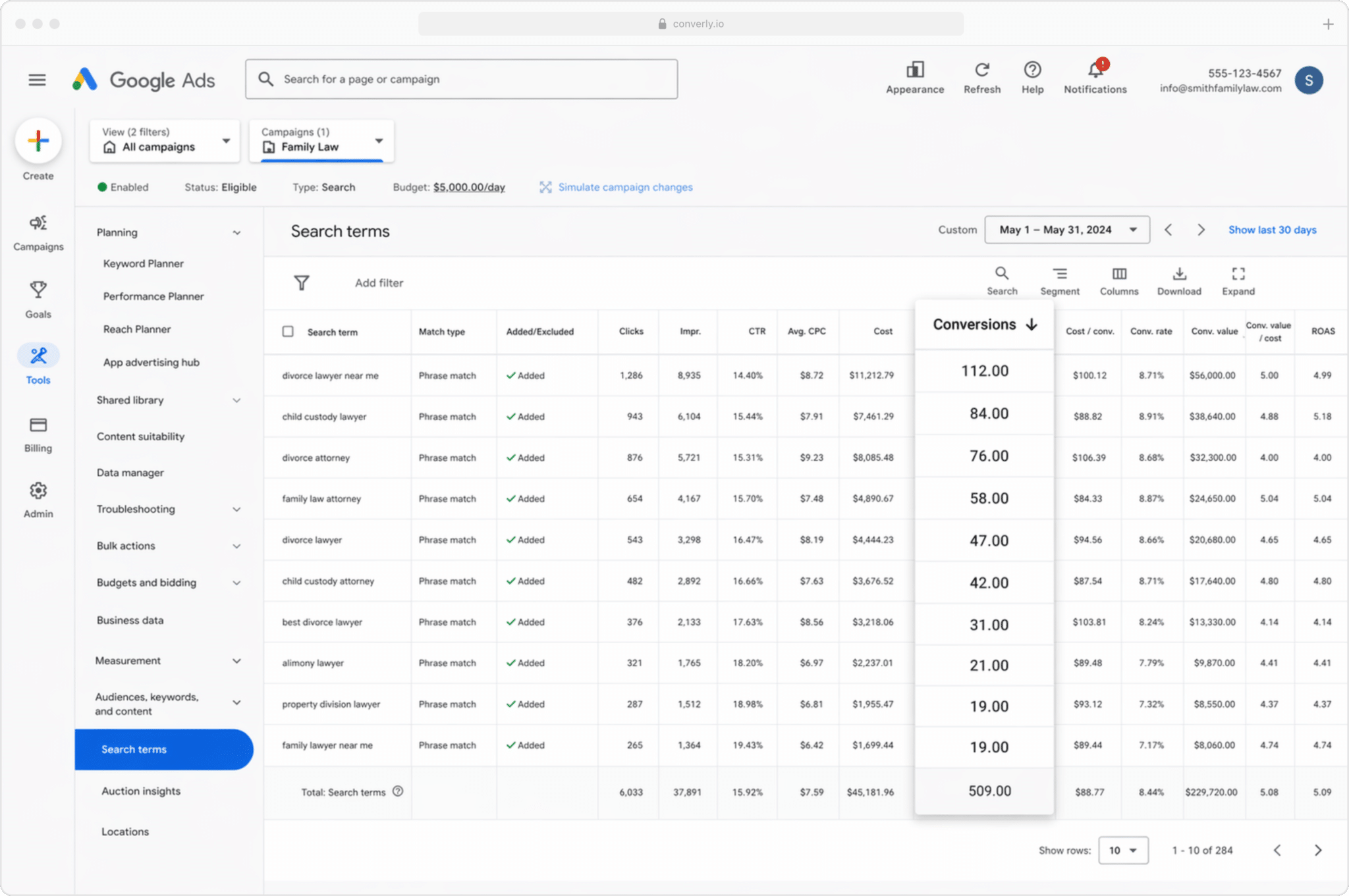
Most businesses running Google Ads end up bidding on a fairly broad spread of keywords across multiple campaigns (often broken out by the services you offer, like a marketing agency running an SEO services campaign alongside a separate paid social management campaign).
This report shows you which of those keywords are actually generating conversions, instead of just impressions and clicks that go nowhere.
It helps you understand which keywords are profitable and which ones aren't, so you know where to put more budget for the best return.
2. Conversion Value by Campaign
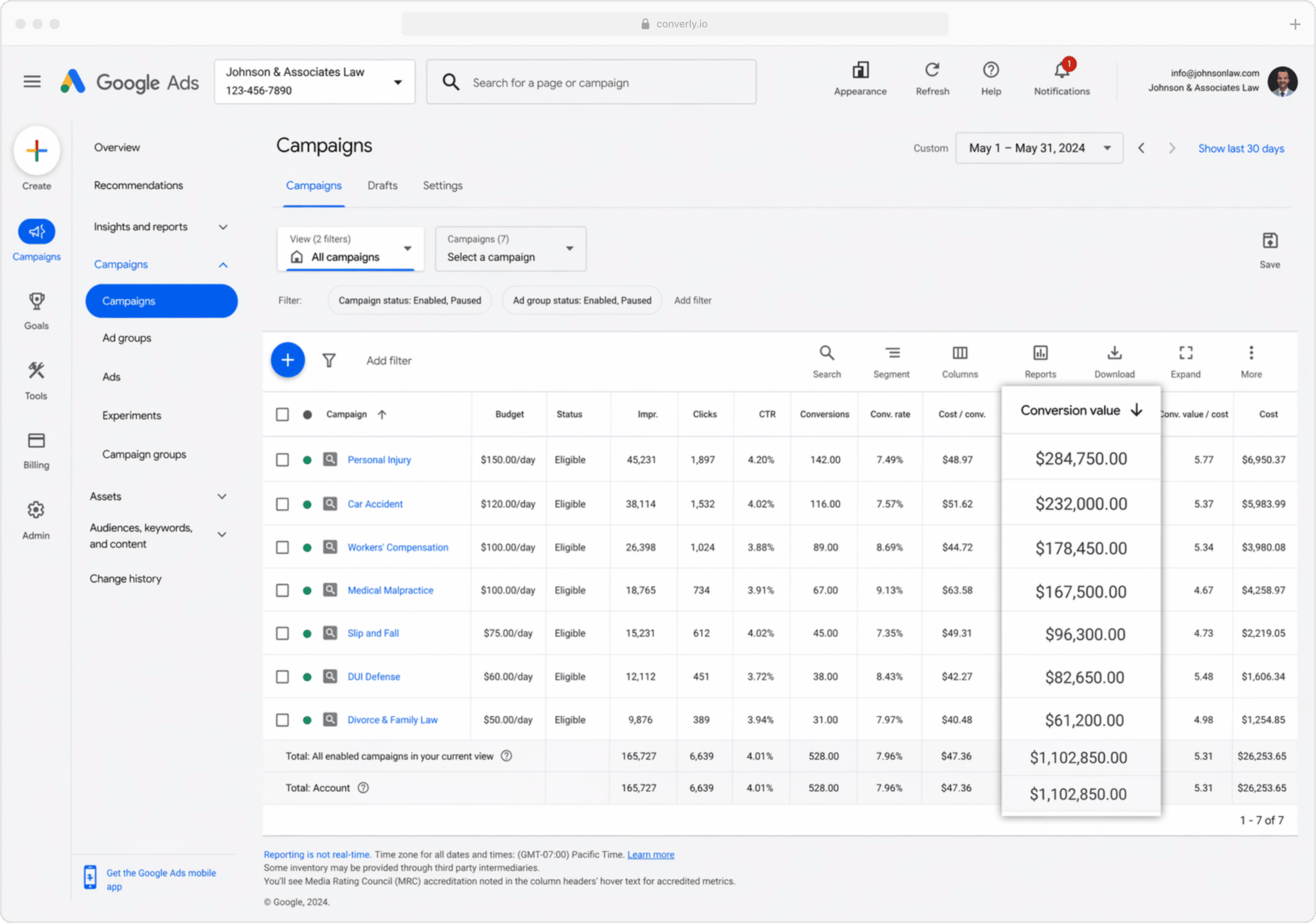
If you're sending conversions back to Google Ads from your CRM, you can also include the value of each conversion (which would normally be populated from the value of the deal or opportunity attached to the lead in your CRM).
This is important because not all customers are equal. For a marketing agency, winning a one-off website build is nowhere near as profitable as winning a new client to run their entire social media marketing, so you don't really want to treat them as equals.
If you send a conversion value from your CRM to Google Ads, you can run reports that show you got X revenue from leads that came from this campaign, and Y revenue from leads that came from another. That makes it much easier to decide which campaigns to put your budget behind.
3. Conversions by Geography
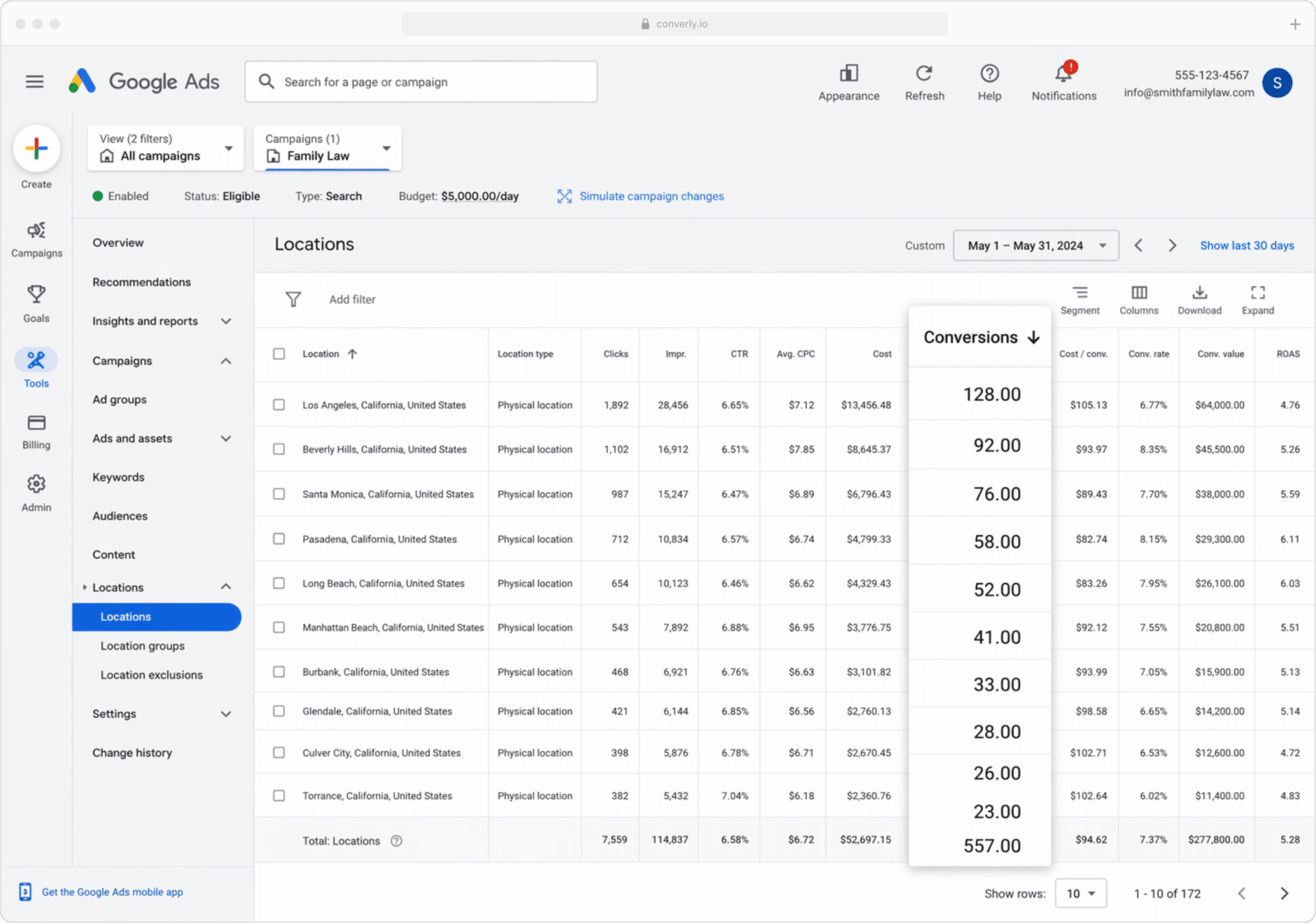
This report is especially useful for businesses that earn most of their revenue locally (landscaping companies, pest control services, locksmiths, plumbers, and so on). It breaks your conversions down by geographical region.
You can view the numbers at a high level (country, state, or city), or drill all the way down to a specific postcode. That tells you whether your leads are clustered in your target service areas, or whether you're paying for clicks from suburbs too far out for you to profitably serve.
From there, Google's Location Bid Adjustments give you a way to act on it. Tell Google to bid more aggressively in the postcodes that consistently produce paying customers, and pull bids back (or cut them entirely) in the areas that generate clicks but never produce filled out forms.
Wrap up
Sending server side conversions to Google Ads can really move the needle on your campaign results. It gives you the data you need to make manual adjustments (like bidding higher on certain keywords or in certain geographies), and it gives Google's algorithms the data they need to make smarter automated bidding decisions for you.
But it only works well if the conversion data going in is accurate. If you're tracking thank you page visits or firing events in the browser through Google Tag Manager, you're not really sending proper data, and your Google Ads performance will reflect it.
So whether you fire the conversion the second the form is submitted (using Converly) or hold off until the lead becomes a paying customer (using Attributer + your CRM + Zapier), make sure you're sending it server side. That's where the real lift in performance comes from.
Get Started For Free
Start your 14-day free trial of Attributer today!

About the Author
Aaron Beashel is the founder of Attributer and has over 15 years of experience in marketing & analytics. He is a recognized expert in the subject and has written articles for leading websites such as Hubspot, Zapier, Search Engine Journal, Buffer, Unbounce & more. Learn more about Aaron here.