
The best way to track Calendly bookings as conversions in Google Ads
Learn how to get 23% more conversions in Google Ads by sending setting up server-side conversion tracking from Calendly

Use Attributer to capture the GCLID when someone books a meeting through Calendly, then send it back to Google Ads as a conversion (either straight away, or once the lead becomes a customer in your CRM).
Google Ads can be a brilliant way to bring in new leads and customers, but getting conversion tracking set up properly is genuinely hard.
Tools like Google Tag Manager expect you to write custom code to detect when a booking happens, and then wire up triggers, tags, variables, and a pile of other fiddly settings.
And the simpler approaches, like tracking visits to a confirmation page, can miss up to 30% of your conversions thanks to ad blockers, privacy features built into browsers (Safari being the big one), or someone clicking your ad on their phone and only booking later from their laptop.
So what are you meant to do?
In this article, we'll walk through how to set up proper conversion tracking in Google Ads for when someone books a meeting with you through Calendly (using an approach called server-side tracking).
Why you need to be doing server-side tracking in Google Ads
The common ways of tracking conversions in Google Ads, like tracking visits to a confirmation page or firing events through Google Tag Manager, have some serious flaws. Studies show these methods can miss up to 30% of conversions.
There are a few reasons this happens:
- Ad Blockers. Ad blockers stop the Google Tag from firing on your website, which means it can't track anything the visitor does once they're there.
- Privacy Features in Browsers. Browsers like Safari have built-in technology that blocks the Google Tag from tracking visitors for more than a day, so if someone clicks your ad and then books three days later, it won't be tracked.
- Using multiple devices. Someone might click your ad on their work computer but later book on their home computer or phone, which means their original ad click can't be tied to the eventual booking.
This is exactly why you need to be tracking server-side. Instead of relying on something to happen in the browser (like the visitor reaching a confirmation page) and hoping the Google Tag can catch it, you send a direct, private message to Google with all the lead's details, which keeps the information out of reach of ad blockers and privacy settings.
And it has been proven to work much better. Google's own data shows that server-side tracking typically delivers a 23% average increase in total recorded conversions and a 10% reduction in cost per conversion, because Google's algorithms have more accurate conversion data to learn from and can serve your ads more effectively.
How to track Calendly bookings in Google Ads using server-side conversion tracking
You can do this in one of two ways, and the right choice mostly comes down to the moment you want the conversion to fire in Google Ads.
Option 1: When a lead books a meeting
Tools like Converly make it easy to send a server-side conversion to Google Ads every time someone books a meeting with you through Calendly.
Rather than wrestling with Google Tag Manager to detect bookings, pull out the lead's details, hash them with SHA-256 and push them to Google's API, Converly gives you a simple visual builder for putting your conversion flow together.
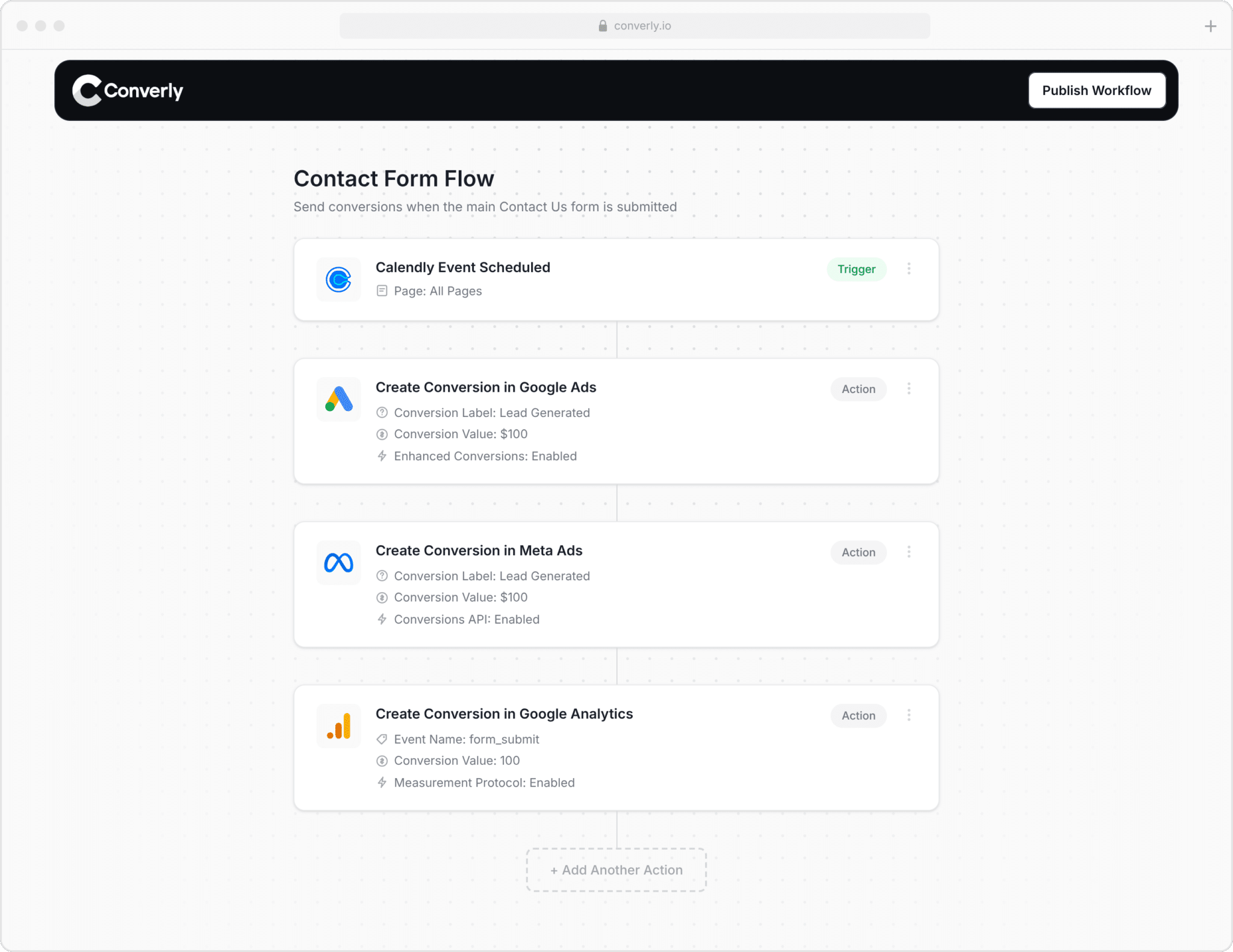
You just pick a trigger (like when a meeting is booked through Calendly) and then choose the actions you want to happen (like sending a conversion to Google Ads).
From there, Converly automatically detects when a booking is made, pulls the invitee's name, email and phone, secures it with SHA-256, and sends it to Google Ads. It also captures the GCLID and other details about how the person found your site and sends that across with the conversion, which makes it far more likely that Google can match the booking back to the campaign, ad and keyword the lead originally clicked.
The upshot is that you get all the benefits of server-side tracking (like a 23% average increase in total recorded conversions and a 10% reduction in cost per conversion) without having to write custom code, work out what SHA-256 means, or figure out how to send events to Google's API.
Option 2: When a lead becomes a customer
If you take bookings through Calendly and push those leads into a CRM like Salesforce, Pipedrive, etc., you can also send conversions back to Google Ads later in the sales cycle (when a lead turns into a paying customer, for example).
The trick is to capture some extra data with each booking and pass it through to your CRM. Here's how it works:
1. Set up Attributer with Calendly
To get started, sign up for a 14-day free trial of Attributer.
Calendly works a little differently to a normal form tool here. You can't add hidden fields to a Calendly booking page, so rather than dropping hidden fields onto a form, Attributer writes your attribution data into the UTM tracking fields that Calendly already has built in.
Setting it up only takes a few minutes. You enter your Calendly booking link into Attributer's code generator, then add the custom embed code it gives you to your website wherever your Calendly is embedded.
To capture the GCLID (the unique ID Google attaches to every ad click, which you need in order to record a conversion later), add it to one of your UTM parameters in Google Ads using a ValueTrack parameter. Full instructions are on the Attributer Help site.
2. Attributer writes the data into Calendly's UTM fields
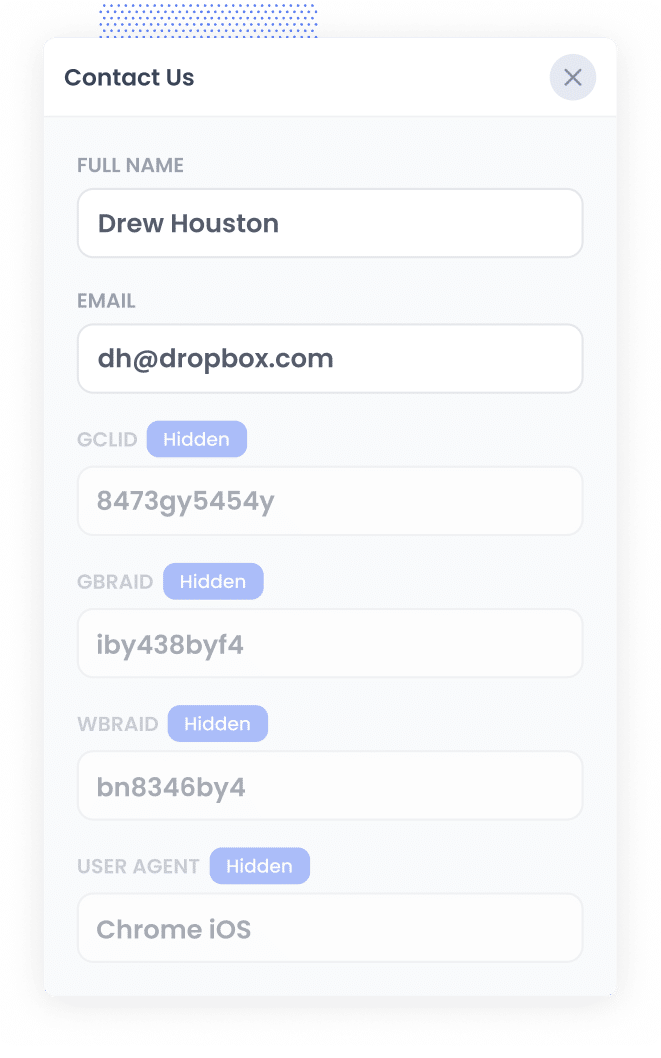
When a visitor lands on your site after clicking one of your Google Ads, Attributer captures the GCLID (along with the rest of their channel data) and stores it in their browser.
It holds onto that data even as the visitor moves around your site, so it isn't lost the moment they click away from the page they first landed on.
Then, when they book a meeting through Calendly, Attributer writes the data into Calendly's UTM fields. Your Channel goes into UTM Medium, Channel Drilldown 1 into UTM Source, and so on, with the GCLID coming through in the UTM parameter you set up.
3. Data is sent to your CRM
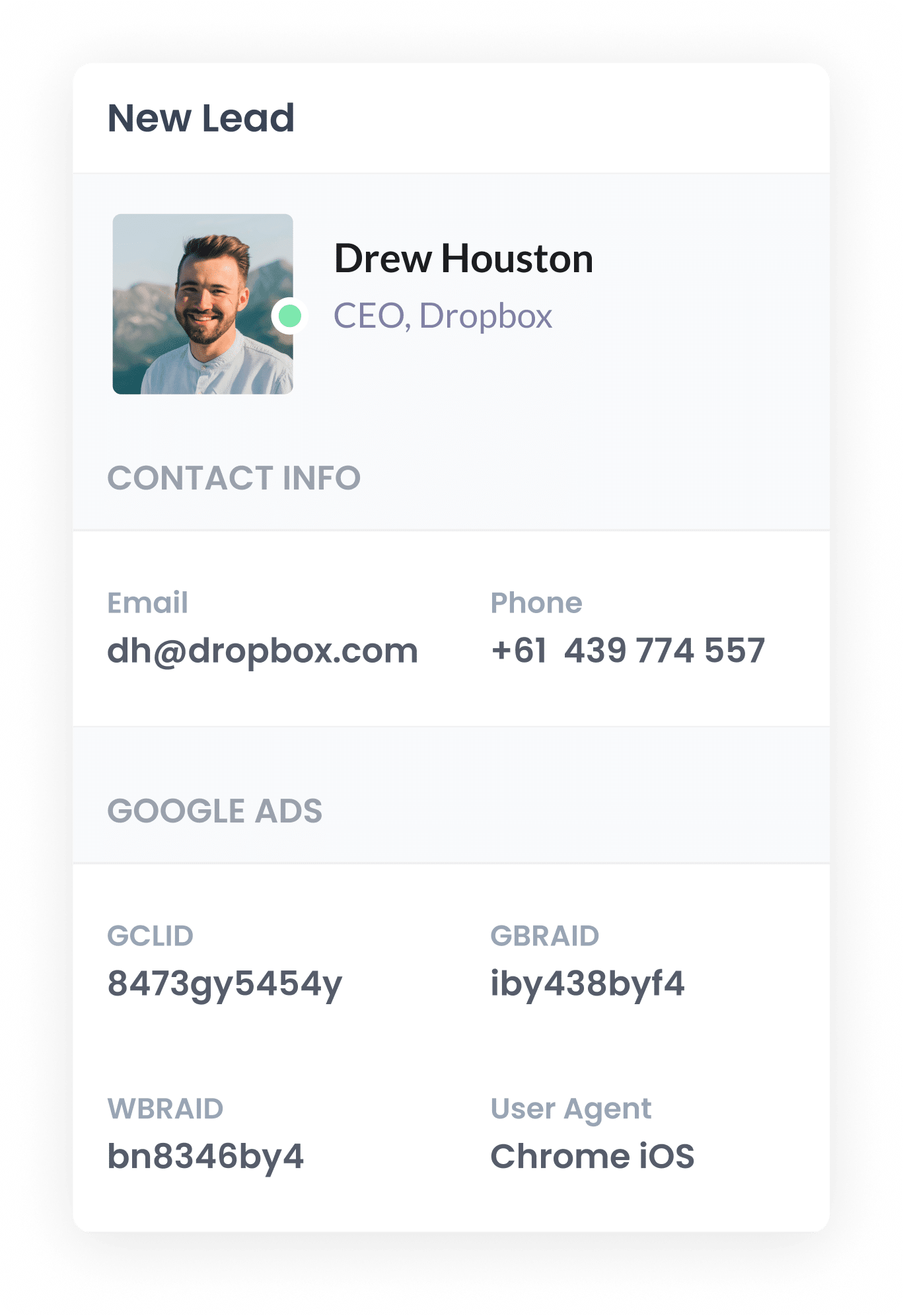
Once the booking is captured, the UTM data (including the GCLID) can be sent to your CRM alongside the invitee's name, email, phone number and anything else they entered when booking. You can do this through Calendly's native CRM integrations or with a tool like Zapier or Make.
The data then sits on the contact record in your CRM, ready for when you need it.
4. Send the data to Google Ads
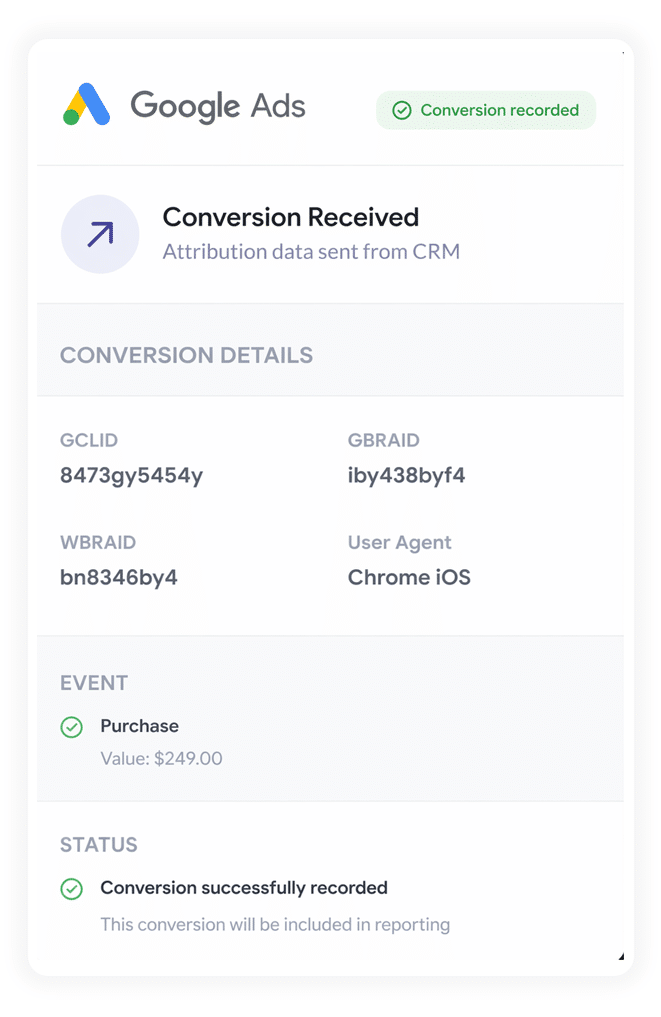
When a meaningful milestone is reached (a deal is created, or the lead becomes a paying customer), you can send everything back to Google Ads to record a conversion.
Zapier and Make are ideal for this. They plug into just about any CRM and can fire the conversion into Google Ads at whatever point you choose (when a deal is created, when it closes, or any other stage). They also give you a straightforward interface for mapping the GCLID that Attributer captured back to the right field in Google Ads.
Why sending server-side conversions to Google Ads is the best approach
At a high level, server-side tracking beats client-side tracking (in other words, tracking things that happen in the browser) because the results are far more accurate.
With client-side tracking, everything happens inside the visitor's browser, which is a chaotic environment you have no control over. Server-side tracking sends the conversion data straight to Google's servers instead, creating a controlled setup that privacy settings and ad blockers can't interfere with.
Here are the four main reasons it's the most effective way to track conversions:
1. Overcomes Ad Blockers
Traditional tracking (like tracking visits to a confirmation page or using Google Tag Manager) relies on scripts that load in the visitor's browser, but ad blockers and privacy-focused browsers often stop those scripts from firing.
And recent research suggests more than 30% of internet users now run some kind of ad blocker.
Server-side tracking sends the conversion data straight to Google's servers, which makes the whole process invisible to ad blockers and means every lead is counted accurately.
2. Bypasses Safari & iOS Privacy Limitations
Apple's Intelligent Tracking Prevention (ITP) often wipes tracking cookies within a couple of days, so you lose the link between an ad click and the conversion whenever someone doesn't book that same day.
With server-side tracking, you can send the lead's name, email, phone, GCLID, etc and Google will use those to tie the conversion back to the original ad click, no matter how much time passed between the click and the booking.
3. Works across devices
A lead might first find your website on one device (their phone, say) but wait until they're at a computer to actually book a meeting.
Traditional browser tracking can't connect those two sessions because they happen on different devices. Sending identity data (like their name and email) from the server lets Google stitch the separate visits together and give your ads the credit they deserve for kicking off the journey.
4. Eliminates duplicate and messy data
On top of all that, browser-based tracking tends to introduce other errors too, like double-counting when someone refreshes the page, or losing data because of a slow connection or a dropped request.
Tracking from the server is far more precise. It records a conversion only when a meeting is actually booked (not when a confirmation page happens to load), so the conversion counts in Google Ads line up much more closely with the real number of bookings you're getting.
3 reports you can run when you properly send conversions to Google Ads from Calendly
I've spent 15 years running marketing teams, pouring millions into Google Ads and building report after report to work out what was actually paying off.
These are the 3 that earned their place over the years:
1. Conversions by Keyword
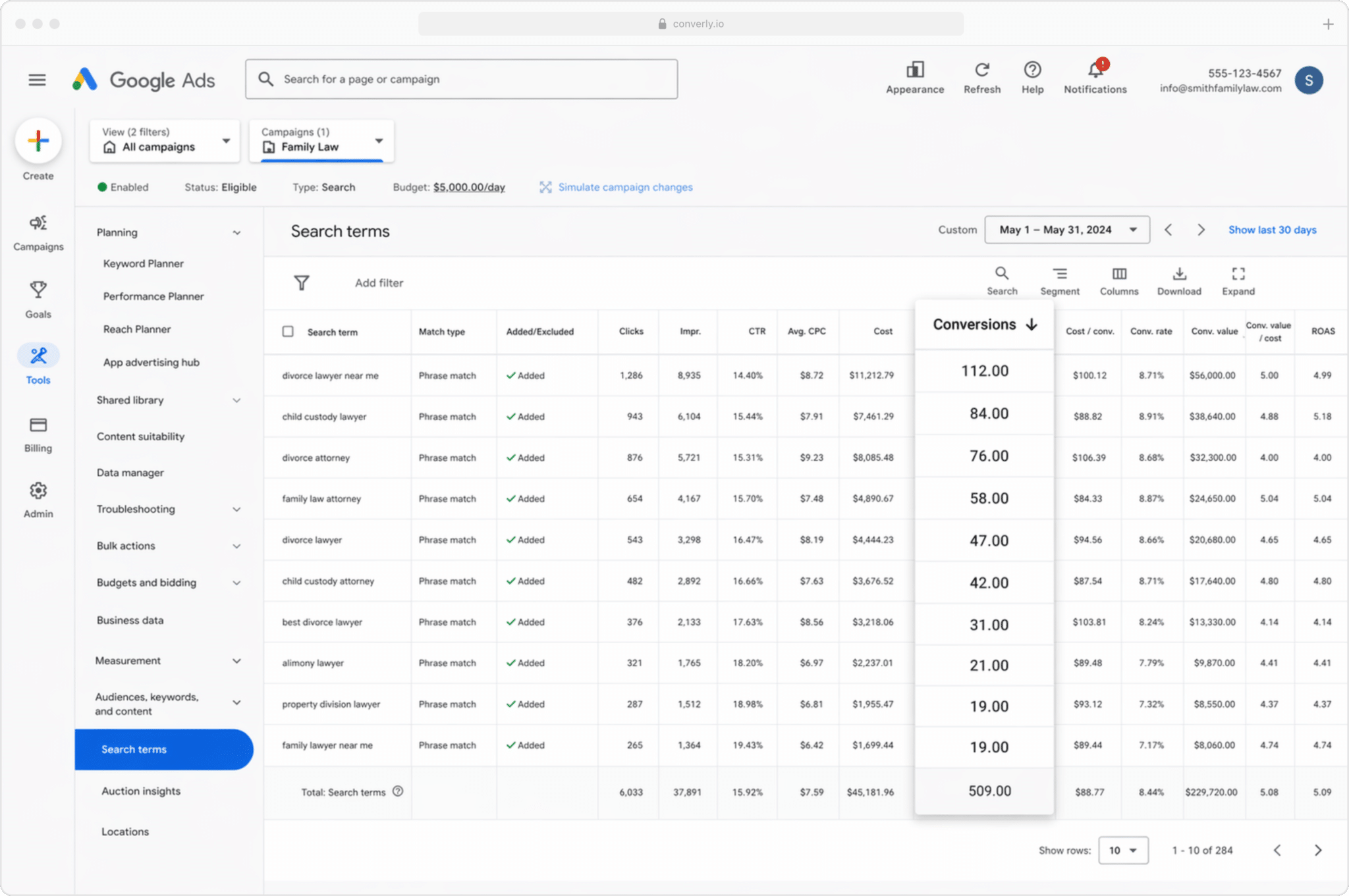
Like most businesses, you're probably bidding on a range of keywords across different campaigns (maybe for the different services you offer, like residential architecture versus commercial projects).
If so, this report shows you which keywords are actually generating conversions for your business, rather than just racking up impressions and clicks that never turn into real leads.
It helps you see which keywords are profitable and which aren't, and ultimately which ones are worth putting more budget behind to win more clicks.
2. Conversion Value by Campaign
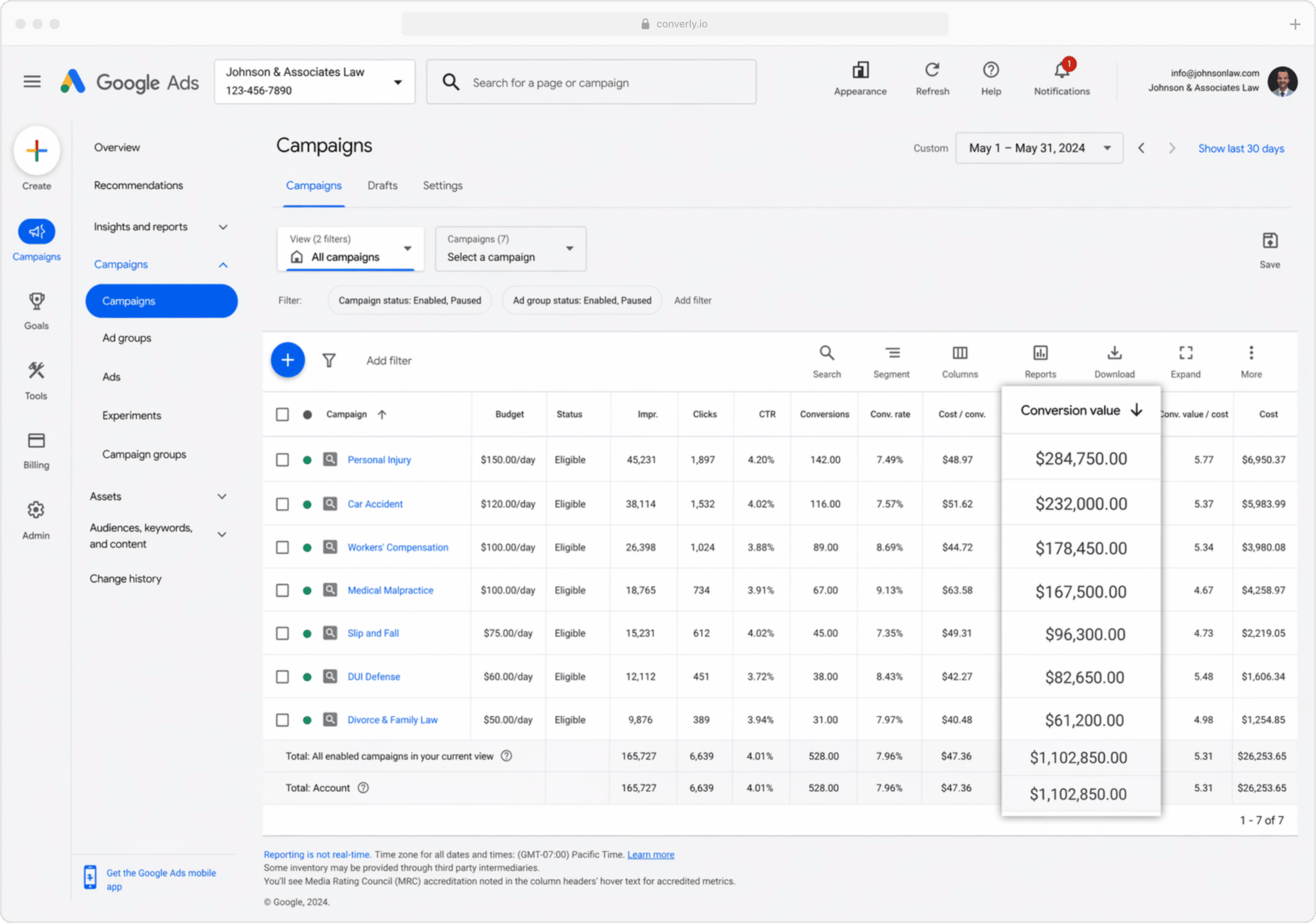
If you're sending conversions back to Google Ads from your CRM, you can include the value of each conversion (pulled from the value of the Deal or Opportunity in your CRM).
This matters because not all customers are equal. For an architecture studio, winning a client from a small residential extension campaign is nowhere near as valuable as landing one from a full commercial building campaign, so you don't really want to treat them the same.
When you send a conversion value from your CRM to Google Ads, you can run reports that show you earned X in revenue from leads on this campaign and Y from leads on that one. That makes it far easier to decide which campaigns deserve more of your budget.
3. Conversions by Geography
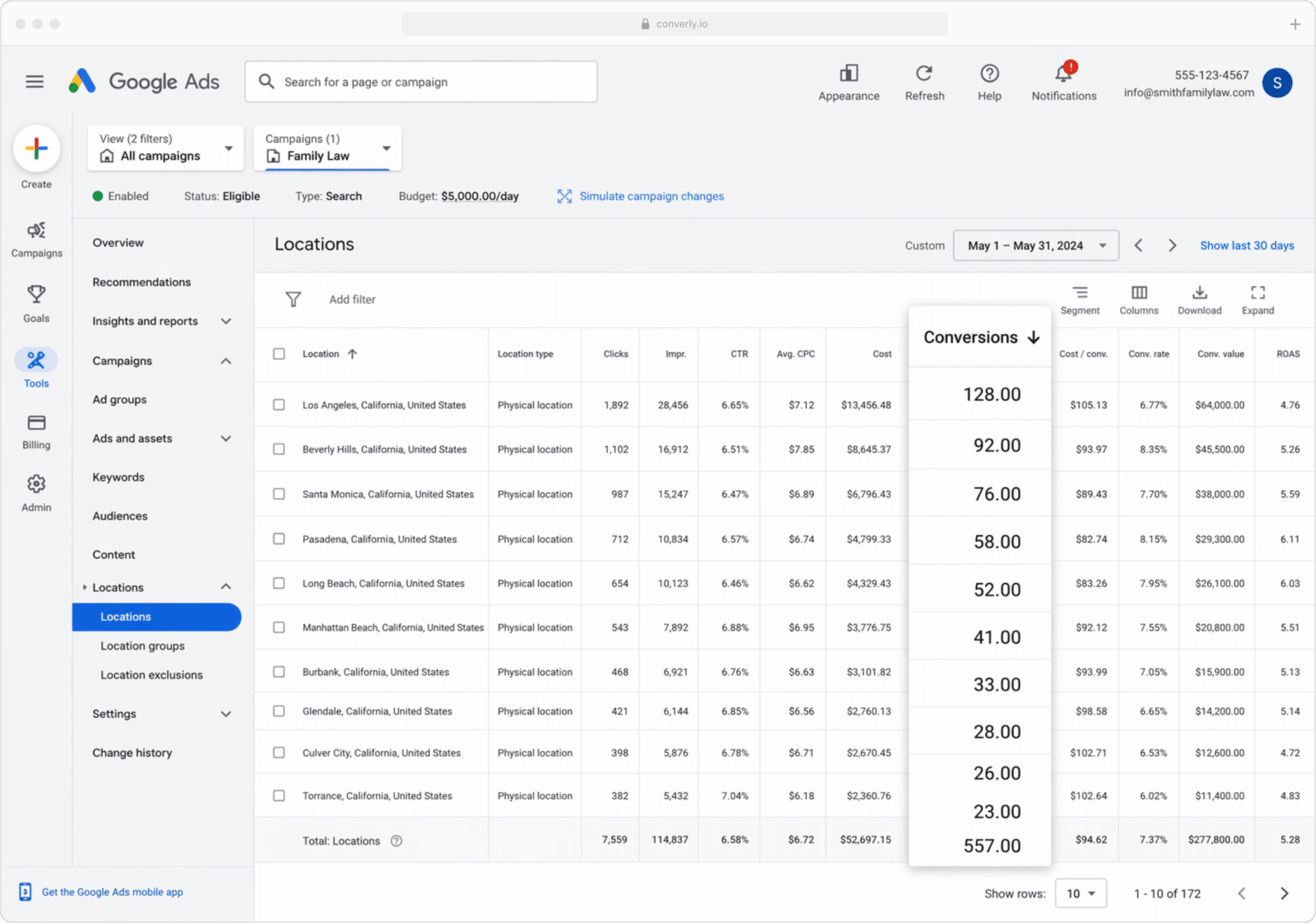
This one is especially handy for businesses that win most of their customers locally (think architecture studios, accounting firms, construction companies, and the like). It shows how many conversions you got broken down by geographic region.
You can look at this at a high level (by country, state or city), or drill all the way down to a specific postcode. That lets you see whether your leads are genuinely coming from the areas you want to serve, or whether you're burning money on clicks from suburbs that are too far away to be worth it.
Once you have this data, you can use Location Bid Adjustments to improve things. You can tell Google to bid more aggressively in the postcodes that are most profitable for you, and pull back (or stop spending altogether) in the areas that send clicks but never lead to a booking.
Wrap Up
Sending conversions to Google Ads can make a real difference to your results. It gives you the data you need to make manual adjustments (like bidding higher on certain keywords or locations), and it gives Google's algorithms the data they need to make automated bidding adjustments on your behalf.
But it only works well if the conversion data you send is accurate. If you're doing things like tracking confirmation page visits or firing events in the browser through Google Tag Manager, you're not really sending proper data, and your Google Ads performance will suffer as a result.
So however you set it up and whenever you choose to fire the conversion (when the booking is made, when the lead becomes a customer, and so on), make sure you're sending conversions server-side to get the best results.
Get Started For Free
Start your 14-day free trial of Attributer today!

About the Author
Aaron Beashel is the founder of Attributer and has over 15 years of experience in marketing & analytics. He is a recognized expert in the subject and has written articles for leading websites such as Hubspot, Zapier, Search Engine Journal, Buffer, Unbounce & more. Learn more about Aaron here.